Now Let Us Sing!

By Johari Jabir, Juneteenth 2021, originally posted on University of Chicago Divinity School’s Sightings website (June 17, 2021)

Now let us sing
Sing til the power of the Lord come down
Lift up your heads, don’t be afraid
Now let us sing til the power of the Lord come down.
(Gospel Song)

June 19, 2021 marks the 156th anniversary of Juneteenth, the celebration enacted by formerly enslaved Africans who received official word of Emancipation on June 19, 1865 in Galveston, Texas.  Juneteenth combines June 19th, the empirical date of the announcement of emancipation with the “Day of Jubilee” from the Jewish Calendar. This significant reference to Jewish calendar has its roots in the ingenuity of enslaved Africans. Letting the soul journey into that sacred temporality where past, present, and future come together to form a Divine Diasporic sense of time, I connect this early history of how enslaved Africans drew inspiration from the children of Israel to the troubled but valuable Black/Jewish struggles of solidarity in the twentieth century.

Continue reading “Now Let Us Sing!”

A Storm Blowing From Paradise…

By Ched Myers (4 Pentecost: MK 4:35-41)

Note: This is an ongoing series, re-posting Ched’s brief comments from 2015 on the Markan gospel readings from the Revised Common Lectionary during year B.

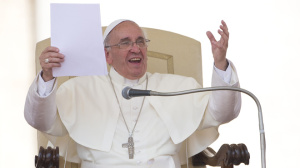
This Sunday’s gospel text is the poignant story of Jesus and his disciples caught in a storm at sea, which threatens to drown them. It is a profound, archetypal scenario that Mark narrates twice (again in 6:45-52). Because today is the day that Pope Francis’ historic encyclical on climate crisis is being published, I will focus on how this appeal addresses the storm that is Climate Catastrophe. A month from now I will return to Mark’s sea stories for Pentecost 8 (on which day the Lectionary inexplicably hops over the second boat journey in its piecemeal gospel selection, which we’ll rectify!).

Continue reading “A Storm Blowing From Paradise…”

This is Not News

A re-post from Shelagh Rogers (Facebook, June 6, 2021), who helped facilitate the Truth and Reconciliation Commission in Canada in 2015.

When we learned about the 215 Indigenous children buried on the grounds of Kamloops Indian Residential School while in the care of Catholic clergy who ran the school, the Prime Minister shared this tweet:

“The news that remains were found at the former Kamloops residential school breaks my heart – it is a painful reminder of that dark and shameful chapter of our country’s history. I am thinking about everyone affected by this distressing news. We are here for you.”

I want to parse the tweet out a little.

May I start with “The news”? I don’t understand how could this be news when a whole volume of the TRC report (V.4, 266 pages) is dedicated to children who did not come home? That volume is titled “Canada’s Residential Schools: Missing Children and Unmarked Burials”. Have you read it, Prime Minister? It’s been out for 5 and 1/2 years. Is it required reading for all your ministers? I was there in December of 2015 when the full 6 volume TRC report was presented to you, Prime Minister. I was in the company of fellow TRC honorary witnesses from Coast Salish territory, Andrea Walsh and Chief Bobby Joseph.

Continue reading “This is Not News”

Sowing Hope

By Ched Myers, for the 3rd Sunday after Pentecost (Mark 4:26-34)

Note: This is an ongoing series of re-posts of Ched’s brief comments from 2015 on the Markan gospel readings from the Revised Common Lectionary during year B.

This week the lectionary gives us the last third of Jesus’ parables sermon (hopping over the famous parable of the Sower and its allegorical interpretation, Mk 4:2-23). This section begins with a sober warning:

And he said to them, “Take heed what you hear: ‘The measure you give will be the measure you get, and still more will be given you. For to him who has will more be given; and from him who has not, even what he has will be taken away’.” (Mk 4:24-25)

Mark’s Jesus cautions his audience to “beware” of the anti-Jubilary ideologies they hear from elites, which counsel resignation in the face of injustice (4:23). The assertion that the gulf between haves and have-nots will inevitably grow was the “realism” advanced by wealthy landowners to justify their privilege (4:24). These two verses are omitted by the lectionary portion, but in fact are the point to which the next two parables serve as radical counterpoint, as Jesus repudiates such rationalizations of economic stratification (in the spirit of another parable-spinner, Ezekiel, see Ez 18:1-9).

Continue reading “Sowing Hope”

White Evangelical Racism

An excerpt from an interview with Anthea Butler, the author of the new release White Evangelical Racism. The full interview with Eric Miller at Religion and Politics can be read here.

I chose this title because I wanted to set certain parameters for the book. I specified white evangelicals to show that I’m using the term in the way that it is used colloquially by the media and the political pundits, rather than in some academic sense. That popular understanding of evangelical can be traced to self-identification, to the demographic of white, Christian conservatives who consider themselves evangelical. And I included racism because it is a very particular type of racism that I am discussing. That is, the racism that hides behind “moral” issues.

I address these questions at some length in the book, exploring how the meaning of evangelicalism has changed over time, and recognizing that there are a lot of people out there who don’t realize they’re in this thing because their self-concept leans heavily on theological considerations, allowing them to pretend that they’re not political. But nobody cares about your commitment to the Bebbington Quadrilateral when you’re arguing about the Supreme Court or judges or abortion. They care about how your belief informs your politics, which candidates you vote for, and what they stand for. So I wanted to pull evangelicals out of this safe little realm in which they’ve placed themselves and press them to confront how other people see them.

Binding the Strong Man: Jesus’ Master Metaphor

By Ched Myers, for the 2nd Sunday of Pentecost (Mk 3:20-35)

Note: This is re-posted from a series of Ched’s brief comments in 2015 on the Markan gospel readings from the Revised Common Lectionary during year B.

The first major narrative cycle in Mark’s gospel (1:16-3:6) ends with Jesus’ rejection by the authorities in a Capernaum synagogue. The following episodes serve to regenerate the story by a withdrawal and summary scene (3:7-12) and then by a reconsolidation moment (3:13-19a). The latter mountaintop scene boldly re-contextualizes two of the most revered traditions of Israel: God’s covenant with Moses on Sinai, and Moses’ founding of the free tribal confederacy in the wilderness. Jesus, who has taken the torch from the prophets, prepares to pass it on to twelve disciples he has called, named, and commissioned to proclaim, heal and exorcize (3:14f). Shortly they will be sent out to practice this charge – a second regenerative episode that follows upon another synagogue rejection (6:1-13).

Continue reading “Binding the Strong Man: Jesus’ Master Metaphor”

The Womanist Theology of Rev. Dr. Katie Geneva Cannon

An excerpt from a reflection on the life of Rev. Dr. Katie Geneva Cannon by Angela D. Sims. Re-posted from Religion and Politics, February 2019.


In every generation, a “remnant” of scholars emerges that challenges status quo perspectives. Their critiques of normative constructs serve as models for subsequent scholars who learn how to work not only to eat but also to work in a manner that enables others to eat. The Rev. Dr. Katie Geneva Cannon was indeed such a person. She loved life, loved people, loved laughter, loved food, loved imagining the not yet, loved calling things into existence. The progenitor of womanist theological ethics, Cannon was a brilliant scholar, a mentor extraordinaire who possessed an ability to discern what was most needed, and generous (almost to a fault) in the sharing of her time and resources…

…Born January 3, 1950, in Kannapolis, North Carolina, Cannon became the first black woman to be ordained in the United Presbyterian Church, a precursor to the Presbyterian Church (U.S.A). After earning her doctorate at Union Theological Seminary in New York City—the first African American woman to do so—Cannon laid the foundation for womanist ethics in her 1985 essay, “The Emergence of Black Feminist Consciousness.” Many black women in theological disciplines, including Cannon, have gravitated to the use of author Alice Walker’s term “womanist” as both a challenge to and a confessional statement for our own work. Womanist, as defined in Walker’s In Search of Our Mothers’ Gardens: Womanist Prose, contains elements of tradition, community, self, and a critique of white feminist thought and provides a fertile ground for religious reflection and practical application.

Continue reading “The Womanist Theology of Rev. Dr. Katie Geneva Cannon”

An Alternative Version

By Tommy Airey

A year ago, police responded to a call from a convenience store employee who accused George Floyd of paying for cigarettes with a counterfeit $20 bill. Before every single one of us witnessed this Black man forty days younger than me face down on the street pavement calling for his mother while a white man in uniform with his left hand in his pocket took his life by kneeling on his neck, the Minneapolis Police Department issued a press release describing what happened:

Two officers arrived and located the suspect, a male believed to be in his 40s, in his car. He was ordered to step from his car. After he got out, he physically resisted officers. Officers were able to get the suspect into handcuffs and noted he appeared to be suffering medical distress. Officers called for an ambulance. He was transported to Hennepin County Medical Center by ambulance where he died a short time later. At no time were weapons of any type used by anyone involved in this incident.

This ordering of facts was the official account.  

Continue reading “An Alternative Version”

Holiness Entered Suffering

A recent social media re-post from Mark Van Steenwyk, the executive director of The Center for Prophetic Imagination.

At its best, Christianity isn’t about redemptive suffering. Suffering isn’t sacred. This is the classic mistake. That, somehow, enduring suffering is, in and of itself, something holy. This sort of thinking leads to the horrid idea that a soldier’s death renders their service holy. It is a lie that empires spin.

Rather, the way of Jesus tells us that holiness *enters* suffering. On the cross, God suffered. Holiness entered suffering, not to glorify suffering, but to be with those who suffer.

It is life that is sacred. In our suffering, God is present.

This is the powerful insight of liberation theology. God is uniqely present with the oppressed.

Continue reading “Holiness Entered Suffering”