o, woman

Water Transfer 3
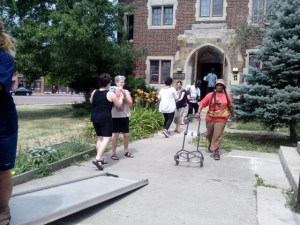
Re-loading cases of water to deliver to victims of water shut-off.

By Jim Perkinson, on John 4:5-42, for the beloved community that meets at St. Peter’s Episcopal Church (right) at the corner of Trumbull and Michigan in Detroit.  

o, the waters, the waters, the waters

o jacob, my father
o leah, my mother
o rachel, crying after the lost ones Continue reading “o, woman”

The Naming Project

TNP_largeBy Logan Rimel

For seven summers in a row, I’ve gathered with the other directors and counselors of The Naming Project for a week at Bay Lake Camp in Deerwood, MN. Since summer 2012, I’ve been blessed to be a part of this faith-filled summer camp for youth ages 14-18 of all sexual orientations and gender identities, and a director there since 2017. Each summer, the counselors and directors work to create a space where LGBTQ+ and allied youth can explore the intersection and interaction of their faith, identity, and community. Continue reading “The Naming Project”

Yet You Do Not Receive Our Testimony

MLKBy Tommy Airey, a seven-minute sermon at Storydwelling, a community of belonging, ritual and resistance in Bend, Oregon
“Very truly, I tell you, we speak of what we know and testify to what we have seen; yet you do not receive our testimony.”–John 3:11

Nicodemus, like most powerful men, knows how to conduct a covert operation. He was a Pharisee from Jerusalem with a lot to lose if others saw him associating with Jesus of Nazareth, the radical Galilean rabbi. Nicodemus’ night call would be like the President of the United States secretly meeting with Rev. Dr. Martin Luther King, Jr. in the 1960’s, when Dr. King’s approval rating hovered around 25% in white America. Continue reading “Yet You Do Not Receive Our Testimony”

A Spirituality of Disconnection

CPIBy Mark Van Steenwyk, executive director of the Center for Prophetic Imagination
Any spirituality that nurtures abstracted love, generic unity, and vague justice is worse than useless.

A Jesus-shaped spirituality moves us to love specific people, to struggle for tangible solidarity, and challenges us to work for particular justice.

If your spirituality provides positive feels and comfort because it helps you cope with the pain of the world, without ever addressing that pain, then it is, ultimately, a spirituality of empire. Continue reading “A Spirituality of Disconnection”

To Rebirth This Country

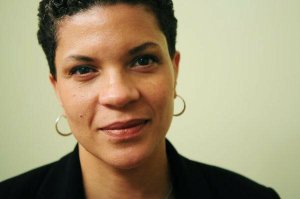
AlexanderFrom Michelle Alexander, on a panel with Keeanga Yamahtta Taylor and Naomi Klein in May 2017.

I have been having some trouble with the frame of “resistance” for some time. I understand completely why the term, the phrase, the rallying cry emerged following Trump’s election — it makes complete sense to me. But I think we’ve got to think beyond resistance. Resistance is inherently defensive. Continue reading “To Rebirth This Country”

Indigenous Wisdom Re-Schooling Christian Vision

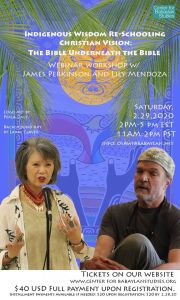
LilyFrom the Center For Babaylan Studies, this webinar is live tomorrow at 2pmEST. Click here to register!

Is it possible to learn from indigenous wisdom and practice across the globe and then re-read the biblical writings with an eye to the indigenous traces not entirely erased there? Or is going back to indigenous ways the same as going back to superstitious belief? Does following Jesus mean forsaking all other ancestral ways? This webinar will walk through the scriptural tradition to explore a possibility of calling Christianity to depth-work in recovering some of its own indigenous, anti-imperial roots. Continue reading “Indigenous Wisdom Re-Schooling Christian Vision”

Rome Will Destroy Us: Resisting Anti-Judaism in John

Woman at wellA great opportunity for radical disciples as Lent approaches on our calendars. This free webinar starts at 8pmEST on Mon, February 24. Register HERE. It will be led by Rev. Anne Dunlap, Faith Coordinator for Showing Up for Racial Justice (SURJ).
The Lent 2020 lectionary readings from the Gospel of John are challenging for Christians trying to counter anti-Jewish/anti-Semitic interpretations of these stories. The choices seem stark, and the enemies seem clear. What alternative readings could there be that do not perpetuate dangerous interpretations that have been – and continue to be — the excuse for violence against Jews and others? Continue reading “Rome Will Destroy Us: Resisting Anti-Judaism in John”

The Yoke’s on Us

UrsulaBy Nichola Torbett

The following is a sermon I preached at Open Door United Methodist Church today. The scripture is Isaiah 58: 1-12.

I was reminded this week of a short story by science fiction writer Ursula LeGuin. The story is called “The Ones Who Walk Away from Omelas.” It’s the story of a city called Omelas. Imagine a place where everyone lives happy, peaceful, rich lives, a place filled with music and dancing and cultural expression, where everyone has what they need.

Well, almost everyone. There is one exception. A small one. Very small, in fact.

In a tiny, dark mop closet of a dank, unfinished basement in a single building within this vibrant and beautiful city lives a small child—emaciated, terrified, and alone. She has been in there for years, but you wouldn’t guess how old she is, because her development—physical, intellectual, and emotional—has been stunted by neglect and malnourishment. The only interruption to her unending empty terror comes when someone rattles the door open and slides in some meager food. At these times, she cries out, “Please help me! I promise I’ll be good! Just let me out. I’ll be so good! Just help me!” But every time, the door slams closed and she is left in the dark. Continue reading “The Yoke’s on Us”

Healing Trauma, Decolonizing Memory

ElaineBy Elaine Enns (right), re-posted from Vision: A Journal for Church and Theology.

All four of my grandparents fled Ukraine and Russia in the 1920s, coming to Saskatchewan with some 22,000 other Mennonite immigrants.2 During the Russian Revolution and Civil War (1917–21), they and other German-speakers endured a continuous climate of violence, plundering, rape, and killing. As a child, I knew something unspeakable had happened to them. But my grandparents spoke only about the good times and the vast abundance and beauty of the land. In my senior year at a Mennonite high school in Saskatchewan, our drama teacher had us perform a reader’s theater rendition of Barbara Claassen Smucker’s novel Days of Terror. 3 Survivors of the Zerrissenheit (a German term loosely translated as “a time of being torn apart”) spoke with us about their experience. Seeds of a call to become a “remembearer” in my community were planted in me, which have grown for thirty years. Click here to keep reading.