Even Deeper Than What We Can See Right Now

MLP
PC: Valerie Jean (Detroit, MI)

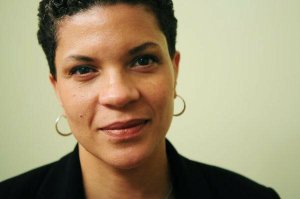
From Monica Lewis-Patrick (right), executive director of We The People of Detroit, leaders in the struggle for clean and affordable water in Detroit and beyond. 

We didn’t call ourselves into this fight. We tell folks that we didn’t choose water. Water chose us. In the divinity of water, water was before everything else was. We see ourselves as called into this great layer of warrior women that are fighting for water all around the globe, from Cochabamba to the Arab Spring, from Ireland to the Navajo Nation, from all over these Great Lakes where we have what I call “bad revolutionary sisters” who have decided that not only will they drink, but that their children’s children’s children will drink. Our vision is even deeper than what we can see right now. It’s a transformative way of thinking.

Registrations for BKI2020 Close at Midnight (PST) on 29 Jan, 2020

BillabongBartimaeus Kinsler Institute 2020: Unsettling Histories | Decolonizing Discipleship | hukišunuškuy

Click HERE to register and for more info!

This year the BKI will follow up on the Bartimaeus Kinsler Institute 2019, when we listened to and learned from a range of Indigenous voices concerning land, law and language (note: you do not need to have participated to join us in 2020).  The 2020 BKI, as Rev. Art Cribbs puts it, “aims to help us toward 20/20 vision,” by:

Unsettling Histories: Cohorts will focus on the personal and political work required of settlers and immigrants, in order that we might more deeply:

  • understand how our narratives, communities and landscapes in North America are haunted by violence and injustice, past and present; and
  • heal the myriad layers of our colonization, and colonizing behaviors, inward and outward.

Continue reading “Registrations for BKI2020 Close at Midnight (PST) on 29 Jan, 2020”

Hospitality as the Ground for Good

Hospitality-as-the-Ground-for-the-Good_800_800_90
Dough rising – it’s a braided bread night Credit: Mark Bonica (link below)

By Jayme R. Reaves. From Geez 56: Entertaining Angels.

When someone says “hospitality,” what comes to mind?

Offering a cup of coffee or tea, a hot meal, a bed for the night – these are the usual answers. When we dig deeper, there’s usually an emphasis on welcome, creating a space where people feel at home, a warmth, a commitment to the other’s wellbeing.

In English, the Latin roots for the word hospitality connote two different ideas. First, the root hostis implies both guest and host, indicating a fluidity of motion between the two, a reciprocity or exchange that is expected: “I do this for you because you did this for me.” In the ancient worlds that shaped our religious traditions, the common practice was to treat guests with respect for two main reasons. Either it was an act of diplomacy as you may be a traveler in their land one day, or because there was an understanding that a guest could have been a powerful being – a god – in disguise, testing the righteous. Therefore, welcoming a guest became a sacred ritual because you just never really know who this guest sitting at your table really is or what they may be able to do for you later. Continue reading “Hospitality as the Ground for Good”

Submit Stories and Reflections!

DODNew Year’s Greetings!

The Arts and Education Committee of the Dismantling the Doctrine of Discovery Coalition is assembling a new resource on the topic of reparations and repair. It will contain biblical and theological reflections as well as stories about how people have practiced reparative justice on the ground. Our intended audience is Anabaptist congregations, but our past resources (see here) have been used far and wide and are not limited to church folks! Continue reading “Submit Stories and Reflections!”

An Alternative Tour

51429161_10218004177755475_3993712457292972032_nBy Tommy Airey

“The time has come, God knows, for us to examine ourselves, but we can only do this if we are willing to free ourselves of the myth of America and try to find out what is really happening here.”—James Baldwin, Nobody Knows My Name (1961)

“…and a little child shall lead them.”—Isaiah 11:6b

Warning: this essay contains graphic language that may be unsuitable for some adults.

On this date, exactly a year ago, Lindsay and I found ourselves on ancient Chumash land, now called “the central coast of California.” We took the shuttle up to Hearst Castle, the 40,000 acre “ranch” built for newspaper mogul William Randolph Hearst and his wife, five sons and mistress. Early in the tour, our six-year-old nephew creatively resisted his boredom by making a game of how many nude statues he could find along the way. He was particularly fond of the penises, which made him giggle uncontrollably. Continue reading “An Alternative Tour”

The Moral and the Ethical

CornelFrom Cornel West, in an interview last month with Salon.

Part of [the global struggle for human rights] is realizing that we are in a moment now where people’s conception of community has been degenerated into a conception of constituency. It’s that people’s conception of a cause has been degenerated into a conception of a brand. People’s conception of the public has been degenerated into PR strategies. This creates a spiritually and morally impoverished culture. And so in order to have some notion of human rights that is actually full of content and substance, one has to have some primacy of the moral and the ethical. The calculations cannot be just the Machiavellian. So much of the culture just comes down to strategies and questions such as, “How am I going to make more money? How am I going to get something out of somebody?” Continue reading “The Moral and the Ethical”

Stigma

Blasey FordAn excerpt from The Sun Magazine‘s January 2019 interview with Dr. Anne Hallward.

Professor Blasey Ford demonstrated remarkable bravery in telling her story and responding to questions in front of a phalanx of men who were hostile to her. Her experience of not being believed, of being threatened for daring to speak up, was all too familiar.

I do think her willingness to make herself vulnerable was in the service of women everywhere. Her testimony is a powerful example of how telling our stories is a form of nonviolent social change. Though the outcome of the hearing was painful, I believe it will bear fruit in the long run, raising awareness of sexual assault and helping people understand what makes it hard to bring up. Professor Blasey Ford was highly credible, and yet many senators had already chosen not to believe her. Part of how the powerful maintain the status quo is by rendering certain voices noncredible. In our culture women’s voices are often not taken seriously. We demand proof that is impossible to obtain, or we critique them as shrill or strident. In Professor Blasey Ford’s case, she suffered death threats in an attempt to silence her. Continue reading “Stigma”

It’s a Specific Position That Stands Actively–Not Passively

Bree NFrom a recent Black Perspectives interview that Ajamu Amiri Dillahunt did with Bree Newsome Bass, an artist who drew national attention in 2015 when she climbed the flagpole in front of the South Carolina Capitol building and lowered the confederate battle flag.

I often get the question, “how do I become an activist.” The simple answer is that an activist is one who acts, who takes action in furtherance of a cause. I was an activist before I consciously identified as such. I never had ambitions of being an activist, only an ambition to change things for the better. The labels only serve to describe what it is I do. It’s become very hip to identify as an activist–not necessarily a bad thing–but it’s important to not let this word become devoid of meaning. Many of the struggles and movements of the past have been Disney-fied and watered down to focus merely on the tactic of nonviolent protest and to portray the tactic as being the goal itself. That is, the reason for the protests, racial and economic oppression, are erased and glossed over to make it seem like the extent of being an activist is participating in a nonviolent protest. The white power structure continues to find new ways to dilute or subvert the central issue of racism in America. One of its most recent tactics is introducing the notion of “bothsideism” to activism. Every cause qualifies as “activism” and everyone is an “activist” with little time or examination given to what cause folks are actually being an activist for. Continue reading “It’s a Specific Position That Stands Actively–Not Passively”

Liberation Feminism

ImaniFrom an interview that The Nation did with professor Imani Perry, the author of Vexy Thing.

I wanted to produce a work of feminist theory, or as I call it, liberation feminism, that would speak to the particular conditions of neoliberal capitalism and the hypermedia age—this eruption of digital media, where things that look like democratic spaces are at the same time corporate platforms.

I saw so many uses of the term “patriarchy” that didn’t actually apprehend the structure of domination. Patriarchy is a project that coincided with the transatlantic slave trade and the age of conquest. It’s not just attitudes. It’s legal relations between human beings, which lead to very different encounters with violence and suffering. The book begins with where patriarchy comes from, and then morphs into the current landscape, in which conditions are different but where that foundational structure is still present. Feminism is ultimately a way of reading the world with an eye towards reducing or eliminating unjust forms of domination, violence, and exploitation.