Lent is almost here. Consider this compelling guide for walking through this season. Click here to download.


Lent is almost here. Consider this compelling guide for walking through this season. Click here to download.
 A great opportunity for radical disciples as Lent approaches on our calendars. This free webinar starts at 8pmEST on Mon, February 24. Register HERE. It will be led by Rev. Anne Dunlap, Faith Coordinator for Showing Up for Racial Justice (SURJ).
The Lent 2020 lectionary readings from the Gospel of John are challenging for Christians trying to counter anti-Jewish/anti-Semitic interpretations of these stories. The choices seem stark, and the enemies seem clear. What alternative readings could there be that do not perpetuate dangerous interpretations that have been – and continue to be — the excuse for violence against Jews and others? Continue reading “Rome Will Destroy Us: Resisting Anti-Judaism in John”
 By Nichola Torbett
The following is a sermon I preached at Open Door United Methodist Church today. The scripture is Isaiah 58: 1-12.
I was reminded this week of a short story by science fiction writer Ursula LeGuin. The story is called “The Ones Who Walk Away from Omelas.” It’s the story of a city called Omelas. Imagine a place where everyone lives happy, peaceful, rich lives, a place filled with music and dancing and cultural expression, where everyone has what they need.
Well, almost everyone. There is one exception. A small one. Very small, in fact.
In a tiny, dark mop closet of a dank, unfinished basement in a single building within this vibrant and beautiful city lives a small child—emaciated, terrified, and alone. She has been in there for years, but you wouldn’t guess how old she is, because her development—physical, intellectual, and emotional—has been stunted by neglect and malnourishment. The only interruption to her unending empty terror comes when someone rattles the door open and slides in some meager food. At these times, she cries out, “Please help me! I promise I’ll be good! Just let me out. I’ll be so good! Just help me!” But every time, the door slams closed and she is left in the dark. Continue reading “The Yoke’s on Us”
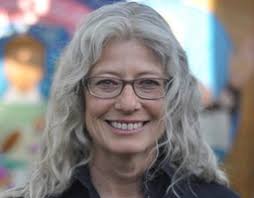 By Elaine Enns (right), re-posted from Vision: A Journal for Church and Theology.
All four of my grandparents fled Ukraine and Russia in the 1920s, coming to Saskatchewan with some 22,000 other Mennonite immigrants.2 During the Russian Revolution and Civil War (1917–21), they and other German-speakers endured a continuous climate of violence, plundering, rape, and killing. As a child, I knew something unspeakable had happened to them. But my grandparents spoke only about the good times and the vast abundance and beauty of the land. In my senior year at a Mennonite high school in Saskatchewan, our drama teacher had us perform a reader’s theater rendition of Barbara Claassen Smucker’s novel Days of Terror. 3 Survivors of the Zerrissenheit (a German term loosely translated as “a time of being torn apart”) spoke with us about their experience. Seeds of a call to become a “remembearer” in my community were planted in me, which have grown for thirty years. Click here to keep reading.
 By Jim Perkinson
Note: this is a long working definition of Whiteness. Dr. Perkinson laid this down for a committee reflecting in the wake of The Council on the Way (right), an October 2019 gathering of white men envisioning and embodying a redemptive white male theology. The conversation over two days in Washington D.C. was conceived and coached by Ruby Sales, theologian and veteran of the Black Freedom Struggle.
What is whiteness? I would understand the paler shades of skin color that are typically referenced, when the term “whiteness” is used, as a kind of shorthand for a whole social system of infrastructure and expectation, as well as conscious/unconscious identification. It is a system that is rooted in European Christian colonialism taking land on this continent by force (either violent conquest or coercive legal imposition) from indigenous peoples and making much of that land yield “resources” by means of enslaved African peoples (as well as other coerced peoples of color, and to some degree even coerced lower and working class European heritage peoples). Continue reading “What is Whiteness? A Provisional Articulation”
 From the front porch of Mother Ruby Sales. This is the sequel to yesterday’s clarion call to young people. This was originally posted to social media on February 2, 2020.
As remnants and elders we still
have a race to run and a role to play.
Heed the call.
Earlier this week I wrote a post to my younger friends reminding them of their responsibility as new generations of leaders. I reminded them that it is now up to them to use the fluency of their bodies and minds to push us beyond where previous generations took us. Now they are the ones under the light of historical scrutiny. I hope that they realize that the glare can both blind and clarify at the same time. Continue reading “We Still Have a Race to Run”
A two-part post from the front porch of Mother Ruby Sales. This is part I, originally posted to social media on January 31, 2020.
My young friends you have often stated that my generation should pass the baton of leadership. Well the ball is in your court as the Republicans take this nation down further into an abyss that chokes democracy to death.
I am listening to the roll call in the Senate, and it is clear that Republicans believe that Trump is above the law & they think that they are above your rebuke. Continue reading “The Ball is in Your Court”

From Monica Lewis-Patrick (right), executive director of We The People of Detroit, leaders in the struggle for clean and affordable water in Detroit and beyond.
We didn’t call ourselves into this fight. We tell folks that we didn’t choose water. Water chose us. In the divinity of water, water was before everything else was. We see ourselves as called into this great layer of warrior women that are fighting for water all around the globe, from Cochabamba to the Arab Spring, from Ireland to the Navajo Nation, from all over these Great Lakes where we have what I call “bad revolutionary sisters” who have decided that not only will they drink, but that their children’s children’s children will drink. Our vision is even deeper than what we can see right now. It’s a transformative way of thinking.
 Bartimaeus Kinsler Institute 2020: Unsettling Histories | Decolonizing Discipleship | hukišunuškuy
Click HERE to register and for more info!
This year the BKI will follow up on the Bartimaeus Kinsler Institute 2019, when we listened to and learned from a range of Indigenous voices concerning land, law and language (note: you do not need to have participated to join us in 2020). The 2020 BKI, as Rev. Art Cribbs puts it, “aims to help us toward 20/20 vision,” by:
Unsettling Histories: Cohorts will focus on the personal and political work required of settlers and immigrants, in order that we might more deeply:
Continue reading “Registrations for BKI2020 Close at Midnight (PST) on 29 Jan, 2020”

By Jayme R. Reaves. From Geez 56: Entertaining Angels.
When someone says “hospitality,” what comes to mind?
Offering a cup of coffee or tea, a hot meal, a bed for the night – these are the usual answers. When we dig deeper, there’s usually an emphasis on welcome, creating a space where people feel at home, a warmth, a commitment to the other’s wellbeing.
In English, the Latin roots for the word hospitality connote two different ideas. First, the root hostis implies both guest and host, indicating a fluidity of motion between the two, a reciprocity or exchange that is expected: “I do this for you because you did this for me.” In the ancient worlds that shaped our religious traditions, the common practice was to treat guests with respect for two main reasons. Either it was an act of diplomacy as you may be a traveler in their land one day, or because there was an understanding that a guest could have been a powerful being – a god – in disguise, testing the righteous. Therefore, welcoming a guest became a sacred ritual because you just never really know who this guest sitting at your table really is or what they may be able to do for you later. Continue reading “Hospitality as the Ground for Good”

