Geez Call for Pitches: G56 Breaking the Law

Image_from_iOS_580_435_90
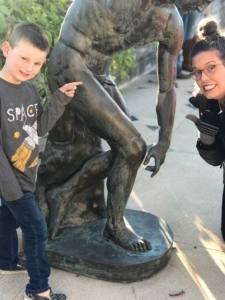
Praise the Lord and Break the Law. As seen at the Sugar Creek Midwest Catholic Worker Gathering, fall 2019. Credit: Kateri Boucher

Deadline November 10, 2019

“We need to engage in whatever nonviolent actions appeal to us. There is no act too small, no act too bold. The history of social change is the history of millions of actions, small and large, coming together at critical points to create a power that governments cannot suppress. We find ourselves today at one of those critical points.” – Howard Zinn

“The decision to engage in civil disobedience is challenging not just what the symbol represents, but also the laws that are set up to protect it.” – Bree Newsome, after pulling down the South Carolina Confederate flag in 2015

In countries founded on the legality of slavery and Indigenous massacres, we begin naming the complex relationships between law, violence, and power. Historically, engaging with laws through breaking them has been part of the arc that moves us towards justice. In this issue we hope to unpack the nuances of breaking the law, and the choices we do (or don’t) make in the process. Continue reading “Geez Call for Pitches: G56 Breaking the Law”

May We

Michael Raymond Smith
PC: Michael Raymond Smith

By Tommy Airey

A translation of the Jesus Prayer for this time.

May we celebrate Steadfast Love.
May we pledge to end exploitation and extraction.
May we live simply so it will be simple to love.
May we be released from our shame and supremacy.
May we share the debt load of others.
May our tests and trials transform us.
Amen.

Tommy Airey was born and raised on stolen, unceded Acjachemen territory (“Orange County, California”), was transformed by the thin place the Ojibwe, Huron and Odawa call Wawiiatanong (“Detroit River”) and has entered the sacred “hidden waters” the Molalla and Paiute named Towarnehiooks (“Deschutes River, Oregon”). He is the co-curator of RadicalDiscipleship.Net and author of Descending Like a Dove: Adventures in Decolonizing Evangelical Christianity (2018).

Let Us In the Name of the Holy Trinity…

Columbus DayFrom the first chapter of Howard Zinn’s classic The People’s History of the United States (1980). For Columbus Day Indigenous People’s Day.

Because of Columbus’s exaggerated report and promises, his second expedition was given seventeen ships and more than twelve hundred men. The aim was clear: slaves and gold. They went from island to island in the Caribbean, taking Indians as captives. But as word spread of the Europeans’ intent they found more and more empty villages. On Haiti, they found that the sailors left behind at Fort Navidad had been killed in a battle with the Indians, after they had roamed the island in gangs looking for gold, taking women and children as slaves for sex and labor. Continue reading “Let Us In the Name of the Holy Trinity…”

Have Mercy on Us!

lepersBy Wes Howard-Brook and Sue Ferguson Johnson

*NOTE: this piece was originally posted to Radical Discipleship in October 2016.

The final leg of the journey to Jerusalem begins with this week’s gospel (Lk 17.11-19). Alert readers, though, will note that Jesus and the disciples have not gotten very far. At the very beginning, Luke tells us that “they entered a village of the Samaritans to make ready for him” (9.52). Now, eight chapters later, Luke says, “On the way to Jerusalem Jesus was going through the midst (Gk, dia meson, misleadingly translated by NRSV as “between”) of Samaria and Galilee.” Like the Israelites in the wilderness, they seem to be going in circles in the land north of Judea. Perhaps this is a sly reference to the disciples, like their Israelite ancestors, lacking the faith that the journey they are on will lead to the place of God’s abundant provision. Indeed, as we heard last week, the disciples had just demanded of Jesus, “Increase our faith!” (17.5). Continue reading “Have Mercy on Us!”

Wild Weeds and Imperial Trees: Reading a Messianic Parable at the Crossroads of Settlement and the Wild

7007039354_a6903e0e32_b
wild mustard (public domain)

By Jim Perkinson, some timely scholarship for this weekend’s Gospel story

*Note: these comments from Dr. Perkinson are a summary of his “ground-breaking” essay on seeds and soils in Political Spirituality in an Age of Eco-Apocalypse: Essays in Communication and Struggle Across Species, Cultures, and Religions (Palgrave McMillan, 2015)

The seed parables of the gospels are “heirloom” for modern readers. They come across time, hard with unpacked dynamism.  As bare kernels, they sit unmoving before the eyes. But given the right nutrients from without, they may sprout with a surprising prolixity.

I want to treat these little Galilean riddles like transportable spore, and see what they do in a plot of contemporary “compost.” Continue reading “Wild Weeds and Imperial Trees: Reading a Messianic Parable at the Crossroads of Settlement and the Wild”

Contemplative Resistance

CPIOn November 2-3, the Center for Prophetic Imagination is offering a 2-day retreat called “Contemplative Resistance.”

In a letter to his discouraged friend Daniel Berrigan, Thomas Merton once wrote: “Do not be discouraged. The Holy Spirit is not asleep.”

It is easy to be discouraged by rampant injustices in our world today. Children in cages. Fascism on the rise. Environmental collapse looming. The list is long.

Where is the Spirit at work in this world? How do we act in ways that challenge injustice while being rooted in the presence of God? Continue reading “Contemplative Resistance”

A Way of Love, Not a Way of Sin Remediation

A re-post from Mark Van Steenwyk, executive director of The Center for Prophetic Imagination (originally posted to social media on September 23, 2019). MVS

Sin isn’t a homogeneous substance that exists in human hearts. It isn’t a phantomous thing that can only be combated with prayer and good intentions.

The Bible doesn’t make the case that all of humanity is bad to the core and that sin is about individual human choices and that the only way to fight sin is to win people to Jesus. That story has been placed upon Scripture and, at the same time, fits so nicely within the framework of individualism and religious conservatism. Which is why it persists in the USA. Continue reading “A Way of Love, Not a Way of Sin Remediation”

The Rich Man and Lazarus: Warning Tale and Interpretive Key to Luke

fyodorBy Ched Myers, on Luke 16:19-31, this weekend’s Gospel text

Note: This piece was originally posted to Radical Discipleship in October 2016. As was the case last week, this is a longer post, because of the importance of Luke 16 to those of us suffering from “Affluenza.” For a recording of a recent webinar Ched did on this gospel text, go here. [Right: Fyodor Bronnikov, “Lazarus at the rich man’s gate,” 1886.]

This Sunday’s gospel completes our journey through Luke 16. How rare it is that the lectionary allows a sustained look at Luke’s narrative argument! Last week’s text was Jesus’ subversive tale of the “defect-ive” discipleship of the beleaguered middle manager of a “filthy rotten system” (16:1-13). I read it as a poignant fable for those who would try to monkey-wrench the dominant economic system to provide a modicum of Jubilee justice for themselves and others.  The “paired” story of Lazarus and the Rich Man represents, in turn, a warning tale about the dark consequences of failing to deconstruct the systems of vast social and economic disparity that hold our world hostage. Continue reading “The Rich Man and Lazarus: Warning Tale and Interpretive Key to Luke”

This resurrection will likely be painful

hopeful_redemption_700_525_90
Credit: Samira, http://www.flickr.com/photos/mink/4466099617/

By Bre Woligroski. This article first appeared in Geez magazine Issue 25, Spring 2012, The utopia issue.

Those of us wannabe revolutionaries who have been working, praying and calling out for significant social change have found some tangible positive signs lately.

Our world is shifting. Some sort of change is in the air and it makes my heart leap and stirs my soul.

Stories of resistance play on every newsfeed; on a global scale, symptoms of the collapse and the collective rejection of capitalism are becoming evident. Between the Arab Spring, the struggling economies of the U.S., Greece and Italy and the growing commitment to the Occupy movement, something is moving and changing. A new way of relating to each other is on the proverbial horizon. Continue reading “This resurrection will likely be painful”