The Wedge of Patriarchal Practice

Binding

30 years in and Ched Myers’ Binding the Strong Man: A Political Reading of Mark’s Story of Jesus (1988) is more relevant than ever. This week’s commentary homes in on Mark 10:2-16.

Jesus refuses to enlist in the legal debate over the divorce statute itself. Instead he questions the way in which Pharisaic casuistry simply legitimates the already established social practice of divorce. The problem, as Elizabeth Schussler Fiorenza sees it, is that the legal issue is “totally adrocentric,” and “presupposes patriarchal marriage as a given.” Jesus argues:

Divorce is necessary because of the male’s hardness of heart, that is, because of men’s patriarchal mind-set and reality…However, Jesus insists, God did not intend patriarchy but created persons as male and female human beings. It is not woman who is given into the power of man in order to continue “his” house and family line, but it is man who shall sever connections with his own patriarchal family and “the two persons shall become one sarx“….The [Genesis] passage is best translated as “the two persons–man and woman–enter into a common human life and social relationship because they are created as equals.”

Jesus’ conclusion (10:9), then, is not meant as an absolute prohibition upon “divorce,” which would both overturn the Mosaic statute and return to a legalistic solution. Indeed, it drops the term for divorce (apoluse) in favor of a different term (to “separate,” chorizeto). Rather it protests the way in which patriarchal practice drives a wedge into the unity and equality originally articulated in the marriage covenant. Understood in the true sense, this famous phrase rightly belongs in the Christian marriage liturgy.

The principled critique of patriarchy having been stated “publicly,” the internal understanding of the community on this issue is once again given in a private explanation to the disciples in the safe narrative site of the home (10:10; 7:17f). Jesus here accepts the reality of divorce but prohibits remarriage–as does the similar catechetical tradition in I Corinthians 7:10 (though, there, “separation,” chorizo). The reciprocal formulation of the prohibition in 10:11f, however, reveals that the principle of equality has been maintained. The first clause–a man cannot divorce a woman and marry another without committing adultery against her–already went beyond Jewish law, “in which a man can commit adultery against another married man but not against his own wife” (Taylor, 1963). Bu the second clause, in which the rights of the female partner are expanded to include her right to divorce (or “leave”), directly contradicted Jewish law, which stipulated that only men could initiate and administer such proceedings (Kee, 1977).

This teaching recognizes the fact that divorce is a profound spiritual and social tragedy…The teaching also acknowledges, however, that divorce is a reality, within which the fundamental issue of justice must not be lost. Both parties must have the right to take initiative, and both must accept the responsibilities and limitations involved in the death of marriage.
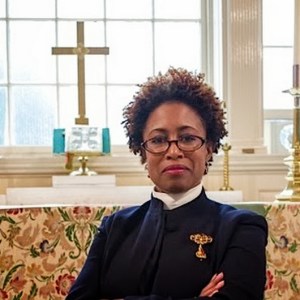
God, The Bible & Rape

Wil gafneyA five-year-old classic (more relevant than ever) from Rev. Wil Gafney, Ph.D., Associate Professor of Biblical Hebrew and Jewish and Christian Scripture (reposted from The Huffington Post, 1/15/2013)

Rape is at the forefront of our civil discourse in ways it has not been in my memory or experience: A young woman raped to the point of death in India has been the focus of international media. During the run up to the presidential election Rep. Todd Akin articulated his belief in legitimate and illegitimate rape as medical certainty proved by whether or not a woman conceived as evidence that women lie about being raped to get abortions. There were so many egregious GOP statements about rape that many conservative women and some men are horrified that their party has become lampooned as the “party of rape.” But rape is not a Republican problem, an American problem, an Indian, Darfurian or Congolese problem. It is a human problem, and because many humans are religious, it is also a religious problem. Continue reading “God, The Bible & Rape” →

Loving Our Enemies in the Work for Social Change: An Interview with Jonathan Matthew Smucker

SmuckerIntroduction: Jonathan Matthew Smucker (right) is a Mennonite political organizer and author who recently published Hegemony How-To: A Roadmap for Radicals. He is currently working in his home town of Lancaster Pennsylvania with Lancaster Stands Up to support Jess King, a Mennonite candidate for US House of Representatives. In our conversation we explored his relationship with his Mennonite faith and how his work relates to loving our enemies. 

Note: A shorter version of this interview curated by Tim Nafziger was published in the October 2018 print edition of The Mennonite.

Tim Nafziger: How would you introduce yourself to Mennonites who aren’t familiar with your work?

Jonathan Matthew Smucker: I grew up Mennonite in Lancaster County in a rural, working class pretty conservative area. We went to Bart Mennonite Church until I was nine and then we went to Ridgeview Mennonite Church. Continue reading “Loving Our Enemies in the Work for Social Change: An Interview with Jonathan Matthew Smucker” →

Getting Soaked: A Meditation on the Recovery of Baptismal Integrity

COM baptism group 9.24.18 (1)By Ken Sehested, the curator of prayerandpolitiks.org, an online journal at the intersection of spiritual formation and prophetic action

Last week I wrote a quick note to my friend Kyle, who gets as excited about baptism as I do, to share the news.

“We’re baptizing seven of our youth group this coming Sunday. Is it OK to brag about this?”

“Yes,” he responded. Continue reading “Getting Soaked: A Meditation on the Recovery of Baptismal Integrity” →

Practice, Not “The Right Name”

Binding30 years in and Ched Myers’ Binding the Strong Man: A Political Reading of Mark’s Story of Jesus(1988) is more relevant than ever. This week’s commentary homes in on Mark 9:38-50.

The arrogance in John’s objection lies in its attempt to erect boundaries around the exercise of compassionate ministry “in Jesus’ name.” He equates exorcism with the accrual of status and power, and wishes to maintain a monopoly over it. This is especially ludicrous in light of the disciples’ lack of exorcism power, which we have just witnessed (9:14-29). But more importantly, it cuts directly against the grain of “receiving” in 9:37, an exhortation to inclusion, not exclusivity. On top of all this, John’s censure is based on the fact that the stranger “was not following us.” The disciples want to be followed, not followers. Never was a “royal we” less appropriate! Continue reading “Practice, Not “The Right Name”” →

But Herein Lies The Trap

Michelle AlexanderFrom Michelle Alexander’s The New Jim Crow: Mass Incarceration in the Age of Colorblindness (2010):

The genius of the current caste system, and what most distinguishes it from its predecessors, is that it appears voluntary. People choose to commit crimes, and that’s why they are locked up or locked out, we are told. This feature makes the politics of responsibility particularly tempting, as it appears the system can be avoided with good behavior. But herein lies the trap. All people make mistakes. All of us are sinners. All of us are criminals. All of us violate the law at some point in our lives. In fact, if the worst thing you have ever done is speed ten miles over the speed limit on the freeway, you have put yourself and others at more risk of harm than someone smoking marijuana in the privacy of his or her living room. Yet there are people in the United States serving life sentences for first-time drug offenses, something virtually unheard of anywhere else in the world.

A Revelation

Descending, Front CoverAn excerpt from Tommy Airey’s recent release Descending Like A Dove: Adventures in Decolonizing Evangelical Christianity.

A few weeks into 2016, the Flint water crisis went viral. Tap water was poisoned with high levels of lead and bacteria. As complaints from residents came pouring in, city and state officials did nothing to change the situation. Just denial. For almost two whole years.

A month after the crisis made the headlines of every major newspaper in the world, Flint native and retired autoworker Claire McClinton drove sixty miles south to visit a group of us organizing for clean and affordable water in Detroit. These were Claire’s opening remarks:

We send you greetings from the occupied city of Flint. You can go to the gas station and get lead-free gas. You can go to the hardware store and get lead-free paint. Even a capitalist knows the dangers of lead. But we can’t go to our sink and get lead-free water. I’ve got PTSD. In fact, everybody’s got it if you care about humanity.

Continue reading “A Revelation” →

Understanding & Responding to the Doctrine of Discovery

DoDBy Will O’Brien, executive director of Project H.O.M.E. in Philly and the curator of the Alternative Seminary
*This Saturday, September 29, the Alternative Seminary and a group of Mennonite pastors are hosting a gathering in Philadelphia to deepen understanding and discern a call to respond to the Doctrine of Discovery

Of the many crimes perpetrated through history in the name of an imperialized Christ, one of the most pernicious is also one of least known.

The “Doctrine of Discovery” is a philosophical and legal framework dating to the 15th century that gave “Christian” governments in Europe the moral and legal rights to invade and seize indigenous lands and dominate indigenous peoples. For more than five centuries, this doctrine and the laws based upon it have legalized the theft of land, labor, and resources from across the world – crimes that continue to this day. Continue reading “Understanding & Responding to the Doctrine of Discovery” →

Radical Status-Reversal

Binding30 years in and Ched Myers’ Binding the Strong Man: A Political Reading of Mark’s Story of Jesus(1988) is more relevant than ever. This week’s commentary homes in on Mark 9:30-37.

They next reach the home in Capernaum. That the community would stop in here on its way south, specifically for instruction on internal matters of power and discipline, is significant, for Capernaum was the center of gravity for the first part of the Gospel (Mk 1:21; 2:1). It is here that Jesus really begins to unmask his disciples’ true aspirations to power. Not only do they not understand where Jesus is trying to lead them; they are headed full speed in the opposite direction. Mark contrives the episode for maximal irony: the disciples are caught debating who was greatest among them “on the way” (twice, 9:33b, 34a)! For Jesus’ response, Mark sets a familiar stage: the twelve are called (3:14; 4:10; 6:7; 10:32; 14:17) and Jesus takes his seat (4:1; 12:41; 13:3). The narrative signals: Pay attention to the teaching that follows! Continue reading “Radical Status-Reversal” →

The Gangsterization of Our Politics

barberFrom William Barber’s recent comments in a Democracy Now interview:

Before all of the latest news, Judge Kavanaugh, first of all, was being put forward after McConnell in the Senate held open a seat for over 420 days, in a way that we had not seen since the Civil War. They literally denied a president his right to nominate someone and for them to have a hearing. This was the same Judiciary Committee that denied two African-American women a hearing to be appointed to the federal court, the 1st District—Eastern District in North Carolina. So the process was bad from the beginning. Continue reading “The Gangsterization of Our Politics” →