Live by the Gun, Die By the Gun: But Can We Make Peace Living With the Gun?

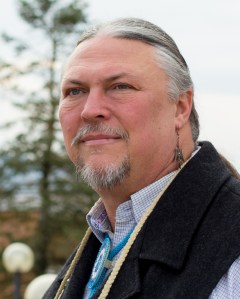
RandyBy Rev. Dr. Randy Woodley (photo right),a Keetoowah Cherokee teacher, poet, activist, former pastor, missiologist and historian

*This piece was originally posted at HuffPost.

Full disclosure: I am a committed peace activist who often hunts for his food and has valid concealed carry permits recognized in 36 states. I have never been a member of the NRA.

I won’t take the time here to explain the details above except to say they are deeply held, carefully thought through convictions. Hopefully, my disclosure causes some cognitive dissonance. Because I do not believe the issue of violence in our country is going to be resolved by advocating the talking points of either extreme, it may be helpful to create a sense of disequilibrium. I believe the problem of gun violence in America can be effectively addressed by looking deeply at all perspectives and by finding meaningful and practical compromise through a renewed sense of spirituality.
Continue reading “Live by the Gun, Die By the Gun: But Can We Make Peace Living With the Gun?” →

Moral Activism

PovertyThe Poor People’s Campaign is growing, organizing for action in 2018.  Sign up to join the coalition of 25,000+ here.  A summary from Rev. William Barber:

A truly moral agenda must be anti-racist, anti-poverty, pro-justice, pro-labor, transformative and deeply rooted and built within a fusion coalition.  It would ask of all policy, is the policy Constitutionally consistent, morally defensible and economically sane.  We call this moral analysis and moral articulation which leads to moral activism.

The Tension of Two Postures

CvilleFrom the conclusion of The Mennonite blog post “Nonviolence Against White Supremacy After Charlottesville” by Tim Nafziger and Mark Van Steenwyk: 

We are both Christian pacifists committed to creative responses to white supremacy that step outside the myth of redemptive violence.

Pacifists are at their best when they commit to strong solidarity and are willing to lay their lives on the line for the ones they love. It can be a pure expression of compassion–suffering with the oppressed in such a way as to magnify the full humanity of the oppressed while, at the same time, showing love for the oppressor as well. Continue reading “The Tension of Two Postures” →

Unnaturally Catastrophic

HarveyFrom from Amy Goodman’s interview with Naomi Klein on DemocracyNow (Sept 18, 2017).  This is Klein’s response to Goodman’s question:  When a disaster strikes, how is it dealt with, and what is it used as an opportunity for?

We need to respond to crises like this. They’re messages. They’re messages telling us that something is broken with the system. You know, these are not just natural disasters. These are disasters that have become unnatural, that have become unnaturally catastrophic, because of the impacts of climate change, but also because of the impacts of deregulation, because of inequality, of racial injustice. Continue reading “Unnaturally Catastrophic” →

we are living in impossible times

indexwe are living in impossible times. if it were fiction it would be critiqued as hyperbolic. if it were nightmares we would never sleep.
we are living in times created by our own species. I can’t remember the last time my tears weren’t man-made.

it feels like everything is broken. we must, each of us, fix our attention on the nearest wound, conjure within us the smallest parts of ourselves that are still whole, and be healers. heal with words and prayer and energy, heal with money, clean water, time and action.

there’s enough destruction. there’s enough nothingness swallowing the living world. don’t add to it. there’s enough.our visions are ropes through the devastation. look further ahead, like our ancestors did, look further. extend, hold on, pull, evolve.

My Own Awakening

AlexanderFrom an Onbeing interview with Michelle Alexander (April 21, 2016):

I was raised to believe that there had been extraordinary racial injustice in our history, but that we are on the right path. And we may have a long way to go, but we are on the right path, headed, albeit too slowly, towards that promised land that Dr. King spoke of so eloquently. And in many ways, I think my own parents, being interracially married, felt they had to believe in that, they had to believe that by bringing mixed race children into this world they were bringing them into a world where there was hope for their future.

And so I was really raised on that narrative that we were overcoming. And when I became a civil rights lawyer and was a baby civil rights lawyer, just starting out, and I saw that sign stapled to a telephone pole saying, “The drug war is the new Jim Crow,” yeah, I thought that was hyperbole. I shook my head and said, “Yeah, the criminal justice system is racist in a lot of ways, but it doesn’t help to make such absurd comparisons to Jim Crow. People will just think you’re crazy.”

And then I hopped on the bus and headed to my new job as director of the Racial Justice Project for the ACLU in California. And it was really only through those years of representing victims of racial profiling and police brutality, and investigating patterns of drug law enforcement in poor communities of color, and attempting to assist people who had been released from prison as they faced just one unimaginable barrier after another — not just to their so-called “re-entry,” but to their basic survival after being released from prison — that I had my series of experiences that led to my own awakening that we hadn’t ended racial caste in America. We had just redesigned it.

The Primal Story Line: Peace, Respect & Reconciliation

VernAnother short and sweet book review-summary from legendary pastor Vern Ratzlaff, posting up on the Canadian prairies, pouring his heart and mind into anti-imperial theology and soul-tending. 

Instead of Atonement. Ted Grimsrud, Cascade, 2013.

Grimsrud does a double theological treatment: of penal theory and of atonement theory.

Penal theory. The difference between retributive and restorative approaches to retaliatory justice. Continue reading “The Primal Story Line: Peace, Respect & Reconciliation” →

White Liberals, You Too Are Complicit

AliciaBy Alicia Crosby, a Chicago-based community organizer, re-posted with permission from her blog Chasing The Promise

Today I find my body wrestling with illness while my spirit fights against the crushing weight of seeing the toll white supremacy is taking on the world around me. While I feel we all have some degree of complicity we can afford to address, I need to name a particular manifestation of this explicitly.

I am utterly exhausted by all the ways that progressive, liberal, and radical white folks run away from and contort themselves to avoid dealing with the truth that they too are complicit in upholding white supremacy. It’s often not overt supremacy that troubles me so much as the ways in which this particular group of folks refuses to identify, interrogate, hold, then deconstruct their own complicity in upholding this oppressive system.  Read MORE.


When the Landowner is not God

day laborerBy Tommy Airey, adapted from a sermon on Matthew 10:1-16

Most interpretations of Jesus’ “parable of the landowner” equate the vineyard owner with God and the workers with God’s People or humanity at large.  God is seen as “generous” and “equitable” with the people and expands the population of those who, by grace, are ushered through the heavenly gates.   The grumbling worker at the end of the story is representative of Israel at large or the Pharisees, chief priests and other Jewish leaders who confronted Jesus during his life and ministry—the lesson being that we should all be thankful for God’s equal treatment and unconditional generosity and kindness.

Infused by the scholarship of William Herzog and his former student Ched Myers, there is a more compelling and contextual interpretation of Matthew 20 flowing out of the “minority report” of the radical discipleship movement.  Fortunately, nothing in the parable forces us to assume that the vineyard owner in the parable is God!  Instead, like a political cartoon, the parable is an exaggerated representation of what life was actually like during the time of Jesus and in the culture of the very first hearers of the parable five decades later. Instead of offering us heavenly principles that permit us to rest easy, the parable functions as a jarring illustration that prods us to face reality. Continue reading “When the Landowner is not God” →

Fifteen Years Fermented

Little CaesarOn September 12, the brand new $800 million+ Little Caesar’s Arena kicked off with a Kid Rock concert on the southern edge of the Cass Corridor in Detroit. It was the culmination of white billionaire Mike Ilitch’s* fifteen-year “dereliction by design,” scores of properties purchased and left to rot.  Land values were intentionally driven lower so Ilitch could buy even more. One week after the grand opening, prompted by this journalistic prose, Lindsay Airey was visited by a nightmare. Her attempt to relay it in poetry: 

A sea of black faces.
Beaten, downtrodden
by violent displacement,
callous disregard.
Greed turned sick
the souls
of these precious ones’
attackers.
Gluttonous murder,
seeping like poison,
hemorrhaging
out their murdering pores. Continue reading “Fifteen Years Fermented” →