When God Said Poop: Prophetic Theater & Suffering Through Our Collective Sins

Joshua Grace is an ENFJ on the MBTI, hits cleanup for the Kensington Royals, is a longtime member of the Psalters, pastors at Circle of Hope in Philadelphia, is married  a brilliant woman who turned out to be quite the social entrepreneur. They have two daughters, now in middle school. Joshua spends his free time blogging and other creative endeavors to stop wars, watershed keeping, affordable housing, land use, immigration, and ending handgun violence. You can access his blog Ghostride The Whip here.
———————–
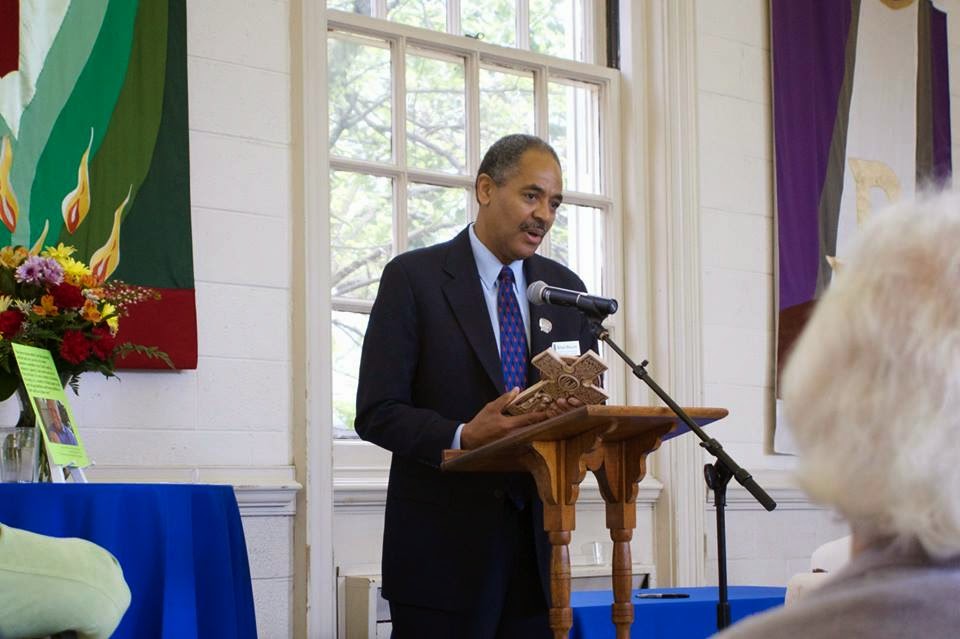
I’m not totally sure how I got on an Ezekiel kick, but I’m on one. While talking to a couple of cool pastors the other day at the Urban Anabaptist Ministry Symposium in Philadelphia we got on the topic. They told me that they stick to Ezekiel’s “greatest hit” – the Valley of Dry Bones. The other week I dipped into this prophet while going through the story about the destruction of the cities Sodom & Gomorrah. God, through Ezekiel, explains the sin of Sodom was that “She and her daughters were arrogant, overfed and unconcerned; they did not help the poor and needy.” If there ever was an Old Testament prophet with a one-hit wonder for pastors – it’s Ezekiel with Valley of the Dry Bones and its “B-side” about Sodom.

The prophet Ezekiel

Continue reading “When God Said Poop: Prophetic Theater & Suffering Through Our Collective Sins”

The End is Here

by tom airey, co-editor, radicaldiscipleship.net
—————————–
We know that the whole creation has been groaning in labor pains until now…
Romans 8:21

Hope, for radical disciples, is intimately related to both our identity and vocaton as “children of God:” those committed to the Way of Brother Jesus, who taught and lived out a dangerous style of love, forgiveness, peace, inclusivity and solidarity with the poor and marginalized. We join a determined God in giving birth to a whole new world. This will take sacrifice and suffering.

Continue reading “The End is Here”

Discipleship As Suffering

From Brian Blount, President of Union Presbyterian Seminary, in Then the Whisper Put On Flesh: New Testament Ethics in an African American Context (2001):

Discipleship is not exemplified by suffering; suffering is the tragic outcome of following this kingdom-preaching Jesus. This is what makes Jesus discipleship heroic. Despite the probability that one will suffer if one persists in imaging the life of Jesus in his or her own life, the disciple goes ahead and images that life anyway.

An open letter to my students after my arrest for disorderly conduct


kim redigan 2

Kim Redigan teaches theology at University of Detroit Jesuit High School and blogs at www.writetimeforpeace.com. She is a nonviolence trainer and peace educator with Meta Peace Team.

Dear students:

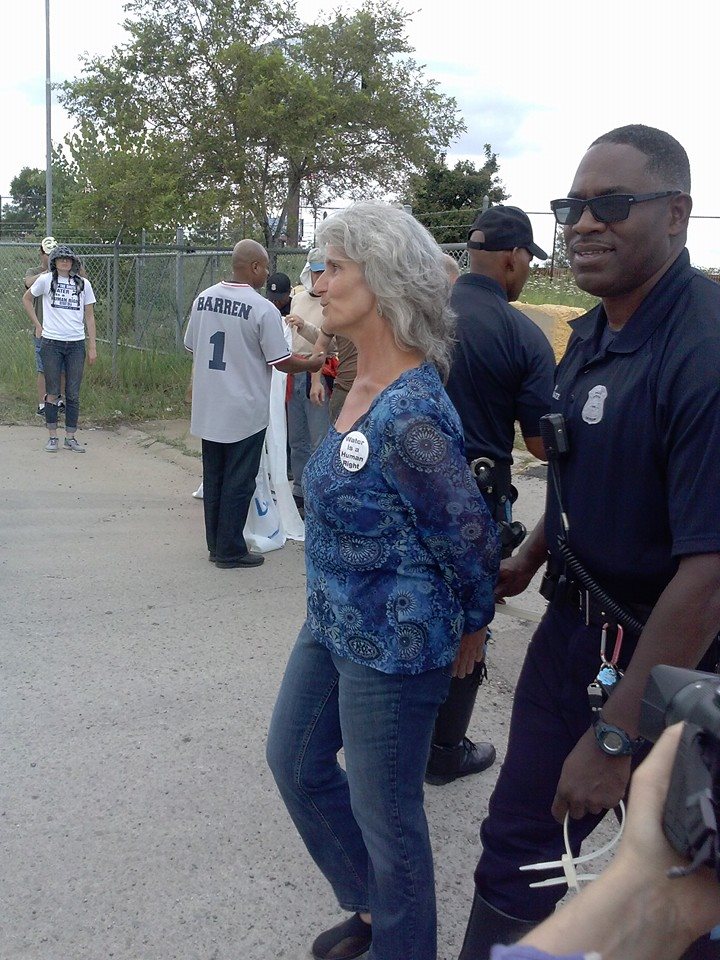
Some of you have contacted me after seeing news of my arrest for a nonviolent action around the water shutoffs here in Detroit. While I am touched by your concern, I implore you to reserve your support for those being affected by the shutoffs and your own generation, which, unless things change, is on track to inherit a commodified world in which beauty, nature, life itself will be sold off to the lowest corporate bidder, an affront to all that is good, decent and human. Continue reading “An open letter to my students after my arrest for disorderly conduct”

Who Are Our People?

But wanting to justify himself, he asked Jesus, ‘And who is my neighbor?’
Luke 10:29

From Justin Ashworth, a candidate in the Duke Divinity School ThD program. Justin is in the process of finishing a dissertation devoted to a theological engagement with U.S. immigration policy, drawing on the Merciful Samaritan parable in Luke 10 (right: painting by Paula Modersohn-Becker, 1907), which challenges followers of Jesus to ask the vital question in immigration debates: “Who are our people?” This is the conclusion from a presentation he gave to a class last week:

…the calling of gentiles to follow Jesus draws us into a life together with people we did not choose. It requires that we deny any notion of a permanently stable identity: we follow the God of the living who is on the move in the world. There may be times for staying put, but the Christian life is fundamentally one of movement towards Jesus and therefore towards the people he is gathering around himself. This recognition requires that we cultivate a posture of openness toward the Spirit of Jesus Christ who blows where the Spirit wills. Continue reading “Who Are Our People?”

Multiplication [of] Tables

By Tom Airey, RadicalDiscipleship.Net, Co-Editor

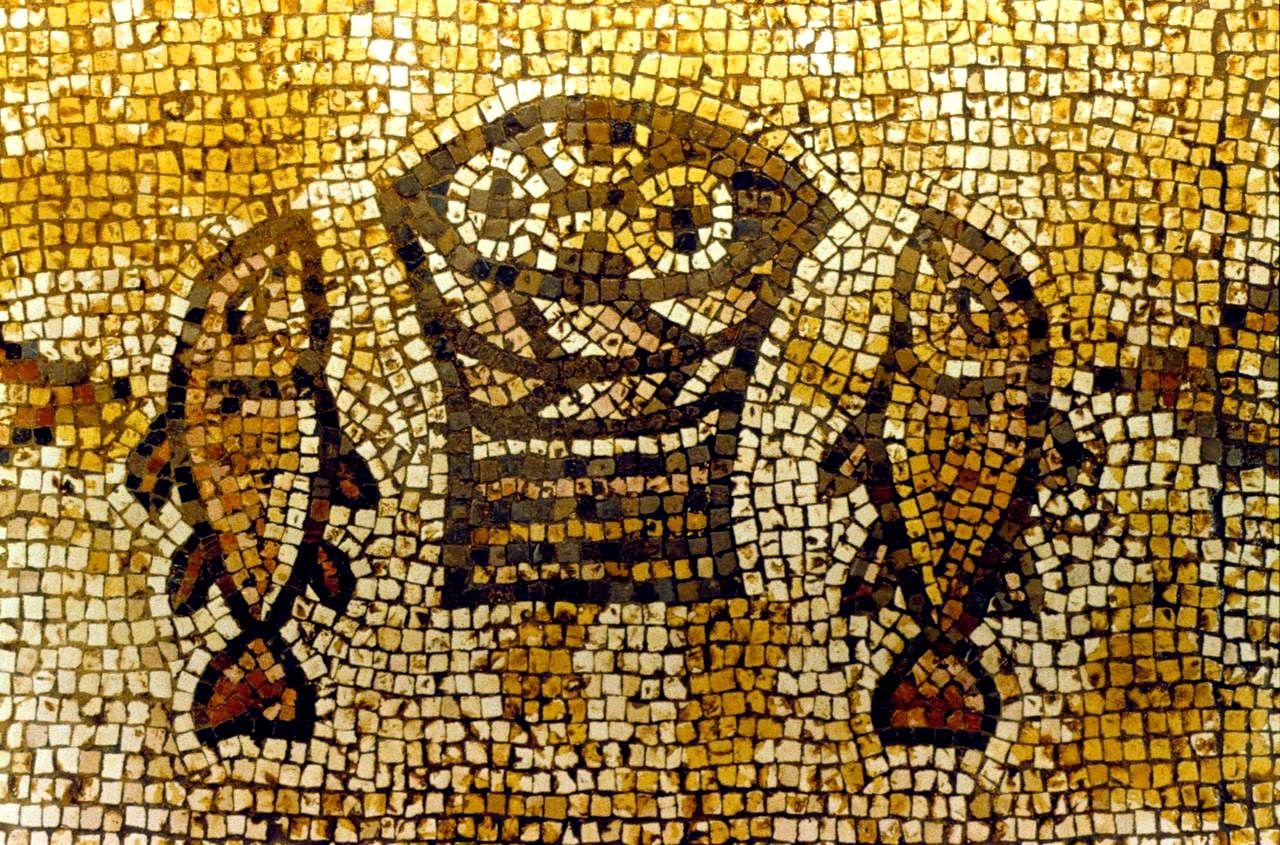
Inspired by Mark 6:30-44 & dedicated to my new friends at Manna Community Meal, in the Corktown neighborhood of Detroit:
—————————
It’s a Miracle!
But only by messianic mandate:
We future the world’s Fate when
We reduce our own plate.

Manna never trickles down
From those who hoard.
Multiply baskets for bored
And hungry sheep.

Innoculate affluenza: descale the heap.

Within a Communion of Children

mom with lydia waterWritten by Jeanie Wylie-Kellermann, she reflects on the decision of whether to baptize her daughter, Lydia. Jeanie was a writer, activist, and mother. She died after a long fight with brain cancer in 2005. This piece was published in 1986 for Detroit’s Catholic Worker paper On the Edge.
I didn’t want to baptize Lydia.

My love for her took me off guard. I’d only been able to see her and touch her for a few hours and already I wanted the world for her. I studied her while she lay in my arms to eat and she stared back. I cried often. I was overwhelmed. Continue reading “Within a Communion of Children”

Pride Sermon by Laurel Dykstra

The Eighth Sunday after Pentecost – Pride Daylaurel
August 3rd, 2014
Christ Church Cathedral, Vancouver

Laurel Dykstra is a community-based scholar with a long history in intentional communities and the radical discipleship movement. Her justice work focuses on issues of urban poverty; the activism of children, youth and families; challenging white privilege; and Queer and gender-Queer participation and resistance in churches. She is the author of Set Them Free: The Other Side of Exodus (Orbis, 2002), Uncle Aiden (Baby Bloc, 2005), editor of Bury the Dead (Cascade, 2013) and co-editor, with Ched Myers of Liberating Biblical Study (Cascade, 2011).
———————-
I have a lot of favorite bible passages, but today’s about Jacob, his 4 wives and 11 children beside the river Jabbok is one of them–it is complicated, human, and a surprisingly good fit for pride Sunday. Continue reading “Pride Sermon by Laurel Dykstra”

Puddleglum on Faith

From C.S. Lewis’ The Silver Chair:Puddleglum

 “Suppose we have only dreamed, or made up, all those things- trees and grass and sun and moon and stars and Aslan himself. Suppose we have. Then all I can say is that, in that case, the made-up things seem a good deal more important than the real ones…I’m on Aslan’s side even if there isn’t any Aslan to lead it. I’m going to live as like a Narnian as I can even if there isn’t any Narnia.”

A Revaluation Of Everything

From now on, therefore, we regard no one from a human point of view; even though we once knew Christ from a human point of view, we know him no longer in that way. So if anyone is in Christ, there is a new creation: everything old has passed away; see, everything has become new!
II Corinthians 5:16-17

Below, we excerpt the work of Ched Myers & Elaine Enns, critically reflecting on II Corinthians 5:16-17 in Ambassadors of Reconciliation, Volume I: New Testament Reflections on Restorative Justice & Peacemaking (2009). Continue reading “A Revaluation Of Everything”