A Creed…

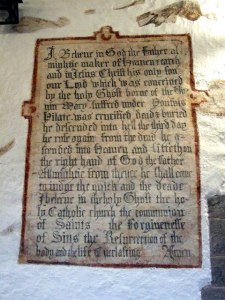
Wall_painting_at_Partrishow_(3)_-_geograph.org.uk_-_1213970By Sarah Moon. Reposted.

Recently, while at work, I was thinking about the Apostles’ Creed, and how I cannot say the words in it anymore and actually mean them. So, when I got home from work, I sat down and rewrote it. I decided to share my rewritten creed on Facebook. I’d already rewritten and shared a few Bible verses in a similar manner, and my friend Rod asked when I was going to turn these into blog posts. Well, there’s no time like the present. Continue reading “A Creed…”

Worthy of More Study and Attention

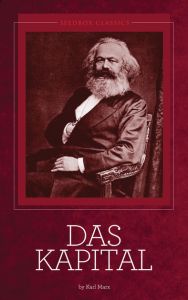
KapitalBy Dennis Moore

The first time I was ever stopped and searched by the police was on the way home from an anti-fascist protest.  The most seditious thing I had in my bag was a copy of Das Kapital by Karl Marx. I’d bought it on the way to the protest, but the fact that the police who were going through my stuff commented on it negatively just made me want to start reading it even more enthusiastically later that night!

Over the next few months, I trawled through the pages. It was obscenely difficult to understand.  I made pages upon pages of notes and repeatedly Googled terms I didn’t understand, but eventually I came stumbling over the finish line to the end of the book. Soon after, I went through it twice more–once with a local Marxist reading group and once with the aid of David Harvey’s free online lectures. Since then I’ve gone on to read many more works by both Marx and Engels, a few by Lenin and a number of more modern Marxist articles and pamphlets and even contributed a few of my own to a Marxist journal. Continue reading “Worthy of More Study and Attention”

Wild Lectionary: Universal Restoration

IMG_1921.JPG
Vikki Marie and a St’at’imc Bear Dancer praying for healing and protecting wild salmon.

Easter 3(B)
Acts 3:1-21

By The Rev. Dr. Victoria Marie

The liturgical season of Easter is the only time that our readings are all from the New Testament. During this season the first readings are from the Acts of the Apostles. Today’s reading from Acts is another occasion where our Roman Catholic Lectionary differs from the Revised Common Lectionary and omits scripture verses. This textual omission significantly changes the meaning and therefore our understanding of the scriptural message.

Continue reading “Wild Lectionary: Universal Restoration”

His Faith Demanded It

ConeFrom James Cone’s The Cross and The Lynching Tree (2013):

Just as Jesus knew he could be executed when he went to Jerusalem, Martin Luther King, Jr., knew that threats against his life could be realized in Memphis.  Like Jesus’ disciples who rejected the idea that his mission entailed his suffering and death (Mk 8:31-32), nearly everyone in King’s organization vigorously opposed his journey to Memphis, not only because of the dangers but because of the need to focus on the coming Poor People’s Campaign in Washington.  But King, like Jesus, felt he had no choice: he had to go to Memphis and aid the garbage workers in their struggle for dignity, better wages, and a safer work place.  He had to go because his faith demanded it.

Crossing the Desert

reedBy Dee Dee Risher

The aboriginal people of the Kalahari desert break and bury ostrich shells in the sand. The extreme temperatures cause condensation inside the eggshells. As the nomads move over the desert, they survive by drawing drops of moisture from these shells with reeds.

You must prepare well,
Rise in the knowing dark,
Go down to the river,
And listen to the reeds.
A single one will call you.
Listen. Continue reading “Crossing the Desert”

Wild Lectionary: Wonder and the True Easter Lily

skunk_cabbage.jpgEaster, Year B
Acts 10:34-43
Isaiah 25:6-9
Psalm 118:1-2, 14-24
John 20:1-18
Mark 16:1-8

By Jessica Miller

Across the northeast of North America at this season, a wonder is happening. The flowers of Symplocarpus foetidus have begun emerging and blooming from swamps and wet places. These true Easter-lilies—members of the same family of the Calla ‘lily’—are more commonly known as skunk-cabbage. Varieties of the plant also grow in Japan, where the red robe-like blossoms resembling a monk’s hood have gained it the name Zazen-sou, or Zen meditation plant.

Continue reading “Wild Lectionary: Wonder and the True Easter Lily”

Ratzlaff Review: Justice & Only Justice

VernAnother short and sweet book review-summary from legendary pastor Vern Ratzlaffposting up on the Canadian prairies, pouring his heart and mind into anti-imperial theology and soul-tending. 

Justice and Only Justice. Naim Ateek, Orbis, 1989.

Ateek is (Anglican) canon of St George’s Cathedral in Jerusalem and pastors its Arabaic speaking congregation. The claim for security for the one people, the Israeli Jews, has been purchased at the expense of the just claims to the land of another people, the Palestinians. In Ateek’s words, the Israeli Jews seek peace with security, and the Palestinians seek peace with justice. Continue reading “Ratzlaff Review: Justice & Only Justice”

Resurrection’s Approach AND Commentary on the March For Our Lives

A Prayer and Commentary from Ken Sehested

Resurrection's approach.jpeg

Whisper words of wisdom, let it be:
Commentary on the March For Our Lives rally in Washington, DC
Saturday 24 March 2018

I am not ashamed to admit it. They made me do it. Cry. More than once. “They” being the uncommonly common students who led the March For Our Lives rally—three-quarters of a million strong—in Washington, DC. The day may well be accounted as among the most significant in our nation’s history. Continue reading “Resurrection’s Approach AND Commentary on the March For Our Lives”

Seraphim Serpents, Bronze Gifts, and Saving Sights

CrossBy Jim Perkinson, a sermon on John 3: 14-21 and Numbers 21:4-9 (March 11, 2018, St. Peter’s Episcopal, Detroit, MI)

The sermon begins today with this year’s early advent of the parade for St. Patrick. The sea of green we already witnessing this morning provides interesting backdrop for the lectionary readings. In mainstream Christian invocation, Patrick is remembered for clearing the snakes from Ireland and often depicted as such, with crozier in hand and coiled serpents at his feet. Patrick mastered the slithering ones. But for our purposes here, it is important likewise to lift up Afro-diaspora creativity with the Gaelic saint and his serpents. In colonized Haiti, the displaced slaves amalgamated their traditional Yoruban-Dahomean-Congolese spiritual practices with the Roman Catholic orthodoxy into which they were forced. For them, the depiction of the snake-mastering Patrick “spoke” of Damballah, the Creator-Serpent-Spirit (or Loa, in their terminology) whose surreptitious presence they saw “mounting” Patrick in possession and using his snake proclivity to express something quite different. Far from banning the Serpent Power, for the creolized community of the French colony, Patrick became the host body for this African indigenous spirit-guide. The Snake mastered Patrick. And something like that intuition will help us open the Hebrew text to its indigenous root this morning. Continue reading “Seraphim Serpents, Bronze Gifts, and Saving Sights”

40 Birds of Lent: Final Count

Laurel1By Laurel Dykstra

While the word Lent comes from Middle English, quadragesima, the Latin word for the season means fortieth referring to the fortieth day before Easter. And while this resonates with a host of biblical wilderness forties—the 40 days of the flood, the Hebrew’s 40 year sojourn in the desert, Moses’ 40 days on Sinai, Elijah’s 40 day journey to Mt. Horeb, Jesus’ 40 days in the wilderness—the actual number of days doesn’t quite add up, so different traditions have different metrics, (don’t count Sundays, Lent ends on Maundy Thursday) in order to get to 40. I love the biblical associations but the 40 Birds of Lent involved some cheating to make the numbers come out right.
Continue reading “40 Birds of Lent: Final Count”