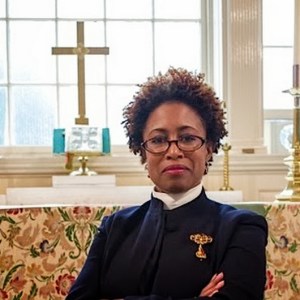
Blessed are you…

gettyimages-1045689232
New Hampshire Public Radio

By Rev. Anna Blaedel
(re-shared from Facebook circulation)

blessed are you who are raging.
blessed are you who are mourning.
blessed are you who feel numb.
blessed are you who feel sick. and tired. and sick and tired.
blessed are you who refuse to turn away.
blessed are you who need to turn away.
blessed are you who keep breathing deep.
blessed are you who are tending to your own needs.
blessed are you who are tending to the needs of another.
blessed are you who have been calling.
blessed are you who have been organizing.
blessed are you who have been testifying.
blessed are you who have been hearing.
blessed are you who have been resisting.
blessed are you who feel broken open beyond repair.
blessed are you who are raw beyond words.
blessed are you who are working hotlines and crisis care centers and bearing witness to the forces of violence and trauma unleashed and unloosed.
blessed are you who are marching.
blessed are you who are weeping.
blessed are you who preach and know that divinity resides in despised, abused, violated flesh.
blessed are you who know deep in your bones that you are good. and beautiful. and beloved. and sacred. and worthy. and believed. and held. and capable of healing beyond your
wildest imagination.
blessed are you who remind others they are good. and beautiful. and beloved. and sacred. and worthy. and believed. and held. and capable of healing beyond their wildest imagination.
blessed are we when we dare to dream of a world without sexual violence, without white supremacy, without misogyny, without police brutality, without anti-trans and
anti-queer violence.
blessed are we when we stay tender.
blessed are we when we stay fierce.
blessed are we when we dare to imagine repair, and transformation.
blessed are we when we labor together to make it so.
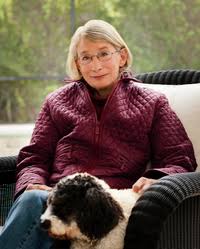
A Reflection on Mary Oliver

mary oliverThis piece was developed during the third Bartimaeus Institute Online (BIO) Study Cohort 2017-2018.  These pieces will eventually be published in a Women’s Breviary collection.  For more information regarding the BIO Study Cohort go here.  

By Kristen Snow

Mary Oliver spends her life offering her view of the world as a gift to anyone, and everyone. She has lived a poor and simple life, not seeing the interest in wealth or possessions, but finding her sustenance in the fruits of the ocean and the earth. Her spirituality and belief in the Creator is deep and wide. She is not framed in the specificities of theology or religion, choosing to see the reality of God in the natural world and through the words of Rumi, a similarly gifted seer. Her poems have reached millions. Continue reading “A Reflection on Mary Oliver”

Howard Zinn on the Real History of Indigenous Peoples Day

ColumbusAn excerpt from the first chapter of Howard Zinn’s classic A People’s History of the United States of America (1980):

Columbus would never have made it to Asia, which was thousands of miles farther away than he had calculated, imagining a smaller world. He would have been doomed by that great expanse of sea. But he was lucky. One-fourth of the way there he came upon an unknown, uncharted land that lay between Europe and Asia–the Americas. It was early October 1492, and thirty-three days since he and his crew had left the Canary Islands, off the Atlantic coast of Africa. Now they saw branches and sticks floating in the water. They saw flocks of birds. Continue reading “Howard Zinn on the Real History of Indigenous Peoples Day”

God, we confess…

By Katerina Friesen

3614016_orig
Photo by Tim Nafziger
God, we confess our human struggles before You:

our deflated dreams after years of trying so hard, our uphill battles
against despair. You see and know us, inside and out.
Our cravings for control when chaos surrounds, our burnt-out
quests for justice, our disillusionment with less-than-perfect community.
God, we need a breakthrough of Your Spirit.
We need some juice for the long-haul! Zest us with hope,
and renew us with Your Living Word today. Amen.

The Wedge of Patriarchal Practice

Binding

30 years in and Ched Myers’ Binding the Strong Man: A Political Reading of Mark’s Story of Jesus (1988) is more relevant than ever. This week’s commentary homes in on Mark 10:2-16.

Jesus refuses to enlist in the legal debate over the divorce statute itself. Instead he questions the way in which Pharisaic casuistry simply legitimates the already established social practice of divorce. The problem, as Elizabeth Schussler Fiorenza sees it, is that the legal issue is “totally adrocentric,” and “presupposes patriarchal marriage as a given.” Jesus argues:

Divorce is necessary because of the male’s hardness of heart, that is, because of men’s patriarchal mind-set and reality…However, Jesus insists, God did not intend patriarchy but created persons as male and female human beings. It is not woman who is given into the power of man in order to continue “his” house and family line, but it is man who shall sever connections with his own patriarchal family and “the two persons shall become one sarx“….The [Genesis] passage is best translated as “the two persons–man and woman–enter into a common human life and social relationship because they are created as equals.”

Jesus’ conclusion (10:9), then, is not meant as an absolute prohibition upon “divorce,” which would both overturn the Mosaic statute and return to a legalistic solution. Indeed, it drops the term for divorce (apoluse) in favor of a different term (to “separate,” chorizeto). Rather it protests the way in which patriarchal practice drives a wedge into the unity and equality originally articulated in the marriage covenant. Understood in the true sense, this famous phrase rightly belongs in the Christian marriage liturgy.

The principled critique of patriarchy having been stated “publicly,” the internal understanding of the community on this issue is once again given in a private explanation to the disciples in the safe narrative site of the home (10:10; 7:17f). Jesus here accepts the reality of divorce but prohibits remarriage–as does the similar catechetical tradition in I Corinthians 7:10 (though, there, “separation,” chorizo). The reciprocal formulation of the prohibition in 10:11f, however, reveals that the principle of equality has been maintained. The first clause–a man cannot divorce a woman and marry another without committing adultery against her–already went beyond Jewish law, “in which a man can commit adultery against another married man but not against his own wife” (Taylor, 1963). Bu the second clause, in which the rights of the female partner are expanded to include her right to divorce (or “leave”), directly contradicted Jewish law, which stipulated that only men could initiate and administer such proceedings (Kee, 1977).

This teaching recognizes the fact that divorce is a profound spiritual and social tragedy…The teaching also acknowledges, however, that divorce is a reality, within which the fundamental issue of justice must not be lost. Both parties must have the right to take initiative, and both must accept the responsibilities and limitations involved in the death of marriage.

God, The Bible & Rape

Wil gafneyA five-year-old classic (more relevant than ever) from Rev. Wil Gafney, Ph.D., Associate Professor of Biblical Hebrew and Jewish and Christian Scripture (reposted from The Huffington Post, 1/15/2013)
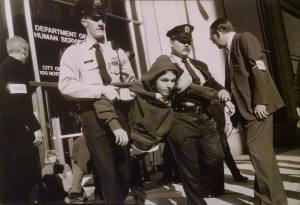
Rape is at the forefront of our civil discourse in ways it has not been in my memory or experience: A young woman raped to the point of death in India has been the focus of international media. During the run up to the presidential election Rep. Todd Akin articulated his belief in legitimate and illegitimate rape as medical certainty proved by whether or not a woman conceived as evidence that women lie about being raped to get abortions. There were so many egregious GOP statements about rape that many conservative women and some men are horrified that their party has become lampooned as the “party of rape.” But rape is not a Republican problem, an American problem, an Indian, Darfurian or Congolese problem. It is a human problem, and because many humans are religious, it is also a religious problem. Continue reading “God, The Bible & Rape”

Loving Our Enemies in the Work for Social Change: An Interview with Jonathan Matthew Smucker

SmuckerIntroduction: Jonathan Matthew Smucker (right) is a Mennonite political organizer and author who recently published Hegemony How-To: A Roadmap for Radicals. He is currently working in his home town of Lancaster Pennsylvania with Lancaster Stands Up to support Jess King, a Mennonite candidate for US House of Representatives. In our conversation we explored his relationship with his Mennonite faith and how his work relates to loving our enemies. 

Note: A shorter version of this interview curated by Tim Nafziger was published in the October 2018 print edition of The Mennonite.

Tim Nafziger: How would you introduce yourself to Mennonites who aren’t familiar with your work?

Jonathan Matthew Smucker: I grew up Mennonite in Lancaster County in a rural, working class pretty conservative area. We went to Bart Mennonite Church until I was nine and then we went to Ridgeview Mennonite Church. Continue reading “Loving Our Enemies in the Work for Social Change: An Interview with Jonathan Matthew Smucker”

Wild Lectionary: Three Stories

bamboo-forest-background.jpgProper 22(27) B
20th Sunday after Pentecost

Genesis 2:18-24
Psalm 8
Hebrews 1:1-4, 2:5-12
Mark 10:2-16

By Jessica Miller

I find this weeks’ lectionary difficult to read because more than one of these passages have been used violently… or are used violently. Let’s be honest: These passages have been used to justify the oppression and rape of nature, to reinforce patriarchal dominance, to ostracize divorced persons, and to clobber queer people with hate, asserting they are not a part of God’s original design. Continue reading “Wild Lectionary: Three Stories”

Getting Soaked: A Meditation on the Recovery of Baptismal Integrity

COM baptism group 9.24.18 (1)By Ken Sehested, the curator of prayerandpolitiks.org, an online journal at the intersection of spiritual formation and prophetic action

Last week I wrote a quick note to my friend Kyle, who gets as excited about baptism as I do, to share the news.

“We’re baptizing seven of our youth group this coming Sunday. Is it OK to brag about this?”

“Yes,” he responded. Continue reading “Getting Soaked: A Meditation on the Recovery of Baptismal Integrity”

Sermon: Cockroaches are my superhero too?

20180930_135921
Isaac wearing spiders and wrapped in a spider web

By Lydia Wylie-Kellermann
September 30, 2018 at Day House Catholic Worker

James 5:1-6

“Guess what Mommy? Cockroaches are awesome!!!” Isaac said to be right after school last week.

“Oh yeah?”

“Yeah, they can hold their breath under water for a whole hour! (or at least 4 minutes) And they have a hard shell! Also, they took lady bugs into space where it was below 0 degrees and they were still alive. So lady bugs can live in space!!!”

It was with such joy and enthusiasm as if these bugs had super powers!

Continue reading “Sermon: Cockroaches are my superhero too?”