Bread of Heaven

indexBy Katerina Friesen

Lord of the harvest, Grain-sower, Bread-giver, Life-sustainer:

We are astounded by your bounteous love, filled to the brim

with good things. You give us enough, and then some!

Bread of Life, we love You. Though You were pounded down,

You rose up again, broken so all may be fed.

Breath of Heaven, Spirit of All-Things-New,

with You, we are carried through the fire and we rise up,

we rise up again! So we praise Your name, Holy Trinity of Love.

Our Script

BindingWe continue our every-Sunday-celebration of the 30th anniversary of Binding The Strong Man, Ched Myers’ political reading of Mark’s Gospel. This portion is excerpted from the book’s “Aftermath” entitled On Continuing the Narrative of Biblical Radicalism.

The empty tomb at the end of Mark’s Gospel symbolizes that his story, like its subject Jesus, has not ended but lives on. Just as Mark reached back across the centuries to bring the “old story” of Hebrew prophetic radicalism to life again in a new story about Jesus of Nazareth, so does he reach forward across the ages to us, challenging us to continue the story by “returning to Galilee” (Mark 16:7). But how is it that an invitation to “reread” this story is politically subversive? Does not the circle of narrative actually lead the reader away from practice, shutting out the real world and seducing us with one that exists only in our imagination? This is certainly what those who dismiss the fictions of apocalyptic narrative as the wish-dreams of the alienated would have us believe. Continue reading “Our Script” →

Instead of Calling the Police

Vigil2From “What To Do Instead of Calling the Police,” a living document (last updated July 15, 2018) compiled by Aaron Rose.

We’ve all been there. Your neighbor is setting off fireworks at 3am. Or there’s a couple fighting outside your window and it’s getting physical. Or you see someone hit their child in public. What do you do? Your first instinct might be: call 911. That’s what many people are trained to do in the United States when we see something dangerous or threatening happening.

At this point, most of us understand that, in the U.S., the police often reinforce a system of racialized violence and white supremacy, in which black people are at least three times more likely to be killed by the police. For years now, we’ve heard the nearly daily news of another unarmed person of color being shot by the police. When the police get involved, black people, Latinx people, Native Americans, people of color, LGBTQ people, sex workers, women, undocumented immigrants, and people living with disabilities and mental health diagnoses are usually in more danger, even if they are the victims of the crime being reported. Police frequently violently escalate peaceful interactions, often without repercussions. In 2017, the police killed over 1,100 people in the U.S. Continue reading “Instead of Calling the Police” →

The Data on Militarized Policing

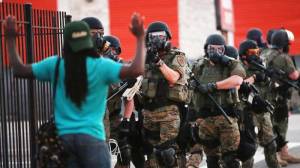
FergusonAn excerpt from The Washington Post (8/22/18), reporting on what the data is saying about police militarization.

A new study published in the Proceedings of the National Academy of Sciences has found that there’s little upside to militarized policing. The study looked at data from Maryland, where a state law required that police agencies in the state submit biannual reports on how and how often they used their SWAT teams. The law was in effect from 2010 through 2014, after which the legislature allowed it to expire. Author Jonathan Mummolo performed a statistical analysis of the Maryland data and crime rates, officer safety data, and race. Continue reading “The Data on Militarized Policing” →

Wild Lectionary: Nature as Divine Dwelling Place

20180716_124708Fourteenth Sunday after Pentecost
Proper 16 (21) B

Psalm 84:1-3

How lovely is your dwelling place, O LORD of hosts!

 My soul longs, indeed it faints for the courts of the LORD; my heart and my flesh sing for joy to the living God.

 Even the sparrow finds a home, and the swallow a nest for herself, where she may lay her young, at your altars, O LORD of hosts, my King and my God.

By Celina Medrano-Miller

As I write this, I sit on the earth, of the traditional and ancestral territory of the Tsleil-Waututh, Squamish and Musqueam Nations.

I was born on this unceded territory, under the name for the new city which was built, called Vancouver.

My parents both migrated here separately… Continue reading “Wild Lectionary: Nature as Divine Dwelling Place” →

There Are Other Clocks

BayoAn excerpt from Bayo Akomolafe’s These Wilds Beyond Our Fences (2017). Dr. Akomalafe is a self-proclaimed “walkout academic,” globally recognized for his poetic, unconventional, counterintuitive, and indigenous take on global crisis, civic action and social change.

The world does not careen toward progress, and human improvement and well-being are not matters owned by the practices of economic development and growth. There are songs that trees know that we haven’t heard; there are alliances that termites and the pheromones they secrete forge that we can learn from; there are wild things that do not know the moral discipline of purpose or the colonizing influence of instrumentality; and then there are murmurations—the waltz of wind, sky, starling, and ground—which are not meant to be spoken about but merely to be seen and appreciated. In short, there are other powers, other agencies, and other clocks. And, perhaps, we release ourselves not only to the performance of our many colors, but we free those in the posh parties that have somehow denied us entry from their secret fears of losing their own seats at the table, when we say, “there are other clocks, and we will not be on time.

time(lessness)

imagesBy Marcia Lee, Detroit, MI

The only reason for time is so that everything doesn’t happen at once.
Albert Einstein.

Time in its measurements of hours, minutes, days, and years is a human construct that we have created to make order in our lives.  (Think of how many different calendars there are in different parts of the world and terms we use like people of color time, Asian time, etc.). We want a certain level of structure and having time to measure events allows us to have something outside of ourselves, a ‘science’ if you will, to give purpose and stability to our decisions.  This is how people come to say things like, “If only I had the time,’ or ‘there are not enough hours in a day.’ This, I call ‘human time.’ Continue reading “time(lessness)” →

Ideology

BindingWe continue our every-Sunday-celebration of the 30th anniversary of Binding The Strong Man, Ched Myers’ political reading of Mark’s Gospel.
…we should instead be about understanding how myth functions as political discourse–in antiquity and today.

Another term for symbolic discourse about social realities and conflicts is ideology.

…There is consensus among both Marxist and non-Marxist scholars that ideological discourse functions in one of two basic ways. It either legitimates or subverts the dominant social order: Berger calls these the “world maintenance” and “world shaking” functions. The legitimizing function seeks to lend plausibility to social reality, “giving normative dignity to its practical imperatives.”

…Ideology can also function to subvert the dominant order pursuing one of two general discursive strategies. The reformist strategy will usually argue its case from reference points within the dominant order, trying to give new meaning to established symbols. These appeals may be for purposes of retrogressive change, as for example in the New Right’s nostalgic call to return to the “traditions of the founding fathers of the USA.” Or the strategy may be progressive, in the sense that the system has yet to realize its own ideological commitments. An example would be Martin Luther King’s appeals to the Bill of Rights in order to attack racial segregation in the USA. Continue reading “Ideology” →

Liberation

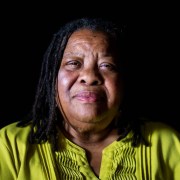
RubyFrom the prophetic front porch of Ruby Sales–a re-post from social media August 11, 2018.

What is liberation for people of color around the globe?

What should be the goals of our movements for liberation?

Should we imagine liberation as the right to exist and live in the world like the guardians of Empire power? Is liberation the right to sit at the Empire’s table and become an envoy for them and their interests? If the answers are no then how should our resistance and movements reflect no? How does no determine how we speak about liberation and how do we speak about our mission and common struggle and destination.

Finally what does liberation mean for White people? Does it mean the right to keep ownership of the table and maintain the power to put a few more seats at it for people of color who meet your requirements and with whom you feel comfortable? Does liberation mean the right to stay in the small and perverse space of Whiteness or does it mean the right to live fully in the world without a shriveled humanity that is constantly poised for battle and wallowing in inferiority and meaningless? If the answers are no then what should be the mission of your liberation struggles and how should it change your discourse, common struggle and destination?