Today’s gospel reading contains perhaps the best-known verse in the bible, certainly the New Testament passage that is known best in modern North America.
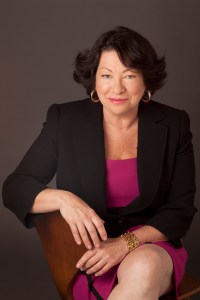
From the conclusion of Justice Sonia Sotomayor’s dissent in Utah, Petitioner v. Edward Joseph Strieff, Jr. (June 20, 2016):
This case involves a suspicionless stop, one in which the officer initiated this chain of events without justification. As the Justice Department notes, supra, at 8, many innocent people are subjected to the humiliations of these unconstitutional searches. The white defendant in this case shows that anyone’s dignity can be violated in this manner. But it is no secret that people of color are disproportionate victims of this type of scrutiny. For generations, black and brown parents have given their children “the talk”–instructing them never to run down the street; always keep your hands where they can be seen; do not even think of talking back to a stranger–all out of fear of how an officer with a gun will react to them. Continue reading “The Subject of a Carceral State”→
To get to Lumpkin, Georgia, you have to really want to be there—or be taken against your will. The highways wind southwest of Atlanta, roughly paralleling the Chattahoochee River, for 143 miles. The town is parked on red clay amid tangles of kudzu, its square a cluster of shuttered storefronts next to an abandoned gas station, where the only visible signs of life on a mid-morning in early January were at the courthouse and a store labeled Christian Gun Sales (motto: “Guns Cheaper Than Dirt”). Continue reading “Predators, Profit, and Precarity”→
After forty days of desert walking
out of the clean baptism waters
of the Jordan, still he
remembered how it was:
to float, to be pushed into the cool deep blue,
to come out caressed
by the words:
Beloved. Blessed. Continue reading “To Be Called Blessed”→
That’s right, said the cab driver,
Turning the corner to the
Round-a-bout way,
Those stupid, fuckin’ beggars,
You know the guys who
Walk up to my cab
With their hands extended
And their little cups?
You know their problem?
You know what’s wrong with them? Continue reading “All Those People”→
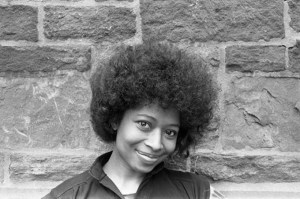
From a young Alice Walker in “From An Interview” (1973):
If there is one thing African-Americans and Native Americans have retained of their African and ancient American heritage, it is probably the belief that everything is inhabited by spirit. This belief encourages knowledge perceived intuitively. It does not surprise me, personally, that scientists now are discovering that trees, plants, flowers, have feelings…emotions, that they shrink when yelled at; that they faint when an evil person is about who might hurt them.
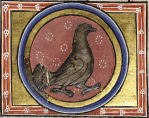
I was beyond excited to discover that the Aberdeen Bestiary (right) has been digitized and is available online. In recent years there has been, among a certain set, a revival of Herbals—illustrated volumes for the identification and medicinal use of plants, with an emphasis on women’s and Indigenous knowledge traditions. But the faunal analog, the Bestiary has seen no parallel resurgence. Composed in medieval monasteries, these often anecdotal sometimes allegorical, encyclopedias of animals were the height of scientific
Rock Dove
learning. Perhaps such “facts” as weasels giving birth through the mouth, deer eating poisonous snakes as a restorative, and the dove’s eye color indicating their maturity and discernment, dissuade modern would-be champions of the genera. Continue reading “40 Birds of Lent: A Siege of Herons”→
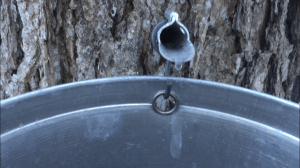
I recently moved from southern Ontario near Toronto to a north-ish rural community near Bancroft, Ontario – north-ish because we are really at the southern end of the north. My partner and I live most of the time in the manse in town, where she is the minister, and the rest of the time in the cabin on a 64-acre piece of mostly forested Land which has been deemed “marginal agriculture” by those who are supposed to know these things. I left my congregational ministry position to move here to live and labour on the Land and in this community. It has never been my dream to be a farmer, but I keep reminding myself that the Spirit moves in mysterious ways and that I may just bloom where I am planted. Continue reading “Wild Lectionary: Thoughts from a reluctant farmer”→
Illustration of Hosea and Gomer from the Bible Historiale, 1372.
This piece was developed during the second Bartimaeus Institute Online (BIO) Study Cohort 2016-2017. These pieces will eventually be published in a Women’s Breviary collection. For more information regarding the BIO Study Cohort go here.
Hos. 1:2-3 When the LORD first spoke through Hosea, the LORD said to Hosea, “Go, take to yourself a wife of whoredom and have children of whoredom, for the land commits great whoredom by forsaking the LORD.” 3 So he went and took Gomer, the daughter of Diblaim, and she conceived and bore him a son.
Hos. 3:1-3 And the LORD said to me, “Go again, love a woman who is loved by another man and is an adulteress, even as the LORD loves the children of Israel, though they turn to other gods and love cakes of raisins.” 2 So I bought her for fifteen shekels of silver and a homer and a lethech of barley. 3 And I said to her, “You must dwell as mine for many days. You shall not play the whore, or belong to another man; so will I also be to you.”

 From the conclusion of Justice Sonia Sotomayor’s dissent in Utah, Petitioner v. Edward Joseph Strieff, Jr. (June 20, 2016):
 By
By  By
By 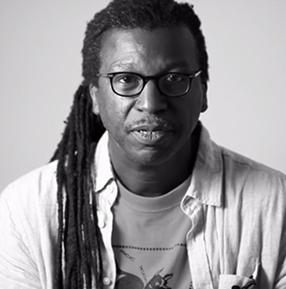 From Cornelius Eady’s “The Cab Driver Who Ripped Me Off” in
  From a young Alice Walker in “From An Interview” (1973):
 By Laurel Dykstra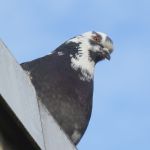
 Lent 3B