Live by the Gun, Die By the Gun: But Can We Make Peace Living With the Gun?

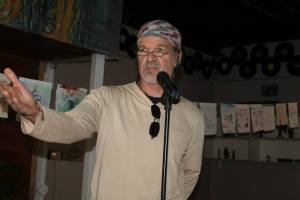
RandyBy Rev. Dr. Randy Woodley (photo right),a Keetoowah Cherokee teacher, poet, activist, former pastor, missiologist and historian

*This piece was originally posted at HuffPost.

Full disclosure: I am a committed peace activist who often hunts for his food and has valid concealed carry permits recognized in 36 states. I have never been a member of the NRA.

I won’t take the time here to explain the details above except to say they are deeply held, carefully thought through convictions. Hopefully, my disclosure causes some cognitive dissonance. Because I do not believe the issue of violence in our country is going to be resolved by advocating the talking points of either extreme, it may be helpful to create a sense of disequilibrium. I believe the problem of gun violence in America can be effectively addressed by looking deeply at all perspectives and by finding meaningful and practical compromise through a renewed sense of spirituality.
Continue reading “Live by the Gun, Die By the Gun: But Can We Make Peace Living With the Gun?”

Sermon: Wedding Feast

index.jpgBy Joshua Weresch
Sunday of Week 28 in Ordinary Time

I really don’t like today’s Gospel reading about the wedding banquet, from Matthew, chapter 22, but I am going to preach on it anyway, because it’s not about what I want but about what you need. I think we both need to hear this reading because it’s hard and difficult and—like the teacher said, tongue-in-cheek, when the student asked what they were doing in class that day—we are ‘working hard and suffering greatly, because life is pain’. I don’t like the reading because I don’t want to think that there are those who are not welcome to the feast, simply because they aren’t rightly dressed or don’t fit in whatever way. Continue reading “Sermon: Wedding Feast”

Moral Activism

PovertyThe Poor People’s Campaign is growing, organizing for action in 2018.  Sign up to join the coalition of 25,000+ here.  A summary from Rev. William Barber:

A truly moral agenda must be anti-racist, anti-poverty, pro-justice, pro-labor, transformative and deeply rooted and built within a fusion coalition.  It would ask of all policy, is the policy Constitutionally consistent, morally defensible and economically sane.  We call this moral analysis and moral articulation which leads to moral activism.

Misaligned

DiazFrom Krista Tippett’s recent interview with author Junot Diaz:

We are not a culture that has built into our way of being, our way of thinking, our civic imaginaries — contemplation, mourning, working through difficult contradictory emotions. That’s not part of our society; and therefore, where society leaves off, we need to take up.

Society miseducates us. Society gives us a lot of prompts and a lot of encouragements to be reactive, emotionally reactive. In this, we have received tremendous tutelage. So the ability to do what our societies seem incapable and unwilling to do is important. Continue reading “Misaligned”

Wild Lectionary: We Despised the Pleasant Land

6863477149_86ff790b32_b
Fort McMurray Alberta Tar Sands, Kris Krüg CC BY-NC-ND 2.0

Proper 23(28)
19th Sunday after Pentecost
Psalm 106

By Wes Howard-Brook and Sue Ferguson Johnson

When you tell the story of your, your family’s, or your community’s journey, what role does the land and its nonhuman creatures play?

Central to God’s promise to ancient Israel was a land to call their own, both as a people and as local families. In this week’s reading, Psalm 106 presents one of several biblical summaries of Israel’s relationship with YHWH, the land and its peoples. It is framed by “praise YHWH,” although the core of the psalm laments the people’s constant disobedience and forgetfulness. Throughout the psalm, the land is close at hand, beginning with deliverance from Egypt via the Red Sea, and continuing into the wilderness struggles. Continue reading “Wild Lectionary: We Despised the Pleasant Land”

The Tension of Two Postures

CvilleFrom the conclusion of The Mennonite blog post “Nonviolence Against White Supremacy After Charlottesville” by Tim Nafziger and Mark Van Steenwyk: 

We are both Christian pacifists committed to creative responses to white supremacy that step outside the myth of redemptive violence.

Pacifists are at their best when they commit to strong solidarity and are willing to lay their lives on the line for the ones they love. It can be a pure expression of compassion–suffering with the oppressed in such a way as to magnify the full humanity of the oppressed while, at the same time, showing love for the oppressor as well. Continue reading “The Tension of Two Postures”

Sermon: Fig Cakes, Tamales, and a Heap of Raisins

tamalesBy Joyce Hollyday
Circle of Mercy: October 1, 2017, World Communion Sunday
1 Samuel 25

We held a sheep-shearing day every spring at Swan Mountain Farm, where I used to live. Mark, the chief shearer, always started with the rams because, he explained, they “come with handles.” Mark grabbed Charlie by the horns and wrestled him over on his side. Charlie, like all the sheep, began that morning as a massive ball of fluff, as wide as he was tall, his wool discolored a dingy brown by dirt. By the time the clipping was done, he was a skinny thing, and the thin layer of wool left on him was shockingly white. As soon as he could get his feet under him, Charlie escaped into the pasture. Mark then repeated the process with Chip. And when he ran into the pasture, the two rams, not recognizing each other with their new haircuts, aimed their horns, charged at each other, and butted heads repeatedly. Continue reading “Sermon: Fig Cakes, Tamales, and a Heap of Raisins”

Remembers

Columbus

By Tommy Airey, a poem for Indigenous People’s Day

Five hundred years ago,
Bartolomeo de las Casas warned:
god is the One who always
remembers those whom history has
forgotten. Who the hell was he? The
only white male Christian who got
saved, gave up his slaves
and gold and then advocated
for the Original Americans,
those Columbus deemed “savages.”
What the hell did he mean by
“remembers?” The exact opposite
of “dismembers.” What the hell
does that have to do with now?
Everything. The choice is
constantly standing right in
front of us: de las Casas
or de las Columbus?
Only one was really
Making America Great
Again.