Wild Lectionary: We Despised the Pleasant Land

6863477149_86ff790b32_b
Fort McMurray Alberta Tar Sands, Kris Krüg CC BY-NC-ND 2.0

Proper 23(28)
19th Sunday after Pentecost
Psalm 106

By Wes Howard-Brook and Sue Ferguson Johnson

When you tell the story of your, your family’s, or your community’s journey, what role does the land and its nonhuman creatures play?

Central to God’s promise to ancient Israel was a land to call their own, both as a people and as local families. In this week’s reading, Psalm 106 presents one of several biblical summaries of Israel’s relationship with YHWH, the land and its peoples. It is framed by “praise YHWH,” although the core of the psalm laments the people’s constant disobedience and forgetfulness. Throughout the psalm, the land is close at hand, beginning with deliverance from Egypt via the Red Sea, and continuing into the wilderness struggles. Continue reading “Wild Lectionary: We Despised the Pleasant Land”

The Tension of Two Postures

CvilleFrom the conclusion of The Mennonite blog post “Nonviolence Against White Supremacy After Charlottesville” by Tim Nafziger and Mark Van Steenwyk: 

We are both Christian pacifists committed to creative responses to white supremacy that step outside the myth of redemptive violence.

Pacifists are at their best when they commit to strong solidarity and are willing to lay their lives on the line for the ones they love. It can be a pure expression of compassion–suffering with the oppressed in such a way as to magnify the full humanity of the oppressed while, at the same time, showing love for the oppressor as well. Continue reading “The Tension of Two Postures”

Sermon: Fig Cakes, Tamales, and a Heap of Raisins

tamalesBy Joyce Hollyday
Circle of Mercy: October 1, 2017, World Communion Sunday
1 Samuel 25

We held a sheep-shearing day every spring at Swan Mountain Farm, where I used to live. Mark, the chief shearer, always started with the rams because, he explained, they “come with handles.” Mark grabbed Charlie by the horns and wrestled him over on his side. Charlie, like all the sheep, began that morning as a massive ball of fluff, as wide as he was tall, his wool discolored a dingy brown by dirt. By the time the clipping was done, he was a skinny thing, and the thin layer of wool left on him was shockingly white. As soon as he could get his feet under him, Charlie escaped into the pasture. Mark then repeated the process with Chip. And when he ran into the pasture, the two rams, not recognizing each other with their new haircuts, aimed their horns, charged at each other, and butted heads repeatedly. Continue reading “Sermon: Fig Cakes, Tamales, and a Heap of Raisins”

Remembers

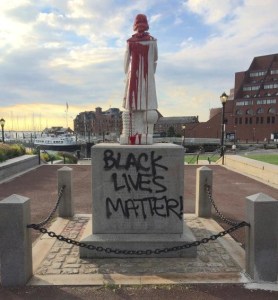
Columbus

By Tommy Airey, a poem for Indigenous People’s Day

Five hundred years ago,
Bartolomeo de las Casas warned:
god is the One who always
remembers those whom history has
forgotten. Who the hell was he? The
only white male Christian who got
saved, gave up his slaves
and gold and then advocated
for the Original Americans,
those Columbus deemed “savages.”
What the hell did he mean by
“remembers?” The exact opposite
of “dismembers.” What the hell
does that have to do with now?
Everything. The choice is
constantly standing right in
front of us: de las Casas
or de las Columbus?
Only one was really
Making America Great
Again.

Unnaturally Catastrophic

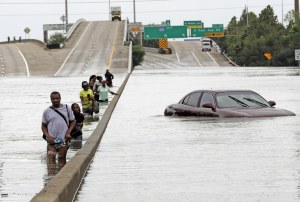
HarveyFrom from Amy Goodman’s interview with Naomi Klein on DemocracyNow (Sept 18, 2017).  This is Klein’s response to Goodman’s question:  When a disaster strikes, how is it dealt with, and what is it used as an opportunity for?

We need to respond to crises like this. They’re messages. They’re messages telling us that something is broken with the system. You know, these are not just natural disasters. These are disasters that have become unnatural, that have become unnaturally catastrophic, because of the impacts of climate change, but also because of the impacts of deregulation, because of inequality, of racial injustice. Continue reading “Unnaturally Catastrophic”

we are living in impossible times

indexwe are living in impossible times. if it were fiction it would be critiqued as hyperbolic. if it were nightmares we would never sleep.
we are living in times created by our own species. I can’t remember the last time my tears weren’t man-made.

it feels like everything is broken. we must, each of us, fix our attention on the nearest wound, conjure within us the smallest parts of ourselves that are still whole, and be healers. heal with words and prayer and energy, heal with money, clean water, time and action.

there’s enough destruction. there’s enough nothingness swallowing the living world. don’t add to it. there’s enough.our visions are ropes through the devastation. look further ahead, like our ancestors did, look further. extend, hold on, pull, evolve.

Wild Lectionary: Until there is room for no one but you

kContinued from yesterday’s reflections on the lectionary for the 18th Sunday after Pentecost
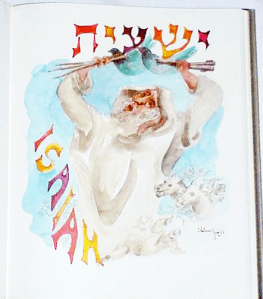
Isaiah 5:8-23

By Ched Myers

Isaiah articulates the contemptible socio-economic disparity in Israel. A series of prophetic “woes” (howy) commences in verse 5:8 that extend through 5:23, and the first one summarizes starkly and succinctly all that will follow. The image of  “joining house to house and field to field” specifically refers to the phenomenon of “latifundialization,” the economic process by which large landowners increase their holdings by foreclosing on indebted small farmers. Theologians Urich Duchrow and Franz Hinkelammert point out that the 8th century BCE saw history’s first wave of “privatization” spread throughout the Mediterranean world, including Israel: Continue reading “Wild Lectionary: Until there is room for no one but you”

Wild Lectionary: Ecological Theology of the Vineyard

kj
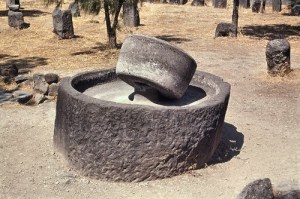
Old millstone, Palestine

Proper 22 (27)
18th Sunday after Pentecost

Isaiah 5:1-7
Matthew 21:33-46

By Ched Myers

The 18th Sunday after Pentecost this year comes on the heels of the “Season of Creation,” a contemporary liturgical and lectionary movement celebrated during the four Sundays in September prior to St Francis of Assisi Day (4 October). Today’s haftorah—Isaiah’s famous “Song of the Vineyard”—continues this vein of ecological theology. Continue reading “Wild Lectionary: Ecological Theology of the Vineyard”

Lying awake these nights

f81577b34538e8b41467c5b32d5a2dc7--black-sky-black-and-white

By Lydia Wylie-Kellermann

I lie awake feeling the weight of the world on my chest. Death haunting our country again. Fifty lives and hundreds wounded. All from guns. I can’t twist my head around any rational for guns. I don’t understand the safety argument. I think of the man in the window and the media argument that he fits “no mold” for motive or terrorism. They can’t say it. That he fits exactly the mold of the violent rampage that rules this country. White men. There is a violent disease filled with numbing, racist hatred. It is a disease that knows no empathy, no kindness, no vulnerability, no self-knowledge, no community. It is a lonely, despicable rotting disease. I lie there with tears in my eyes and rage in my belly at the patriarchy and white supremacy that rules.

And then…I think of these two baby boys that sleep soundly feet away from my bed. I love them more than anything. I love their laughter and their tears and the people they are becoming. I think of this disease that is ready to pounce and swallow them whole. What can I do? How can I mother in a way where they refuse the outstretched hand offered to them as white men? My heart gives in and weeps.

Vincent Harding, rebels and MJ Sharp

Untitled-designBy Joanna Shenk, pastor at First Mennonite Church of San Francisco.
Written for The Mennonite.

Alongside writing Martin Luther King Jr.’s historic “Beyond Vietnam” speech, Vincent Harding also wrote and delivered a speech to Mennonites in Amsterdam that same year. He made a call to Mennonites that, unrealized in that era, was fulfilled by Michael Jesse (MJ) Sharp.

At the Mennonite World Conference in Amsterdam in 1967, Harding urged the mostly Western Mennonite audience to take seriously the concerns and anger of the poor and dispossessed across the world. He articulated why these people were angry and why they were justified in that anger due to the colonization of their land, the exploitation of their people and the theft of their natural resources.

Continue reading “Vincent Harding, rebels and MJ Sharp”