By Bill Wylie-Kellermann, last sermon as Pastor of St. Peter’s Episcopal Church, Detroit
Romans 6:1-11
Matthew 10:24-39
When I was called to St Peter’s in 2006 it marked the close of an important part of my life and the beginning of another. On the last night of 2005, Jeanie Wylie crossed over to God, having lived 7 years, and gloriously, with an aggressive brain tumor. Though marked with grief, that was nonetheless an amazing time for me, for our family: in those seven years she was teaching us how to die, and so how to live.
From Soulforce.Org, an organization seeking to turn this world upside down and inside out in the name of justice and equity for folks across all marginalized racial, sexual, and gender identities:
Christian Supremacy is not new; the project of empire has snatched Christianity and put it into service for hundreds of years, especially in the United States and its business partners.
Calling out Christian Supremacy is new; recognizing that the struggles against white supremacy, capitalism, and (neo)colonization – to name a few – are intricately tied to how certain sectors and expressions of Christianity are driven by power over, not justice. Continue reading “Sabotaging Christian Supremacy”→
An excerpt from an interview with Dr. James Finley, who left home at the age of 18 for the Abbey of Gethsemane (photo right) in Trappist, Kentucky, where Thomas Merton lived as a contemplative. Finley stayed at the monastery for six years, living the traditional Trappist life of prayer, silence, and solitude:
Question: We hear about “spontaneous experiences of awakening, ” but for some of us this concept doesn’t seem real. How common are these “awakenings, ” and what does it mean to be “faithful” to them?
James Finely: There are moments in life when there’s a visceral certitude that the “awakening” experience is real, and precious. By their very nature these moments are self-authenticating: that whatever the greater meaning of life is about, that I am now glimpsing something of that essence. There is an intuition that in this instant you are glimpsing the true nature of the one unending moment in which our lives unfold. Continue reading “Awakening Moments”→
“Hope, on one hand, is an absurdity too embarrassing to speak about, for it flies in the face of all those claims we have been told are facts. Hope is the refusal to accept the reading of reality which is the majority opinion; and one does that only at great political and existential risk. On the other hand, hope is subversive, for it limits the grandiose pretension of the present, daring to announce that the present to which we have all made commitments is now called into question.”
― Walter Brueggemann, The Prophetic Imagination
When I was a young teenager, I would venture down to the basement where my father had his desk. He’d be plugging away at letter writing, or working on a talk or article. I’d wait quietly by his side for a few minutes before interrupting him to say goodbye, on my way to the movies or to meet up with friends.
Holy Fool Arts, a theatrical production company bridging the worlds of faith, art, and activism, has kicked off their Summer 2017 tour. They are heading West with upcoming events this week in Kentucky, Colorado and New Mexico and next week in Southern California. Next month, they will head to the Bay Area, Portland, Seattle and then back through the Midwest. Check HERE for tour dates and locations.
As faith-rooted artists of the Judeo Christian tradition, spiritual activists, and justice advocates, Holy Fool Arts is inspired by the ancient vision at the heart of the world’s spiritual traditions of human life in harmony with the rest of creation. While they are most known for producing the Carnival de Resistance, they have a number of programs to offer this summer, including pieces of ceremonial theater that re-contextualize stories from scripture in the light of current ecological issues around resource extraction and water. One of these pieces, Wade Through Deep Water, introduces two prophets, Miriam and John the Baptist, whose water-logged lives kept them swimming in transformation.
Weaving poetry from Catholic mystic Thomas Merton and Jewish feminist Alicia Suskin Ostriker with beautiful storytelling, high energy song and dance numbers, live music, dramatic characters, and large silk props, all are invited into the grief of the divine feminine and journey toward reunion with this aspect of God. Continue reading “Here Come the Holy Fools!”→
Desert Well by David Winnie, Creative Commons, 2008
Proper 7, Season After Pentecost
Genesis 21:8-21
The biblical portrait(s) of Hagar include surrogacy, power, African identity, patriarchal family, enslavement, physical violence, pregnancy, migration, wilderness, water and the naming of God as one who sees. These are hard subjects and it would be easy to preach on another text. But when migrant bodies, mothers and children, are dying of thirst in the Arizona desert; when African refugees drown by the thousands in the Mediterranean; when corporations like Nestle, Kinder Morgan, and Dakota Access trample Indigenous women’s teaching that Water is Life; when the story of Isaac and Ishmael is used to normalize the Israeli occupation of Palestine; when overt acts of hatred against Muslims are escalating; and when white women’s complicity in criminalizing black bodies and exonerating murderous police is all but invisible, we cannot side-step this heritage that so profoundly speaks to our present. Continue reading “Wild Lectionary: She Saw a Well of Water”→
On May 29, Salal and Cedar and Fossil Free Faith organized “bike to worship week” and a blessing of the bicycles. Below is an article written by Laurel Dykstra for the Diocese of Westminster. Following the article is the order of service and intercessions.
Vancouver’s Christ Church Cathedral has a new bell tower but the bells ringing in the 120 year old church on May 29th were attached to the handle-bars of bicycles. With sacramental chrism oil, bicycle chain oil, holy water and prayers, Anglican Bishop Melissa Skelton, two priests, and a United Church Minister blessed bicycles, transit passes, and a host of people who are making an effort to reduce the environmental impact of their commute to worship.
While light from the stained glass windows colored their faces, a congregation of about twenty-five listened to a passage from Ezekiel about the prophet’s vision of a wheel within a wheel and they prayed for the safety of cyclists, fossil fuel divestment and the victims of climate disasters and wars for oil. Led by a cross and banners and the bishop with miter, crozier and cope, cyclists and pedestrians processed out of the church to a hospitality station on the street where they offered coffee, snacks, bike maps and “ride-by blessings” to commuters on the bike route outside. Continue reading “Blessing of the Bicycles”→
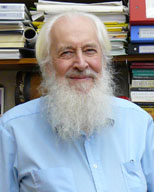
Another short and sweet book review-summary from legendary pastor Vern Ratzlaff, posting up on the Canadian prairies, pouring his heart and mind into anti-imperial theology and soul-tending. Vern turns 80 this week. As Ched Myers noted a few days ago: “in his long ministry he has opened so many new ways of being Anabaptist in a pluralistic world, ways that many of us try to walk with him.” We honor this elder for his service and way-of-Being in the world–a model of radical discipleship.
Herzog focuses on the parables from the social/cultural analysis of Freire, Brazilian educator, whose work with the poor brought new attention to what could help people accept a perspective that would move beyond the immediate poverty and loss of hope. Herzog traces carefully the shifting interpretation systems of Jesus ‘the Parabaler’ and presents an interpretational approach that compares it with Freire’s methodology. Continue reading “Jesus as Pedagogue of the Oppressed”→

 From
From  An excerpt from
  “Hope, on one hand, is an absurdity too embarrassing to speak about, for it flies in the face of all those claims we have been told are facts. Hope is the refusal to accept the reading of reality which is the majority opinion; and one does that only at great political and existential risk. On the other hand, hope is subversive, for it limits the grandiose pretension of the present, daring to announce that the present to which we have all made commitments is now called into question.”


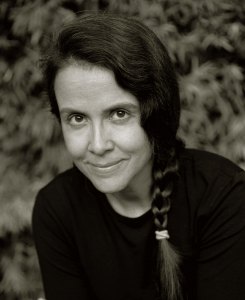 By Naomi Shihab Nye, Palestinian-American poet and author of fiction, essays and children’s books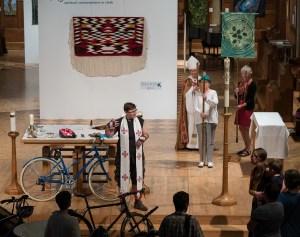
 Another short and sweet book review-summary from legendary pastor
  Radical Discipleship