A recent report from Matthew Albright on Dr. Cornel West’s recent speech at University of Delaware, originally posted at The Delaware News Journal:
America is facing a “spiritual blackout” because of its obsession with money and must recommit to “soulcraft,” Cornel West preached to a crowd at the University of Delaware in Newark on Tuesday.
“A society ruled by big money, big banks, big corporations, the commodification of culture, the commercialization of our culture,” he fired off. “How do you talk about integrity in the face of that ubiquitous cupidity?” Continue reading “A Market-Driven Soulcraft”→
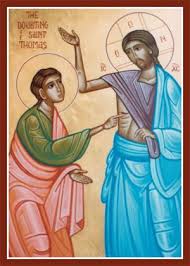
By Lydia Wylie-Kellermann, Homily given at the Day House Mass, the Detroit Catholic Worker House, April 23, 2017
John 20:19-31
The vigil continued behind us with honks, signs and a host of elders calling for love and welcome of immigrants and refugees. We had migrated into the trees and grass of the park delighting in the spring sunshine. My sister sat against a tree nursing my nephew and my kids ran in circles around the old oak. Continue reading “Sermon: Touch and Know”→
By Craig Larson, co-director (with his spouse, Carol) of a Catholic Worker farm, growing potatoes and haskap berries in Swan River, Manitoba. They give their food freely away to food banks. Originally posted on their wonderful site: The Parkland Worker Blog: An Unauthorized Diary of Care and Compassion (thanks to RD.net contributor Joshua Weresch for connecting us to this great work).
In 1957 Daniel Berrigan, SJ, was appointed professor of New Testament studies at LeMoyne College in Syracuse, NY. While there he organized students to look into the lack of adequate low-income housing. Organizing a Catholic Worker house of hospitality earned him an irate phone call from the bishop insisting that he stop this endeavour. It seemed that many of the slumlords were Catholic and held that at the very least a CW house would undercut their incomes. Even though a bishop had no power over an academic position, Berrigan’s actions ultimately resulted in his being removed from priestly and academic assignment, relocated to Baltimore, and then reassigned to numerous locations in Central and South America. He understood it as banishment…exile…punishment issued by his superiors, but used every opportunity there to immerse himself in the lives of the poor, the disenfranchised, and the people living in the barrios. You may read about the particulars of this in his autobiography, To Dwell In Peace. Continue reading “Easter: Resurrected Beyond a Social Ethic”→
In the hot street at noon I saw him
a small man
gray but vivid, standing forth
beyond the crowd’s buzzing
holding in desperate grip his shaking
teethgnashing son,
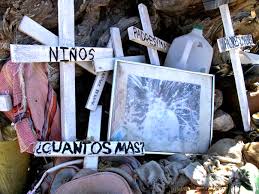
Leo Guardado, Anabaptist Mennonite Biblical Seminary—chapel talk
February 28, 2017
Ezekiel 37:1-6: The hand of the Lord came upon me, and he brought me out by the spirit of the Lord and set me down in the middle of a valley; it was full of bones. 2 He led me all around them; there were very many lying in the valley, and they were very dry. 3 He said to me, “Mortal, can these bones live?” I answered, “O Lord God, you know.” 4 Then he said to me, “Prophesy to these bones, and say to them: O dry bones, hear the word of the Lord. 5 Thus says the Lord God to these bones: I will cause breath[a] to enter you, and you shall live. 6 I will lay sinews on you, and will cause flesh to come upon you, and cover you with skin, and put breath[b] in you, and you shall live; and you shall know that I am the Lord.”
Friends,
At the U.S.-Mexico border there is a group of faithful people called Samaritans—some religious and some not—who daily journey into the Sonoran desert which has become a valley of dry bones. There you find bones of children, of women, of elderly men. About ten years ago, a group of students and I came across bones that were later identified as belonging to a teenager. Sometimes you only find a few bones, for coyotes—the animal kind—and other wild beasts have already been at the scene of death. Continue reading “CAN THESE BONES LIVE? PRACTICING SANCTUARY IN A VALLEY OF BONES”→
Second Sunday of Easter
John 20: 19-31
By Ron Berezan
When it was evening on that day, the first day of the week, and the doors of the house where the disciples had met were locked for fear of the Jews, Jesus came and stood among them and said, “Peace be with you.” After he said this, he showed them his hands and his side. Then the disciples rejoiced when they saw the Lord. Jesus said to them again, “Peace be with you. As the Father has sent me, so I send you. When he had said this, he breathed on them and said to them, “Receive the Holy Spirit. John 20:19-22
Living in fear can be hazardous to your health. Refugees, women subject to domestic violence, the imprisoned, the poor, the conquered and the otherwise oppressed and marginalized live with this daily. Not knowing who might burst through that locked door at any time and what violence they may inflict. Not knowing what tomorrow holds. Never sure who you can trust. Shallow breath, tension, always on edge. Exhaustion. Fear and locked doors. Continue reading “Wild Lectionary: Breath”→
I’m someone who strictly reads books with a pen in hand. I do, after all, have standards. Francis Weller, though, is someone who writes books that force me to rearrange my standards for what gets underlined. His recent release The Wild Edge of Sorrow: Rituals of Renewal and the Sacred Work of Grief(2015) follows that trend. One-fourth of my copy is penned up. If I applied normal standards, though, it would easily be two-thirds. Paragraphs swim through waves of sentences pounding the reader with profundity. For the most part, I’m a typically unexpressive, work-it-out-in-my-head white heterosexual male. Weller, though, sparks something deeper in me. I found myself nodding, slapping inanimate objects, muttering out loud “Yep, holy shit.” An example from early in the book:
What I have come to see is that much of the grief we carry is not personal; it doesn’t arise from our histories or experiences. Rather, it circulates around us, coming to us from a wider expanse, arriving on unseen currents that touch our souls.
Weller is drawing on thirty years of experience in the therapy room, concisely summarizing Jung and Freud, relaying many stories that arise from clients. But he also peppers us with quotes from poets like Rilke and Rumi, Mary Oliver and David Whyte. The icing on the cake is the way he draws on indigenous wisdom and soul-tenders like Pema Chodron and John O’Donohue. Continue reading “The Wild Edge of Sorrow”→
By Bill Wylie-Kellermann, Easter Vigil, April 16, 2017
– St. Peter’s Episcopal and Detroit Catholic Worker
Matthew 281-10
Dan Berrigan, now of blessed memory, who crossed over to the ancestors and saints a year ago this month, has since been repeatedly quoted as saying, “If you want to follow Jesus, you better look good on wood.” Theology in a quip. He also said, though less famously, “It all started with the Resurrection…If only we would have stayed put!”
I love the particulars, the details of Matthew’s story of how Jesus refused to stay put – and more often than not, God is in the details. Let me mention a few unique to Matthew’s Gospel. Continue reading “Sermon: “Preceding the Dawn””→


 spiritual blackout” because of its obsession with money and must recommit to “soulcraft,” Cornel West preached to a crowd at the University of Delaware in Newark on Tuesday.
 By Lydia Wylie-Kellermann, Homily given at the Day House Mass, the Detroit Catholic Worker House, April 23, 2017
 By Craig Larson, co-director (with his spouse, Carol) of a Catholic Worker farm, growing potatoes and haskap berries in Swan River, Manitoba. They give their food freely away to food banks. Originally posted on their wonderful site:
  A post from a couple of months ago from activist and Vanderbilt Divinity student Margaret Ernst:
 By Denise Levertov
 Leo Guardado, Anabaptist Mennonite Biblical Seminary—chapel talk
 A Review By Tommy Airey
 By Bill Wylie-Kellermann, Easter Vigil, April 16, 2017
 Radical Discipleship