A Revolutionary Spirit

JPerkDay 29 of our Lenten Journey through Dr. King’s “Beyond Vietnam” speech.

These are revolutionary times. All over the globe men are revolting against old systems of exploitation and oppression, and out of the wounds of a frail world, new systems of justice and equality are being born. The shirtless and barefoot people of the land are rising up as never before. The people who sat in darkness have seen a great light. We in the West must support these revolutions.

It is a sad fact that because of comfort, complacency, a morbid fear of communism, and our proneness to adjust to injustice, the Western nations that initiated so much of the revolutionary spirit of the modern world have now become the arch antirevolutionaries. This has driven many to feel that only Marxism has a revolutionary spirit. Therefore, communism is a judgment against our failure to make democracy real and follow through on the revolutions that we initiated. Our only hope today lies in our ability to recapture the revolutionary spirit and go out into a sometimes hostile world declaring eternal hostility to poverty, racism, and militarism. With this powerful commitment we shall boldly challenge the status quo and unjust mores, and thereby speed the day when “every valley shall be exalted, and every mountain and hill shall be made low, the crooked shall be made straight, and the rough places plain.”

A genuine revolution of values means in the final analysis that our loyalties must become ecumenical rather than sectional. Every nation must now develop an overriding loyalty to mankind as a whole in order to preserve the best in their individual societies.

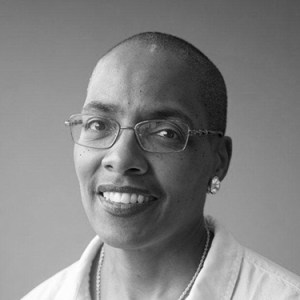
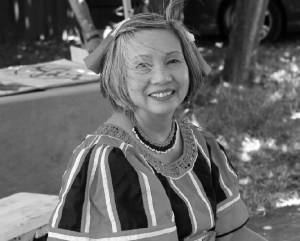
“Beyond Vietnam; Before Apocalypse” by Dr. James Parkinson (photo above), Ecumenical Theological Seminary (Detroit, MI)

Fifty years ago, Dr. Martin Luther King’s “Beyond Vietnam” speech marked a moment of decision for King and the movement he led. Speaking out to link the dropping of bombs on brown skin in Asian rice paddies with the refusal to enact policy addressing the real needs of black people in inner city America laid bare the depths of US violence. It was not enough to address civil rights alone; profound concern for the civil sphere enjoined profound concern for the military, the economy and society at large. King went to the bone with his knife, cut open putrid flesh long festering, joined the right to sit at lunch counters with whites to the question of the right to eat at all. Like Malcolm and so many others before him, once insisting the ugly triplets (militarism, materialism, and “melanism”) were in fact features of each other, King did not have long to live. And the movements he anchored or provoked—Civil Rights and Black Power alike—faced draconian repression and damnable cooptation. Fast forward. Continue reading “A Revolutionary Spirit”

This Revolution of Values

Obery

Day 28 of our Lenten Journey through Dr. King’s “Beyond Vietnam” speech.

A true revolution of values will lay hand on the world order and say of war, “This way of settling differences is not just.” This business of burning human beings with napalm, of filling our nation’s homes with orphans and widows, of injecting poisonous drugs of hate into the veins of peoples normally humane, of sending men home from dark and bloody battlefields physically handicapped and psychologically deranged, cannot be reconciled with wisdom, justice, and love. A nation that continues year after year to spend more money on military defense than on programs of social uplift is approaching spiritual death.

America, the richest and most powerful nation in the world, can well lead the way in this revolution of values. There is nothing except a tragic death wish to prevent us from reordering our priorities so that the pursuit of peace will take precedence over the pursuit of war. There is nothing to keep us from molding a recalcitrant status quo with bruised hands until we have fashioned it into a brotherhood.

This kind of positive revolution of values is our best defense against communism. War is not the answer. Communism will never be defeated by the use of atomic bombs or nuclear weapons. Let us not join those who shout war and, through their misguided passions, urge the United States to relinquish its participation in the United Nations. These are days which demand wise restraint and calm reasonableness. We must not engage in a negative anticommunism, but rather in a positive thrust for democracy, realizing that our greatest defense against communism is to take offensive action in behalf of justice. We must with positive action seek to remove those conditions of poverty, insecurity, and injustice, which are the fertile soil in which the seed of communism grows and develops.
——————-
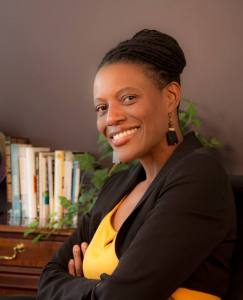
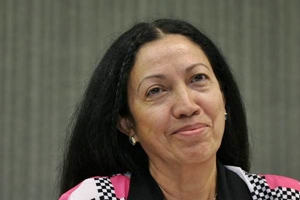
Excerpting Obey Hendricks (photo above) in “Why Martin Luther King had to Die” (April 4, 2014):

The indictments King offered of capitalism and the class inequality that bedeviled American society during his travels were considered extremely inflammatory by members of the power elite. To one audience he said, “We’re dealing in a sense with class issues, we’re dealing with the problem between the haves and the have-nots.” He told a New York Times reporter, “In a sense, you could say that we’re involved in a class struggle.” Elsewhere he declared, “we can’t solve our problem now until there is a radical redistribution of economic and political power.” King was now no longer talking about civil rights; he was talking systemic change, even structural revolution: “I think we must see the great distinction here between a reform movement and a revolutionary movement.” He made it clear that what he advocated was a revolutionary movement and revolutionary action that would “raise certain basic questions about the whole society…. [T]his means a revolution of values” that for him went beyond issues of race. To King that meant, as he said more than once, that “the whole structure of American life must be changed.” Continue reading “This Revolution of Values”

A True Revolution of Values

ChedDay 27 of our Lenten Journey through Dr. King’s “Beyond Vietnam” speech.

A true revolution of values will soon cause us to question the fairness and justice of many of our past and present policies. On the one hand we are called to play the Good Samaritan on life’s roadside, but that will be only an initial act. One day we must come to see that the whole Jericho Road must be transformed so that men and women will not be constantly beaten and robbed as they make their journey on life’s highway. True compassion is more than flinging a coin to a beggar. It comes to see than an edifice which produces beggars needs restructuring.

 A true revolution of values will soon look uneasily on the glaring contrast of poverty and wealth. With righteous indignation, it will look across the seas and see individual capitalists of the West investing huge sums of money in Asia, Africa, and South America, only to take the profits out with no concern for the social betterment of the countries, and say, “This is not just.” It will look at our alliance with the landed gentry of South America and say, “This is not just.” The Western arrogance of feeling that it has everything to teach others and nothing to learn from them is not just.
—————–
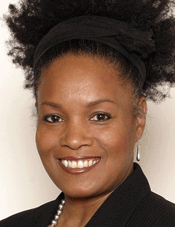
By Ched Myers (photo above), Bartimaeus Cooperative Ministries

I am grateful that this blog is, through the Lenten season, joining the widespread campaign this year among faith-rooted peace and justice circles to both commemorate and “workshop” King’s most important—and consequential—address. As many commentators in this series have pointed out in refrain, King’s analysis remains disturbingly resonant today. Continue reading “A True Revolution of Values”

The Right Side of the World Revolution

mlkDay 26 of our Lenten Journey through Dr. King’s “Beyond Vietnam” speech.

In 1957 a sensitive American official overseas said that it seemed to him that our nation was on the wrong side of a world revolution. During the past ten years we have seen emerge a pattern of suppression which has now justified the presence of U.S. military advisors in Venezuela. This need to maintain social stability for our investments accounts for the counterrevolutionary action of American forces in Guatemala. It tells why American helicopters are being used against guerrillas in Cambodia and why American napalm and Green Beret forces have already been active against rebels in Peru.

It is with such activity that the words of the late John F. Kennedy come back to haunt us. Five years ago he said, “Those who make peaceful revolution impossible will make violent revolution inevitable.”Increasingly, by choice or by accident, this is the role our nation has taken, the role of those who make peaceful revolution impossible by refusing to give up the privileges and the pleasures that come from the immense profits of overseas investments. I am convinced that if we are to get on to the right side of the world revolution, we as a nation must undergo a radical revolution of values. We must rapidly begin, we must rapidly begin the shift from a thing-oriented society to a person-oriented society. When machines and computers, profit motives and property rights, are considered more important than people, the giant triplets of racism, extreme materialism, and militarism are incapable of being conquered.
—————–
On this day, exactly 51 years ago from the Oshkosh Daily Northwestern (Oshkosh, Wisconsin), March 26, 1966.  A timely word:

Headline: King Berates Medical Care Given Negroes [sic]

CHICAGO (AP) – Massive direct-action is needed to “raise the conscience of the nation” to the segregated and inferior medical care received by Negroes, Dr. Martin Luther King Jr. said Friday night.

Calling for court suits to force doctors and hospitals to comply with the Civil Rights Act, King and officers of the Medical Committee for Human Rights accused the American Medical Association of a “conspiracy of inaction” in civil rights.
At a press conference before his speech to the committee’s annual meeting. King said: “We are concerned about the constant use of federal funds to support this most notorious expression of segregation. Of all the forms of inequality, injustice in health is the most shocking and the most inhuman because it often results in physical death.

“I see no alternative to direct action and creative nonviolence to raise the conscience of the nation.”

Dr. John L. S. Holloman, a New York City physician who heads the interracial committee, told reporters: “There is scarcely a hospital North or South that does not overtly or covertly discriminate against Negroes. County medical societies, especially in the South, have discriminated in admitting qualified Negro doctors.” he said. “We put the blame right on their (the AMA’s) doorstep.”

The AMA had no immediate comment.

A Significant and Profound Change

Leah BurgessDay 25 of our Lenten Journey through Dr. King’s “Beyond Vietnam” speech.

The war in Vietnam is but a symptom of a far deeper malady within the American spirit, and if we ignore this sobering reality, and if we ignore this sobering reality, we will find ourselves organizing “clergy and laymen concerned” committees for the next generation. They will be concerned about Guatemala and Peru. They will be concerned about Thailand and Cambodia. They will be concerned about Mozambique and South Africa. We will be marching for these and a dozen other names and attending rallies without end unless there is a significant and profound change in American life and policy. So such thoughts take us beyond Vietnam, but not beyond our calling as sons of the living God.
—————-
“Precious Lord,” by Leah Burgess, Co-Founder/Owner at Salt, Life, and Love

A prayer of resistance for 2017

Abba Father, by the looks, sounds, and feels, it appears that we are losing. Lord, we are still marching, resisting, and speaking truth to power. We are still organizing for some of the same reasons your son – our elder brother Dr. King was organizing. We are tired and worn but not in the same ways as those that have come before us. We’ve built privileged and sophisticated technology but how can we use it to build a system that shares with everyone? Lord our eyes need washing as we win more battles on earth! Continue reading “A Significant and Profound Change”

Every Creative Method of Protest Possible

RicDay 24 of our Lenten Journey through Dr. King’s “Beyond Vietnam” speech.

Part of our ongoing commitment might well express itself in an offer to grant asylum to any Vietnamese who fears for his life under a new regime which included the Liberation Front. Then we must make what reparations we can for the damage we have done. We must provide the medical aid that is badly needed, making it available in this country if necessary. Meanwhile, meanwhile, we in the churches and synagogues have a continuing task while we urge our government to disengage itself from a disgraceful commitment. We must continue to raise our voices and our lives if our nation persists in its perverse ways in Vietnam. We must be prepared to match actions with words by seeking out every creative method of protest possible.

As we counsel young men concerning military service, we must clarify for them our nation’s role in Vietnam and challenge them with the alternative of conscientious objection. I am pleased to say that this is a path now chosen by more than seventy students at my own alma mater, Morehouse College, and I recommend it to all who find the American course in Vietnam a dishonorable and unjust one. Moreover, I would encourage all ministers of draft age to give up their ministerial exemptions and seek status as conscientious objectors. These are the times for real choices and not false ones. We are at the moment when our lives must be placed on the line if our nation is to survive its own folly. Every man of humane convictions must decide on the protest that best suits his convictions, but we must all protest.

Now there is something seductively tempting about stopping there and sending us all off on what in some circles has become a popular crusade against the war in Vietnam. I say we must enter that struggle, but I wish to go on now to say something even more disturbing.
——————
From Ric Hudgens, pastor at North Suburban Mennonite Church in Lake County, Illinois:

In April 1967 at the time of Dr King’s “Beyond Vietnam” speech the number of US troops in Vietnam was peaking at half a million with over a thousand casualties per month. Simultaneously the anti-war movement was also reaching its apex. In New York City 300,000 marched against the war. 50,000 marched at the Pentagon with hundreds arrested and jailed. Yet in 1967 the majority of churches, white AND black, remained silent. Continue reading “Every Creative Method of Protest Possible”

The Long and Difficult Process

WestDay 23 of our Lenten Journey through Dr. King’s “Beyond Vietnam” speech.

I would like to suggest five concrete things that our government should do to begin the long and difficult process of extricating ourselves from this nightmarish conflict:

Number one: End all bombing in North and South Vietnam.    

Number two: Declare a unilateral cease-fire in the hope that such action will create the atmosphere for negotiation.

Three: Take immediate steps to prevent other battlegrounds in Southeast Asia by curtailing our military buildup in Thailand and our interference in Laos.

Four: Realistically accept the fact that the National Liberation Front has substantial support in South Vietnam and must thereby play a role in any meaningful negotiations and any future Vietnam government.

Five: Set a date that we will remove all foreign troops from Vietnam in accordance with the 1954 Geneva Agreement.
——————
Excerpts from a recent Democracy Now interview with Dr. Cornel West of Union Theological Seminary:

…by “neoliberal,” what I mean is, when you see a social problem, you financialize, you privatize and militarize. You have mass incarceration on the one hand, privatized schools…and then you militarize, which is to say drop bombs on seven Muslim countries and then wonder why Muslims are upset, or you drop bombs on innocent children with U.S. drones and then wonder why the gangsters, the fascists coming out of the Muslim world, are organizing. And, of course, we’ve got to be anti-fascist across the board. But this is going to be the most trying of times in our lifetime. There’s no doubt about it. And at 63 years old, I am thoroughly fortified for this fight. I’ll tell you that.

… Unfortunately, given the right-wing populist and authoritarian orientation of Trump, he uses that kind of anguish to scapegoat Mexicans, Muslims and others, rather than confront the most powerful. Twenty-one percent of those who voted for Trump do not like him, but they feel as if they had no alternative. And we have to keep in mind, 42 percent of our fellow citizens didn’t go to the polls at all, already given up on the system, you see. And so, the system itself now is in such a chronic crisis. And we said before the election that Trump would be a neo-fascist catastrophe. And it’s very clear from his picks that he’s moving in that direction.

Wild Lectionary: We Are Animals

12289514_10153766241763739_1680757321006336246_n.jpgFourth Sunday in Lent
Psalm 23:1-3

1The Lord is my shepherd, I shall not want.
2
God makes me lie down in green pastures; God leads me beside still waters;
3
God restores my soul.

By Ric Hudgens

I live in a household with a seven-year old who has no trouble connecting with her animal identity. I often awaken in the morning to hear her downstairs growling, barking, howling, or singing. She may be imitating a dog, a monkey, a bear, a lion, or a bird.  Like all young children she will eventually learn to separate her human identity from her animal identity. Mornings will grow quiet and my world will in one sense be a sadder place. Continue reading “Wild Lectionary: We Are Animals”

Ready to Turn Sharply from our Present Ways

Joyce (1)Day 22 of our Lenten Journey through Dr. King’s “Beyond Vietnam.”

This is the message of the great Buddhist leaders of Vietnam. Recently one of them wrote these words, and I quote:

Each day the war goes on the hatred increased in the hearts of the Vietnamese and in the hearts of those of humanitarian instinct. The Americans are forcing even their friends into becoming their enemies. It is curious that the Americans, who calculate so carefully on the possibilities of military victory, do not realize that in the process they are incurring deep psychological and political defeat. The image of America will never again be the image of revolution, freedom, and democracy, but the image of violence and militarism.

If we continue, there will be no doubt in my mind and in the mind of the world that we have no honorable intentions in Vietnam. If we do not stop our war against the people of Vietnam immediately, the world will be left with no other alternative than to see this as some horrible, clumsy, and deadly game we have decided to play. The world now demands a maturity of America that we may not be able to achieve. It demands that we admit we have been wrong from the beginning of our adventure in Vietnam, that we have been detrimental to the life of the Vietnamese people. The situation is one in which we must be ready to turn sharply from our present ways. In order to atone for our sins and errors in Vietnam, we should take the initiative in bringing a halt to this tragic war.
—————
“Slippery Words and Concealed Souls” by Joyce Hollyday (photo above), founding co-pastor at Circle of Mercy in Asheville, NC

…With speech smoother than butter,
but with a heart set on war;
   with words that were softer than oil,
       but in fact were drawn swords.
—Psalm 55:21

The year was 1983, and I was on a bus with a group of U.S. peacemakers, bumping over a rutted road from the tiny, isolated village of Jalapa, Nicaragua, toward Managua. Bursts of mortar fire erupted from the trees. A young mother riding with us held up her infant son. “Take him,” she pleaded in Spanish as tears streamed down her cheeks. “Take him to a place where there is no war.” Continue reading “Ready to Turn Sharply from our Present Ways”

The ACA and the AHCA: Understanding What is at Stake

MisakBy James Misak MD (photo right), Cleveland, OH

With efforts underway to “repeal and replace” the Patient Protection and Affordable Care Act of 2010 (ACA) with the proposed American Health Care Act of 2017 (AHCA), understanding what is at stake can be challenging. It is my hope that this essay will bring some clarity to this issue.

  1. The US Health Insurance System Prior To The ACA: A Brief Review

The United States is currently the only high-income country without nearly universal health-care coverage. As a result, an estimated 44.6 million Americans (representing 16.7% of the US population under age 65) were uninsured in 2013, the year before the ACA went into effect.1

Most Americans under the age of 65 receive health insurance as a benefit from their employer, but this percentage has been steadily decreasing over time, from 67% of nonelderly Americans in 1999 to 56% in 2013, or approximately 148 million people. Additionally, people in families with lower incomes were less likely to receive health insurance through an employer, and these families lost employer-sponsored insurance at a faster rate than the population as a whole.2 Continue reading “The ACA and the AHCA: Understanding What is at Stake”