A Citizen of the World

Dee DeeDay 21 of our Lenten Journey through Dr. King’s “Beyond Vietnam” speech.

At this point I should make it clear that while I have tried to give a voice to the voiceless in Vietnam and to understand the arguments of those who are called “enemy,” I am as deeply concerned about our own troops there as anything else. For it occurs to me that what we are submitting them to in Vietnam is not simply the brutalizing process that goes on in any war where armies face each other and seek to destroy. We are adding cynicism to the process of death, for they must know after a short period there that none of the things we claim to be fighting for are really involved. Before long they must know that their government has sent them into a struggle among Vietnamese, and the more sophisticated surely realize that we are on the side of the wealthy, and the secure, while we create a hell for the poor.

Surely this madness must cease. We must stop now. I speak as a child of God and brother to the suffering poor of Vietnam. I speak for those whose land is being laid waste, whose homes are being destroy, whose culture is being subverted. I speak for the poor in America who are paying the double price of smashed hopes at home, and dealt death and corruption in Vietnam. I speak as a citizen of the world, for the world as it stands aghast at the path we have taken. I speak as one who loves America, to the leaders of our own nation: The great initiative in this war is ours; the initiative to stop it must be ours.
————–
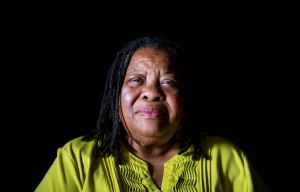
“A Bootcamp Against Cynicism” by Dee Dee Risher (photo above), the former editor of The Other Side Magazine and author of the recently released The Soulmaking Room

The dynamics Dr. King names in this his Riverside address—militarism, materialism, and racism–which we are slowly journeying through this Lent, are as old as history and as sharp as flint. That these realities have been around forever does not lessen their power, nor can it lessen our own resistance to them. Continue reading “A Citizen of the World”

Spoken of Peace and Built up its Forces

ElaineDay 20 of our Lenten Journey through Dr. King’s “Beyond Vietnam.”

Also, it must be clear that the leaders of Hanoi considered the presence of American troops in support of the Diem regime to have been the initial military breach of the Geneva Agreement concerning foreign troops. They remind us that they did not begin to send troops in large numbers and even supplies into the South until American forces had moved into the tens of thousands.

Hanoi remembers how our leaders refused to tell us the truth about the earlier North Vietnamese overtures for peace, how the president claimed that none existed when they had clearly been made. Ho Chi Minh has watched as America has spoken of peace and built up its forces, and now he has surely heard the increasing international rumors of American plans for an invasion of the north. He knows the bombing and shelling and mining we are doing are part of traditional pre-invasion strategy. Perhaps only his sense of humor and of irony can save him when he hears the most powerful nation of the world speaking of aggression as it drops thousands of bombs on a poor, weak nation more than eight hundred, or rather, eight thousand miles away from its shores.

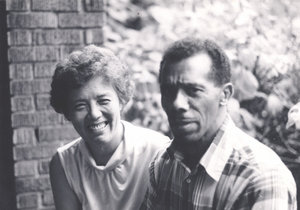
“Refusing to tell the Truth?” By Dr. Elaine Enns (photo above), Bartimaeus Cooperative Ministries

I was born only a few months after Dr. King delivered his Riverside sermon. In today’s passage, King names American duplicity, lying and subterfuge to justify military aggressions in Vietnam. Unfortunately there would be plenty of opportunity in my life time to learn that these strategies are not exceptions but rules of American foreign and military policy. This part of King’s analysis is very specific to the diplomatic deception around the Indochina War in 1967, and at first glance it does not seem to be relevant today. But in fact, even here where King is addressing political particulars, we are seeing him unmask American government’s habit of “refusing to tell the truth” about our foreign policy objectives including fundamental misrepresentation of the enemy in order to justify domestically its military escalation.

In 1990, shortly after I arrived in California from my home place of Saskatoon, SK I got to witness firsthand the lies and propaganda of the first Gulf War. But 13 years later, during the second Gulf War, was my baptism by fire into this reality. In the spring of 2003, Ched and I were visiting professors at Memphis Theological Seminary and Christian Brothers University.  We learned quickly that many folks in the “Bible belt” South didn’t like to hear U.S. policy criticized or a war effort questioned.   I was teaching a class at Christian Brothers University; half of the students were African American women. In January our class began by looking at basic Restorative Justice theory and practice, which set the context for difficult but meaningful discussions during the days leading up to the second Bush invasion of Iraq in March. It was during this time that Ched and I first started using the King sermon to speak truth to this new chapter in American duplicity – the relentless fabrication of Iraq’s alleged weapons of mass destruction. Up until that time, my experience in teaching Restorative Justice had been that once students wrestled with more complex narratives of violation, and mapped them on the “spiral of violence” model they tended to question the dominant paradigm of retributive justice (see Ambassadors Vol 11). However, in the early days of this second Gulf War, the majority of my white students remained stuck in the prevailing war propaganda. Each class became more difficult for me, and I only survived because of the Black students who privately thanked me, saying “we never have conversations like this here.” In one poignant exchange, a Black mother of two small children revealed with fear and frustration that she was being deployed to Iraq; we cried together. (The fact that there is still a disproportionate number of people of color in the “volunteer” military underlines the persistence of the “economic conscription” King called out in this sermon.)

Once the bombing of Iraq commenced, Ched and I looked for ways to break the silence that had descended on the Memphis citizenry (especially the churches). King’s Riverside sermon was a powerful gift and tool we used repeatedly; it was far more effective to let this “national hero” frame issues that had suddenly become taboo in the “fog of war.” The resonance was immediate—whether it engendered embrace (in African American congregations) or resistance (in most white congregations) into which we were invited to preach. The power and poignancy of this text inspired us to use it again to engage the so-called “war on terrorism” in our Philadelphia Word and World School later that year.

Today, almost 15 years and many more military interventions later, it is obvious that we still need to revisit this sermon. Clearly, we have not yet fully grasped the key integrative elements of Dr. King’s catechism as he applied it to the Indochina war, namely:

  • To understand militarism as the war of the rich against the poor;
  • To analyze foreign policy through the lens of race and neo-colonialism; and
  • To insist that injustice anywhere is a threat to justice everywhere.

May this 50th anniversary review help us inscribe King’s truth spoken to power on our own hearts.

To See The Enemy’s Point of View

Wesley MorrisDay 19 of our Lenten Journey through Dr. King’s “Beyond Vietnam” speech.  

Here is the true meaning and value of compassion and nonviolence, when it helps us to see the enemy’s point of view, to hear his questions, to know his assessment of ourselves. For from his view we may indeed see the basic weaknesses of our own condition, and if we are mature, we may learn and grow and profit from the wisdom of the brothers who are called the opposition.

So, too, with Hanoi. In the North, where our bombs now pummel the land, and our mines endanger the waterways, we are met by a deep but understandable mistrust. To speak for them is to explain this lack of confidence in Western worlds, and especially their distrust of American intentions now. In Hanoi are the men who led this nation to independence against the Japanese and the French, the men who sought membership in the French Commonwealth and were betrayed by the weakness of Paris and the willfulness of the colonial armies. It was they who led a second struggle against French domination at tremendous costs, and then were persuaded to give up the land they controlled between the thirteenth and seventeenth parallel as a temporary measure at Geneva. After 1954 they watched us conspire with Diem to prevent elections which could have surely brought Ho Chi Minh to power over a unified Vietnam, and they realized they had been betrayed again. When we ask why they do not leap to negotiate, these things must be considered.

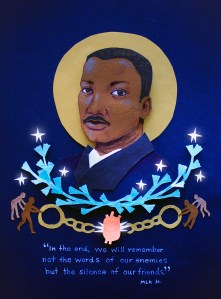
By Wesley Morris (photo above), Union Theological Seminary

Dr. King, with compassionate and nonviolent reasoning, addresses his home country in this passage from “Beyond Vietnam: A Time to Break Silence”. In his gathering, Dr. King goes beyond the self-interest of his nation and proclaims God’s love and justice to be inclusive of people the United States labeled enemies.

In the body of his renowned speech, Dr. King contends with a world divided, east and west, oppressed and oppressor, colonized and colonizer. He speaks from the position of a moral witness of people scattered time and time again, because they sought to be free. The history of resistance to domination by the people of Vietnam was endured, felt and embodied through the lived experience of gunfire, blood and sacrifice. Continue reading “To See The Enemy’s Point of View”

Frighteningly Relevant

Will ODay 18 of our Lenten Journey through Dr. King’s “Beyond Vietnam” speech.
How do they judge us when our officials know that their membership is less than twenty-five percent communist, and yet insist on giving them the blanket name? What must they be thinking when they know that we are aware of their control of major sections of Vietnam, and yet we appear ready to allow national elections in which this highly organized political parallel government will not have a part? They ask how we can speak of free elections when the Saigon press is censored and controlled by the military junta. And they are surely right to wonder what kind of new government we plan to help form without them, the only real party in real touch with the peasants. They question our political goals and they deny the reality of a peace settlement from which they will be excluded. Their questions are frighteningly relevant. Is our nation planning to build on political myth again, and then shore it up upon the power of a new violence?
————————
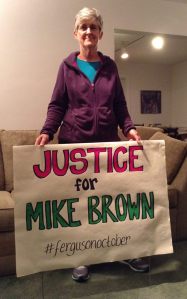
By Will O’Brien, of Project H.O.M.E. and the Alternative Seminary in Philadelphia

The Scriptural tradition, particularly in the scrolls of the prophets, communicates the deep wisdom that human history is marked by the persistent instinct toward power, particularly in governmental systems rooted in oppression and militarism. The late Walter Wink gave powerful articulation to this Scriptural wisdom: he termed it “the Domination System,” which recurs in sundry forms at different epochs throughout history. Continue reading “Frighteningly Relevant”

Surely We Must See

LydiaDay 17 of our Lenten Journey through Dr. King’s “Beyond Vietnam” speech.
Perhaps a more difficult but no less necessary task is to speak for those who have been designated as our enemies. What of the National Liberation front, that strangely anonymous group we call “VC” or “communists”? What must they think of the United States of America when they realize that we permitted the repression and cruelty of Diem, which helped to bring them into being as a resistance group in the South? What do they think of our condoning the violence which led to their own taking up of arms? How can they believe in our integrity when now we speak of “aggression from the North” as if there was nothing more essential to the war? How can they trust us when now we charge them with violence after the murderous reign of Diem and charge them with violence while we pour every new weapon of death into their land? Surely we must understand their feelings, even if we do not condone their actions. Surely we must see that the men we supported pressed them to their violence. Surely we must see that our own computerized plans of destruction simply dwarf their greatest acts.
——————-
By Lydia Wylie-Kellermann (photo above with son Isaac), co-editor of RadicalDiscipleship.Net

It was one of those first warm spring days on campus. We began pulling up the orange jump suits and covering our faces with black hoods. It was, for me, the first of many years that this physical embodiment would be part of protests. News of the US’s use of torture had been spreading. Images flooded the internet. Suddenly, the sidewalks were packed. Within minutes, it was clear that this protest struck a nerve. We were met with hostile anger and a consistent response- “You are wrong! The US does not torture. We would NEVER do that!” Continue reading “Surely We Must See”

Wild Lectionary: There is No New Water. Living Water is Life-Giving Water.

rainonland
Water after a rain on the New Life Church land

Third Sunday in Lent
John 4:5-42

By Rev. Carmen Retzlaff

In Central Texas, we think a lot about water. The Texas climate is famously described by meteorologists as, historically, “drought with periods of flooding.” And so it seems. After seven years of droughts in which water wells dried up in our area, the nearby Blanco River flooded the small town of Wimberley and towns downstream in 2015. With this view of water in mind, I read the story of Jesus’s conversation with the woman at the well as a story about water. Continue reading “Wild Lectionary: There is No New Water. Living Water is Life-Giving Water.”

Raise the Questions They Cannot Raise

WesSueDay 11 in our Lenten Journey through Dr. King’s “Beyond Vietnam” speech.

We have destroyed their two most cherished institutions: the family and the village. We have destroyed their land and their crops. We have cooperated in the crushing of the nation’s only noncommunist revolutionary political force, the unified Buddhist Church. We have supported the enemies of the peasants of Saigon. We have corrupted their women and children and killed their men.

Now there is little left to build on, save bitterness. Soon the only solid physical foundations remaining will be found at our military bases and in the concrete of the concentration camps we call “fortified hamlets.” The peasants may well wonder if we plan to build our new Vietnam on such grounds as these. Could we blame them for such thoughts? We must speak for them and raise the questions they cannot raise. These, too, are our brothers.

By Sue Ferguson Johnson and Wes Howard-Brook

When King turned his prophetic voice to the war in Vietnam, he joined a long tradition of those who saw and named the connections between what he called the “evil triplets” of racism, capitalism and militarism. A century earlier, former slave Frederick Douglas, abolitionist William Lloyd Garrison, and women’s suffragette Susan B. Anthony combined in a campaign that similarly linked such evils in their own time (see H. Meyer, All on Fire). Now, fifty years after King, we, too, are called to speak and to act in solidarity for justice in all its interconnected manifestations. Continue reading “Raise the Questions They Cannot Raise”

Wild Lectionary: Love Flows Like a River

The Third Sunday in Lent
John 4

By Sue Ferguson Johnson and Wes Howard-Brook

John 4 is like a kaleidoscope. From one angle, it is a story about Jesus’ gender-inclusive invitation to dis-cipleship. Turn it slightly and you can see Jesus seeking to heal a hostile history between Samaritans and Judeans. From yet another angle, it speaks to the question of authentic worship. Continue reading “Wild Lectionary: Love Flows Like a River”

These Voiceless Ones

JuliusDay 15 of our Lenten Journey through Dr. King’s “Beyond Vietnam” speech.

So they go, primarily women and children and the aged. They watch as we poison their water, as we kill a million acres of their crops. They must weep as the bulldozers roar through their areas preparing to destroy the precious trees. They wander into the hospitals with at least twenty casualties from American firepower for one Vietcong-inflicted injury. So far we may have killed a million of them, mostly children. They wander into the towns and see thousands of the children, homeless, without clothes, running in packs on the streets like animals. They see the children degraded by our soldiers as they beg for food. They see the children selling their sisters to our soldiers, soliciting for their mothers.

What do the peasants think as we ally ourselves with the landlords and as we refuse to put any action into our many words concerning land reform? What do they think as we test out our latest weapons on them, just as the Germans tested out new medicine and new tortures in the concentration camps of Europe? Where are the roots of the independent Vietnam we claim to be building? Is it among these voiceless ones?
———————
A Lenten liturgy from Exodus 17:3-7 and John 4:5-42 from Atlanta-based UCC pastor Julius Jessup Peterson (photo above):

Call to Worship:

Leader: We are called in this time to remember and to anticipate.

People: We can’t see through the fog around us, we are without water, and the fruit of our land is filled with disease.

Leader: We are called to remember that salvation is liberation from the fear of death, and sin is separation from you.

People: Violence has divided us, neighbor against neighbor, loved one against kin, we have lost our way. Continue reading “These Voiceless Ones”

Regular Promises of Peace and Democracy

LyniceDay 14 of our Lenten Journey through Dr. King’s “Beyond Vietnam” speech.

The only change came from America as we increased our troop commitments in support of governments which were singularly corrupt, inept, and without popular support. All the while the people read our leaflets and received the regular promises of peace and democracy and land reform. Now they languish under our bombs and consider us, not their fellow Vietnamese, the real enemy. They move sadly and apathetically as we herd them off the land of their fathers into concentration camps where minimal social needs are rarely met. They know they must move on or be destroyed by our bombs.
————–
From Lynice Pinkard (photo above), the former pastor at First Congregational Church of Oakland, in an interview with Mark Leviton in Sun Magazine (October 2014):

As a culture we are in a nosedive toward death, and to interrupt it, we must opt out of the capitalist systems that are killing us and decimating the planet. Although we might criticize systems and bemoan their negative effects, we do not often focus on the degree to which we rely upon them. We balk at any course of action that truly threatens the status quo, because a confrontation with the system is going to cost us our comforts and our reputation and possibly our lives. But we have to stop shopping at the bargain counter of the American company store, where we exchange substance for more security, more status, more wealth, and more power. It is nearly impossible to be a prophet with a wallet full of credit cards. Resistance to the system means social death and loss of identity, but it is also a struggle for life. It is not the futile hope for a better day, the self-indulgent staking out of a political position, or a reckless descent into disorder. It is self-determination with integrity. It is the assertion of life without apology. It is the willingness to defend what we love with our lives. Continue reading “Regular Promises of Peace and Democracy”