Wild Lectionary: Dove Descending

dsc_1465-lowresBy Ted Lyddon Hatten

John 1:29-42

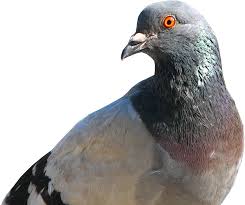
John the Baptist saw the Holy Spirit descending like a dove.

Doves/pigeons (they are the same, like canine/dog) hold a central place in our most sacred stories. From Noah’s ark to burnt offerings, these birds are easy to see if you have eyes that see.

Pigeons are easy to see in most major cities and have a reputation for being unclean. But for the poor, the outcast, and women of the ancient world, doves were the only way to be made clean. Pigeons purchased for pocket change were beheaded and burned by the Temple priests. Continue reading “Wild Lectionary: Dove Descending”

Sermon: Epiphany under Empire: Remembering Resistance

3-kingsBy Ched Myers

Caspar, Melchior, Balthasar, behütet uns auch für dieses Jahr, vor Feuer und vor Wassergefahr. (“…protect us again this year from the dangers of fire and water.”)

— prayer uttered during the traditional German feast of the Three Kings

The origins of the Feast of the Epiphany are historically complicated and ecclesially disputed.  We might think of it as a kind of peace offering from the Western to the Eastern Church, given the latter’s (surely older) January 6th date for the Feast of the Nativity.  The Twelve Days of Christmas, in turn, represent a bridge between the two traditions, straddling exactly our celebration of the New Year.  Continue reading “Sermon: Epiphany under Empire: Remembering Resistance”

This Should Be Our First Clue

jaymes-morganFrom late Fuller Seminary professor Dr. Jaymes Morgan, in a talk to college students at Southern California’s Forest Home on September 2, 1968:

We claim to represent someone who exhausted his life with publicans and sinners, healing the sick and feeding the hungry. Our churches attract the people Jesus alienated and alienate the people Jesus attracted. This should be our first clue that something is wrong. We must affirm ourselves as called of God to meet human need. To restore broken relationships with God. To restore broken relationships with people. To save men [sic] from hunger, disease and poverty and a thousand miscarriages of justice. We have attracted an awful lot of people into the church under false pretenses. No wonder they don’t look like Christians. They didn’t have the terms explained to them at the beginning.

They and Us

brother-davidReprinted from an interview Rex Weyler and Catherine Ingram did with Brother David Steindl-Rast in New Age, September 1983:

How can people learn to communicate effectively, without anger or aggression?

That is where we have to work with ourselves. Anger in itself is not really wrong, but we cannot allow our anger to carry us away and make us violent. This I find myself a most difficult task: to always think in terms of “we” and not “they and us.” The moment that you divide people with they and us, you’re always on the right side and they are always on the wrong side, and I find that makes communication very, very difficult. Continue reading “They and Us”

EPIPHANY: Light to the Powers

seasonsExcerpt and reflection from Bill Wylie-Kellermann’s Seasons of Faith and Conscience: Explorations in Liturgical Direct Action

Among the liturgical ironies of Epiphany is that the date of this ancient feast should be rooted in a heresy and then subjected to the interests of Roman imperial manipulation.

There were many gnostic approaches to Jesus, all tending to assault the integrity of his person. He wasn’t human,he only ‘appeared’ to be. He floated through life, his feet barely touching ground. Or,as some had it, the divine spirit swooped down on him at a certain point, occupying his body and slipping away just before the agony of the crucifixion. In short, he never died. Nor was he ever born. Against such the creeds,indeed the scriptures themselves, avail. Continue reading “EPIPHANY: Light to the Powers”

Wild Lectionary: Water is Life

image-11-3-16-at-1-30-pm
Photo caption: water protectors in the Cannonball River Photo credit: resistmedia

Baptism of the Lord
January 8, 2017

Laurel Dykstra, priest in charge of Salal + Cedar, a watershed discipleship community in Coast Salish Territory near Vancouver BC, and Steve Blackmer, priest at Church of the Woods in Canterbury, NH discuss the readings for January 8.

Steve: There’s so much here but what stands out to me is water, living, real water.
Laurel: What do you mean by “real water”?
S: Real water as opposed to tame water that is contained in the font, sometimes even covered up with a lid, the water itself is tamed and the act of baptism is tamed. But this is actual flowing water. You can imagine Jesus—not a casual surfacing but a splashing, bursting forth! In the psalm the voice of the LORD over mighty waters, powerful and present there’s a sense of divine power. It makes oak trees writhe, that is not a tame God but something wild and untamable.
L: Let’s look at the readings verse by verse. Continue reading “Wild Lectionary: Water is Life”

Mary, Our Theologian of Hospitality

isaac-villegasBy Isaac Villegas, Chapel Hill Mennonite Fellowship

Mary treasured all these words and pondered them in her heart (Luke 2:19).

Her heart. We glimpse Mary’s heart in our Bible passage today. A glimmer of her inner life, of what she thinks about, of what will flash through her thoughts over the years, the thirty-three years, as her child grows from infant in the manger to man on the cross.

It’s worth taking our time here, with this verse, with Mary and her heart, because this is a surprising moment in the ancient world—a world dominated by men, where men do all the writing and thinking. So it’s surprising for a piece of literature to tell us that women have thoughts. I know that sounds strange to say—so crazy to think back to a time when men didn’t think it worthwhile to consider the possibility that a woman could have thoughts, thoughts worth pondering, thoughts worth sharing. The ancient world, the Western tradition, is notorious for considering women as more bodily than brainy, more suited for earthly concerns than to have time for thinking, for knowledge, for contemplation and speculation—for theoria, as the ancient philosophers would call it. Continue reading “Mary, Our Theologian of Hospitality”

Sermon: Thirst

waterA Sermon by Joyce Hollyday. Given at Circle of Mercy: February 28, 2016

My friend Jeanie Wylie-Kellermann died on New Year’s Eve of 2005 of brain cancer. In the aftermath, her daughter Lydia claimed me as one of her two honorary mothers. One of the ways I’ve taken that beautiful tribute seriously was to be present to help catch her son Isaac when he was born three years ago.

Last month Isaac’s brother, Cedar, came into the world. I wasn’t present for his birth, but I had the delight of meeting him when he was ten days old and staying with him, Isaac, and their mothers for a few days. My main task was entertaining Isaac. I read a lot of books, put together countless puzzles, and played endless rounds of the game “Goodnight Moon.” Continue reading “Sermon: Thirst”