Pentecost: Divine Polyculture vs. Imperial Monoculture (Genesis 11 and Acts 2)

pentecost1By Ched Myers

Note: This is part of an ongoing series of Ched’s brief comments on the Revised Common Lectionary during year B, 2015.

How is it that we heard, each of us, in our own native tongue?
Acts 2:8

Since the dawn of colonization, the Americas have been defined by the struggle between dominant culture ideologies of conformity imposed by those in power, and grassroots cultural diversity among those on the margins. This tension between fantasies of racial supremacy and realities of racial diversity remains one of the supreme challenges facing the U.S., and thus our churches, today. The future of North American society depends upon our ability to live peaceably and justly with human diversity — and the same can be said of the human experiment as a whole. The question is whether we can, in church and in society, forge models of coexistence-with-congruence rather than unity-by-uniformity.
Continue reading “Pentecost: Divine Polyculture vs. Imperial Monoculture (Genesis 11 and Acts 2)” →
Carnival de Resistance

CDRBy Todd Wynward

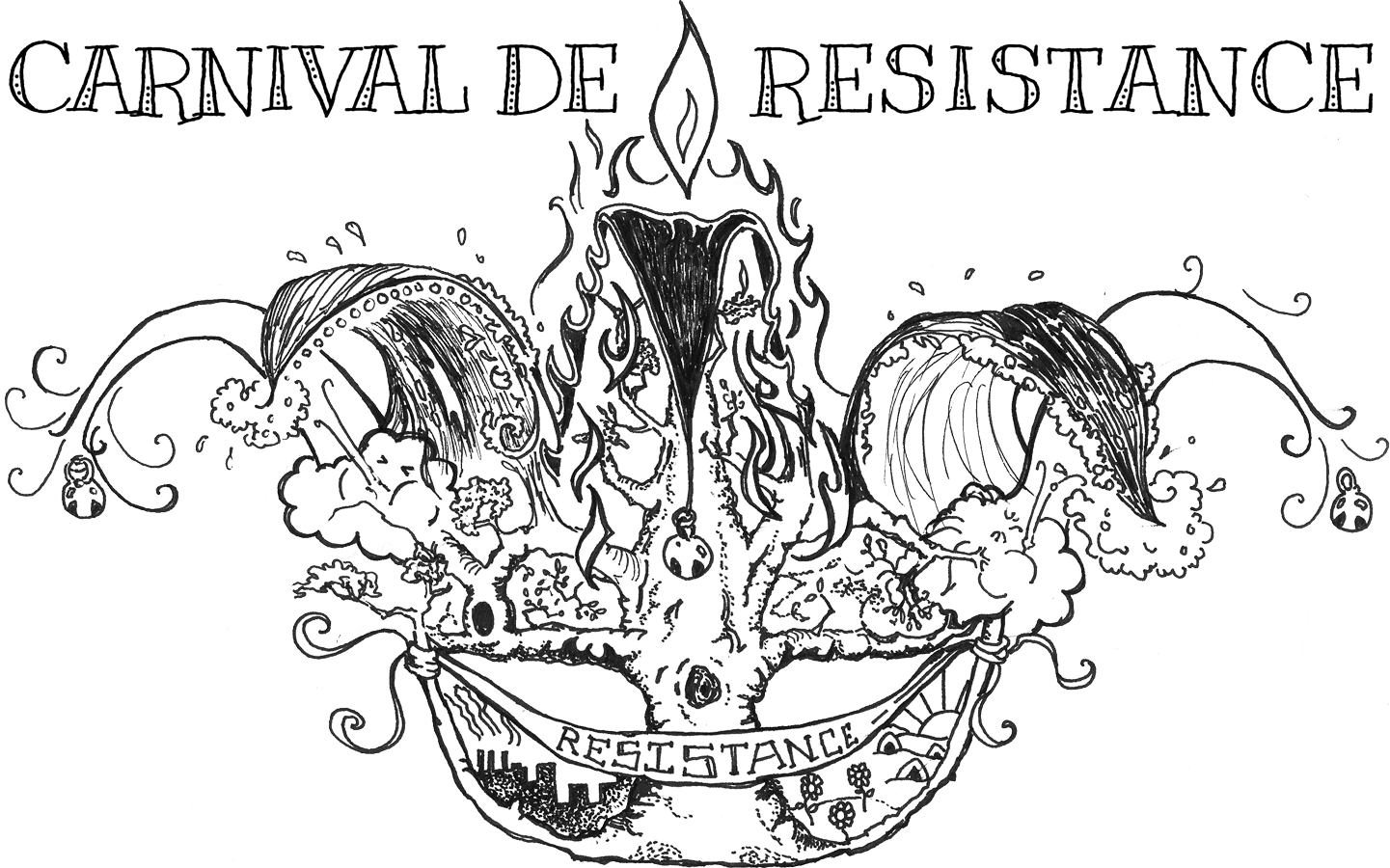
It was night, the circus tent was steamy, and I was in the middle of a twenty-eight-foot long whale puppet, swimming our way through the wide-eyed crowd. A bit earlier in tonight’s show, when a group of women were dancing ecstatically and waving blue veils to the beats of wild drums, I was invisible off-stage taking my turn on one of the stationary bikes that generated the electricity needed to power the amps. But right now it was my turn to be under the spotlight. Human-sized Raven and Dove had set the week’s tone with their prophetic theatre during the Air show last evening; the Fire show was coming tomorrow; right now, we were still deep in Water.
Continue reading “Carnival de Resistance” →

When they turn off our water..

water stationWritten by Lydia Wylie-Kellermann for the Detroit Peace Community’s Stations of the Cross. This week the City of Detroit has resumed shut offs to 30,000 homes.

When they turn off our water, prohibiting us from cleaning our clothes or our bodies, they strip us of our dignity.

When they turn off our water, leaving us unable to care for medical needs and sewage backs up, they strip us of our health.
Continue reading “When they turn off our water..” →

A Letter to Vietnamese Prisoners

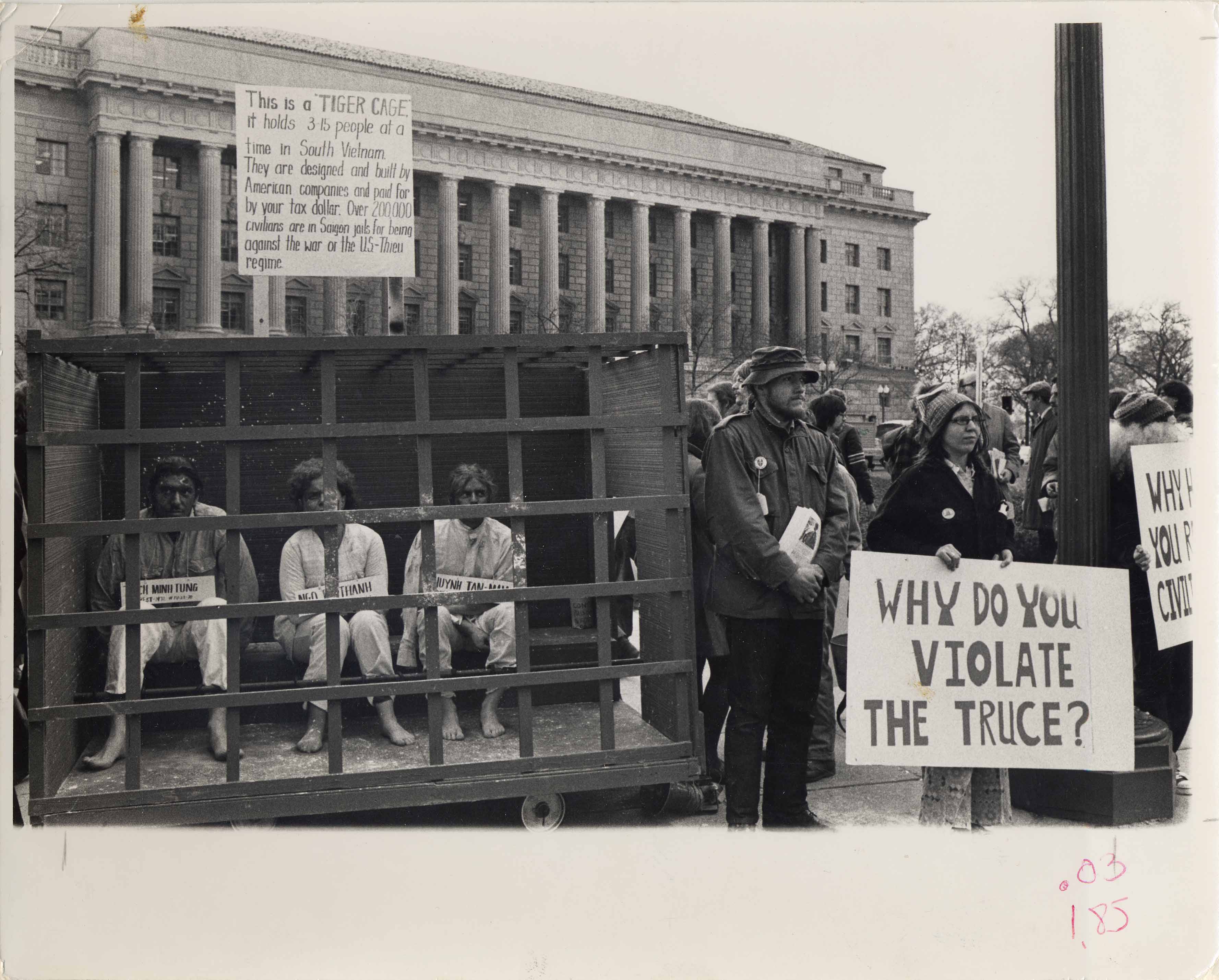
Tiger CageThis poem was written by Daniel Berrigan during his imprisonment after the Catonsville Nine action, published by Fellowship Magazine & The Merton Center. It was, later, memorized by Rev. Bill Wylie-Kellermann during his participation in a protest of “tiger cages” used for torture by the U.S. military during the Vietnam War in the summer of 1973 (right). Wylie-Kellermann recited it from memory yesterday at St. Peter’s Episcopal Church in Detroit, to honor the Catonsville Nine activists.

Part 1.

Dear friends, your faces are a constriction of grief in the throat
your words weigh us like chains, your tears and blood
fall on our faces. Prison; Vietnam, prison; U.S.
prison is our fate, mothers bears in prison,
our tongues taste its gall, bars spring up
from dragons’ teeth, a paling, impaling us. Continue reading “A Letter to Vietnamese Prisoners” →

47 Years Later: The Catonsville Nine

Catonsville 9Today is the anniversary of the Catonsville 9 action in 1968. Here’s how Howard Zinn chronicles it in his classic The People’s History of the United States (1980):

The following May, Philip Berrigan-out on bail in the Baltimore case-was joined in a second action by his brother Daniel, a Jesuit priest who had visited North Vietnam and seen the effects of U.S. bombing. They and seven other people went into a draft board office in Catonsville, Maryland, removed records, and set them afire outside in the presence of reporters and onlookers. They were convicted and sentenced to prison, and became famous as the “Catonsville Nine.” Dan Berrigan wrote a “Meditation” at the time of the Catonsville incident:

Our apologies, good friends, for the fracture of good order, the burning of paper instead of children, the angering of the orderlies in the front parlor of the charnel house. We could not, so help us God, do otherwise…. We say: killing is disorder, life and gentleness and community and unselfishness is the only order we recognize. For the sake of that order, we risk our liberty, our good name. The time is past when good men can remain silent, when obedience can segregate men from public risk, when the poor can die without defense.

Continue reading “47 Years Later: The Catonsville Nine” →

The Only Path to Resurrection

abundant table farm projectRepost from The Abundant Table Farm Project–a quote from Antoine de Saint-Exupéry in Flight to Arras (1969):

Life always bursts the boundaries of formulas. Defeat may prove to have been the only path to resurrection, despite its ugliness. I take it for granted that to create a tree I condemn a seed to rot. If the first act of resistance comes too late it is doomed to defeat. But it is, nevertheless, the awakening of resistance. Life may grow from it as from a seed.

The Open Door Has Enriched Me, Enlivened Me & Emboldened Me

Open DoorBy Melvin Jones of the Open Door Community of Atlanta

*This piece was first published in the April 2015 issue of Hospitality.
———————-
August 29, 2014, marked my 20th year of being buried in the bowels of the beast. On August 29, 1994, my DeKalb County judge sentenced me to 20 years imprisonment for a voluntary manslaughter conviction that I felt, and still feel, should have been adjudicated as justifiable homicide.

Because I was an outspoken prisoner activist and prison abolitionist, the administrative politics of the Prison Industrial Complex sought to silence my justice-based, morality- grounded outspokenness. I refused to shuffle my feet, scratch my head, prostrate in submission, or kowtow in hopelessness. As a result, the beast buried me for every single day of my 20-year sentence. Still, I rise…
Continue reading “The Open Door Has Enriched Me, Enlivened Me & Emboldened Me” →

What Keeps Us Alive

geezBy Lydia Wylie-Kellermann. Published in Geez Magazine’s Spring issue.

If each hour brings death
If time is a den of thieves
The breezes carry a scent of evil
And life is just a moving target
you will ask why we sing…

We sing because the river is humming
And when the river hums
The river hums
We sing because cruelty has no name
But we can name its destiny
We sing because the child because everything
Because the future because the people
We sing because the survivors
And our dead want us to sing

(Excerpt from Mario Benedetti’s Por Que Cantamos) Continue reading “What Keeps Us Alive” →