Housing Justice

DSC00001From Jill Shook, who is teaching an innovative course this summer on housing–through the lens of biblical Jubilee:

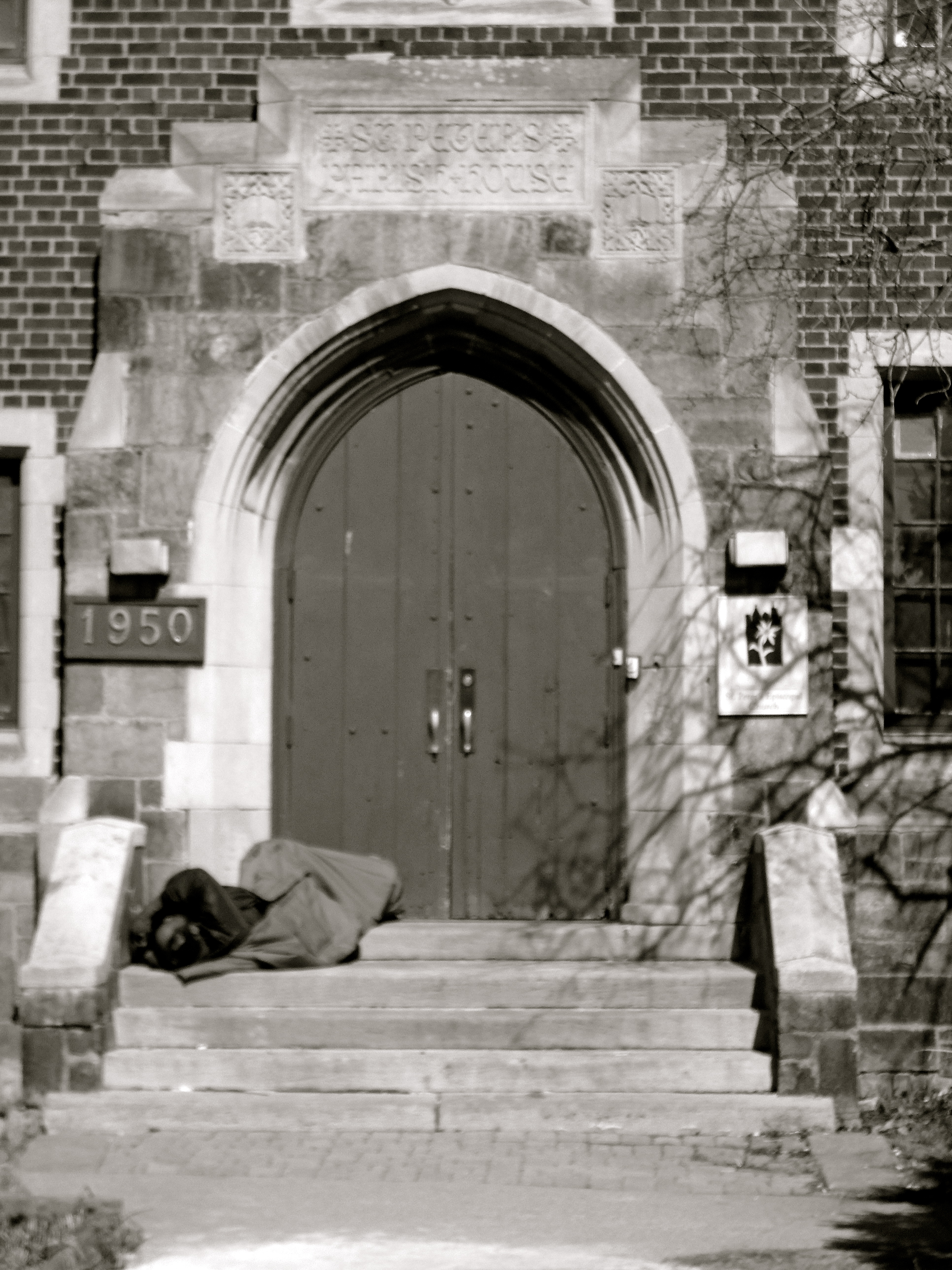
Ever since the Great Recession, low income people in record numbers have been deprived of their assets and displaced from their homes—from land meant to be used in a way so that all can have access to decent shelter. This is a form of systemic violence that violates the principles of Jubilee justice found throughout the Bible, from Leviticus to the Book of Acts. As Christians, we are called to take action to assist not only the refugees from war and violence but also those displaced in gentrified cities, where rents are soaring.
Continue reading “Housing Justice”

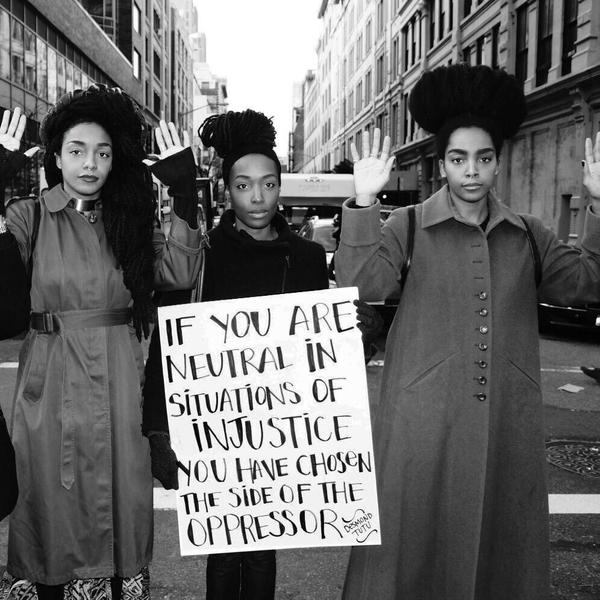
Repenting White Supremacy

decolonizeBy Lydia Wylie-Kellermann. Originally printed in On the Edge.

I am sorry. I am sorry for speaking too quickly. For saying the wrong thing. Or not saying anything. For speaking unaware out of my own white supremacy.

I am sorry for not learning the history. For the large blind spots I carry. For all the people and creatures hurt along my way.
Continue reading “Repenting White Supremacy”

Shoah

shoahFrom Ken Sehested of Prayer & Politiks:

Yom HaShoah (aka “Holocaust Remembrance Day,” more formally “Holocaust Martyrs’ and Heroes’ Remembrance Day”) is observed one week after the end of Passover, this year beginning at sundown on Wednesday 15 April, the date linked to the anniversary of the 1943 Warsaw Ghetto uprising. Increasingly, the word Shoah (“calamity”) is preferred because holocaust has historical roots in the Hebrew word olah, meaning “completely burnt offering to God,” with the implication that Jews and other “undesirables” murdered by the Nazis during World War II were a sacrifice to God…

Sehested included this powerful quote from Etty Hillesum, a Dutch Jew, Hillesum who died at age 29 in Auschwitz, the Nazi concentration camp, in 1943:

I have looked our destruction, our miserable end, straight in the eye and accepted it into my life, and my love of life has not been diminished. I am not bitter or rebellious, or in any way discouraged. . . . My life has been extended by death, by accepting destruction as part of life and no longer wasting my energies on fear of death or refusal to acknowledge its inevitability. It sounds paradoxical: by excluding death from our life we cannot live a full life, and by admitting death into our life we enlarge and enrich it.

The Women’s Witness: An Eastertide Reflection

By Ched Myers

Note: This is an ongoing series of Ched’s brief comments on the Markan gospel readings from the Revised Common Lectionary during year B, 2015.
—————–
I wish to offer another brief midrash on Mark’s spare but evocative Easter narrative, highlighting a central aspect that is routinely overlooked.

Let’s begin with the body. According to Mark, after Jesus’ execution, his body was granted by the Roman procurator Pilate to Joseph, a member of the Judean council that had condemned Jesus. As described in 15:43-46, this has all the hallmarks of a political move aimed at prohibiting those in Jesus’ community from executing their duties according to Purity and custom, thus further cutting off the new movement and preventing occasion for more protest during the volatile season of Passover. [1]
Continue reading “The Women’s Witness: An Eastertide Reflection”

Good Friday in Detroit: It’s a Sad Day

imageToday, the Detroit Peace Community walked the Stations of the Cross through the city as it does each year, led by the question: Where is Jesus being crucified in this time and place? Were a station written to represent each injustice that has Detroit in its grip at this moment, we would be walking for weeks rather than a mere three hours on Good Friday afternoon.
Continue reading “Good Friday in Detroit: It’s a Sad Day”

70 Years Later: Dietrich Bonhoeffer

bonhoefferTomorrow is the 70th anniversary of the execution of German theologian and martyr Dietrich Bonhoeffer. During his short time in America, Bonhoeffer was a trailblazer in learning from his African-American brothers and sisters, as reported by James Cone in The Cross & The Lynching Tree (2011):

In contrast to [Reinhold] Niebuhr and other professors at Union Seminary, the German theologian Dietrich Bonhoeffer, during his year of study at Union (1930-31), showed an existential interest in blacks, befriending a black student named Franklin Fisher, attending and teaching Bible study and Sunday school, and even preaching at Abyssianian Baptist Church in Harlem. Bonhoeffer also read widely in African American history and literature, including Walter White’s Rope and Faggot on the history of lynching, read about the burning of Raymond Gunn in Maryville, Missouri (Jan 12, 1931) , in the Literary Digest, “the first lynching in 1931,” and expressed his outrage over the “infamous Scottsboro trial.” He also wrote about the “Negro Church,” the “black Christ” and “white Christ” in the writings of the black poet Countee Cullen, read Alain Locke and Langston Hughes, and regarded the spirituals” as the “most influential contribution made by the negro to American Christianity.” Some of Bonhoeffer’s white friends wondered whether he was becoming too involved in the Negro community.

The Feast of Bonhoeffer

RNS-DIETRICH-BONHOEFFERBy Bill Wylie-Kellermann
—————–
We have for once learnt to see the great events of world history from below, from the perspective of the outcast, the suspects, the maltreated, the power-less, the oppressed, the reviled – in short, from the perspective of those who suffer.
Dietrich Bonhoeffer, Christmas letter to friends and co-conspirators (1942)

Seventy years ago today, just weeks before the fall of Berlin in 1945, Dietrich Bonhoeffer was marched naked into the yard of Flossenberg Concentration Camp and hanged with piano wire for being an enemy of the Nazi state. He was 39.
Continue reading “The Feast of Bonhoeffer”