The Lessons of Groundhog’s Day

joyceBy Joyce Hollyday. First published on her blog http://seekingcommunity.ca in 2012.

Tuning in to life’s rhythms

A Sunday school teacher was asking her young class about Easter. A 5-year-old boy piped up, “That’s when Jesus comes out of his tomb, and if he sees his shadow, we have six more weeks of winter.”

This story may not be funny or make any sense to you, because I don’t know if you have this bizarre holiday in Canada; but yesterday in the U.S. of A., we observed Groundhog’s Day. And by “observed,” I mean we totally ignored it except to ask at the end of the day, “Anybody know what Punxsutawney Phil saw today?”
Continue reading “The Lessons of Groundhog’s Day”
The E-Dictionary

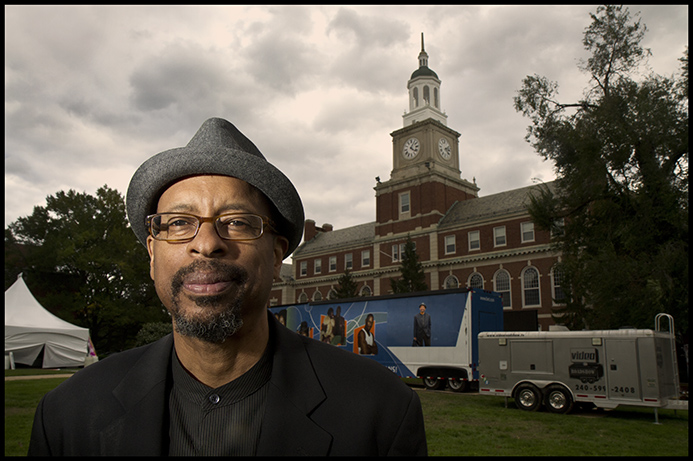
ethelbert millerFrom literary activist E. Ethelbert Miller, the board chairperson of the Institute for Policy Studies (IPS), a board member of The Writer’s Center and editor of Poet Lore magazine (a recommendation of Rose Berger):

It’s my belief that in order to usher in a better society a new language and vocabulary will need to be created. I’ve slowly started developing my own personal new dictionary. This creation I feel will help add clarify to my understanding of the things taking place around me. Many of the words and terms I’ve coined or have “borrowed” from others can be linked to our technology changing how we live. In my essays and public conversations I try to use these words as often as possible. So far I have 14 entries in my dictionary. Here they are.
Continue reading “The E-Dictionary”

The Movement For God’s Beloved Community

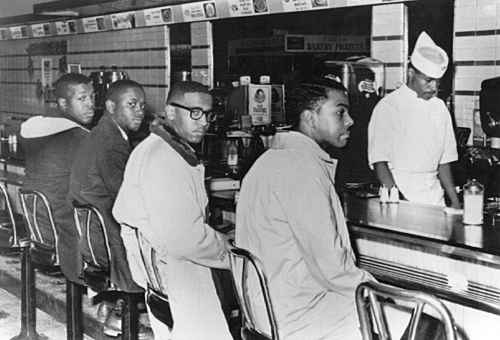
greensboro1Today, we honor those nonviolent freedom fighters who sparked the sit-in movement at lunch counters exactly 55 years ago. It is also the 50th anniversary of the first mass arrests in Selma–Dr. King and more than a thousand demonstrators, including more than 500 children were jailed on February 1, 1965 (many these same children prayed for Sheriff Clark’s speedy recovery from exhaustion outside a hospital days later). Lastly, we celebrate the 60th birthday of Ched Myers, a man who has committed his life to the legacy of Jesus & Martin Luther King. This is an excerpt from an article he published 10 years ago in Transmission (U.K) titled “Was Jesus a Practitioner of Nonviolence? Reading through Mark 1:21-3:19 and Martin Luther King”, an appropriate piece of vision-casting for all of us who dare to resist like it’s 1960 Greensboro & 1965 Selma:

At the end of their lives, Jesus and King were each hemmed in by all the factions of their respective political terrains. They had to navigate death threats from without, dissent from within their own movements, and had as colleagues only a relatively tiny group of feckless companions. But that is how it always is struggling for the Kingdom of God in a world held hostage by tyrants, terrorists, militarists, and kingpins, unaided by ambivalent religious leaders and insular academics and utterly distracted young folks. Despite all this, however, both Jesus and King chose nonviolent love without compromising their insistence upon justice. They believed that the movement for God’s Beloved Community was worth giving their lives to—and they invite us to do the same.

Breakin’ Down Messianism With Dr. Jim Perkinson

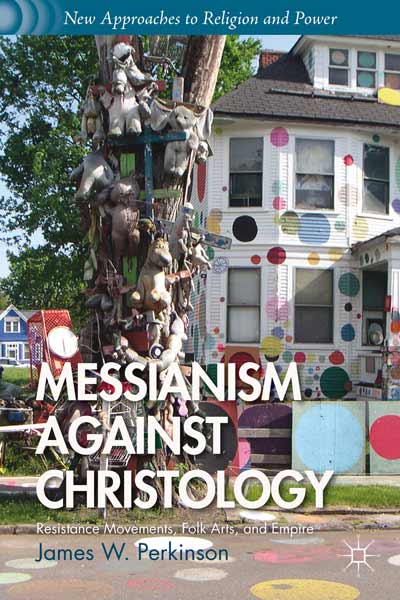
messianismJim Perkinson is a long-time activist and educator from inner city Detroit, where he has a history of involvement in various community development initiatives and low-income housing projects. He holds a PhD in theology from the University of Chicago and is in demand as a speaker on a wide variety of topics (especially race, class & colonialism). He is also a recognized artist on the spoken-word poetry scene in the inner city. Many of his works are published. In this interview, we home in on his 2014 work Messianism Against Christology: Resistance Movements, Folk Arts and Empire.
————–
RD: What’s the difference between “messianism” and “christology?”

J-PerkMessianism Against Christology: Resistance Movements, Folk Arts and Empire is a work committed to re-thinking the Christian tradition from the point of view of social movements rather than magnified individuals.   Jesus was a movement man—as were Moses and Elijah before him, and John the Baptist alongside him. “Messianism” is a word drafted into service as a movement term. Rather than focus on a great individual called “Jesus” comprehended as “the Christ,” the book examines his effort as part of a broader resistance initiative. The social movement launched by John was already in motion when Jesus first opts to begin public action. Continue reading “Breakin’ Down Messianism With Dr. Jim Perkinson”

Challenging the Status Quo: Jesus Contests Scribal Authority

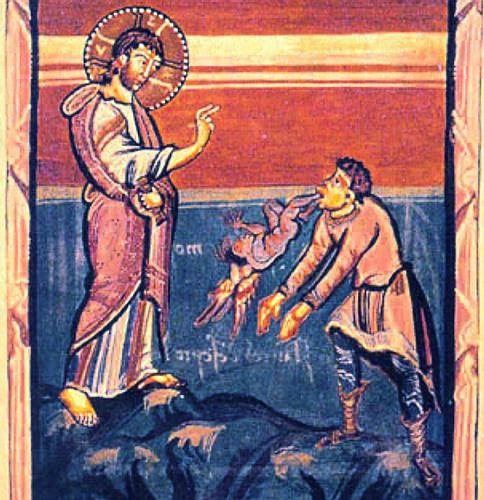
Healing_of_the_demon-possessedBy Ched Myers, Fourth Sunday in Epiphany (Mk 1:21-28)

This is an ongoing occasional series of Ched’s brief comments on the Markan gospel readings from the Revised Common Lectionary during year B.

The first major narrative section of Mark’s gospel begins (1:16) and ends (4:36) by the shores of the Sea of Galilee. In it Mark paints a portrait of Jesus’ public ministry in and around the Galilean city of Capernaum. This series of episodes exhibits the three essential characteristics of Jesus’ mission: the healing and exorcism of marginalized people, the proclamation of God’s sovereignty and the call to discipleship. These practices result in escalating confrontations with the local authorities, culminating with open conflict in 3:1ff.
Continue reading “Challenging the Status Quo: Jesus Contests Scribal Authority”

The Unforced Rhythms of Grace

rest-and-recoveryBy Amy Epp, Associate Pastor for Christian Formation and Worship, Seattle Mennonite Church (you can read more of her writings here)

I have this knot in my shoulder.  It’s actually kind of dormant right now.  But when my shoulders start getting really tight, I know I’ve been working too much – or at least too much at my desk.  It’s the knot that tells me I’ve been carrying around the tension that is worry and stress and anxiety that comes from work.  I’m sure I’m not the only one who carries my work around in my body – ulcers have a kind of bad reputation for be the result of work-related stress.  Some people experience lower back strain.  Our bodies notice when we are working too much.
Continue reading “The Unforced Rhythms of Grace”

Birth: The conspiracy of Soul and Body

birthBy Lydia Wylie-Kellermann (printed in Conspire, Fall 2014)

It was unseasonably warm as I carefully stepped onto the next wrung balancing the extra weight and size. My body called me into those trees as I deliberately and gently trimmed the small, sucker branches. First the apple tree, then the peach, then the plum. Being past my due date, I knew I probably shouldn’t be on a ladder, but I kept climbing higher and higher. Continue reading “Birth: The conspiracy of Soul and Body”

Sacred Jazz As Spiritual Midwifery by Joshua Grace

warren cooper…moving forward on the journey of being organized agents for transformation…from the inside out.
Warren Cooper (photo right)

During a wonderfully painful & hopeful confluence of the #BlackLivesMatter and #ICantBreathe spotlights on systemic racism and the release of the film Selma, Philadelphia joined many other US cities in the effort to reclaim the MLK holiday as a day of disrupting the status quo. Our church, Circle of Hope, has been making some concerted efforts this month to be shaped deeper by the legacy of Dr. King as well as open our sails wide to the winds of the Spirit.
Continue reading “Sacred Jazz As Spiritual Midwifery by Joshua Grace”

A Two-Sided Transformational Process

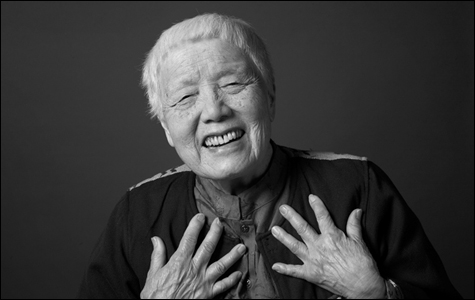
graceFrom Grace Lee Boggs in The Next American Revolution (2012):

Radical social change had to be viewed as a two-sided transformational process, of ourselves and of our institutions, a process requiring protracted struggle and not just a D-Day replacement of one set of rulers with another. The Montgomery Bus Boycott of 1955-56 was the first struggle by an oppressed people in Western society from this new philosophical/political perspective…not only desegregating the buses but creating the beloved community.