Wild Lectionary: Transfiguration

27847750_10154970804366567_1328436879_n
Fresh buds on Tiger Mountain

Transfiguration B
Mark 9:2-9

By Sue Ferguson Johnson and Wes Howard-Brook

“Six days later, Jesus took with him Peter and James and John, and led them up a high mountain apart, by themselves.” (Mk 9.2)

It has been a long, wet, grey, dark winter so far here in the Issaquah Creek watershed. While we have been spared the intense cold and massive snowfalls visited upon our sisters and brothers to the east, the relentless “parade of storms” from the Pacific Ocean (as local weatherfolk like to call it) can wear away at even the most committed pluviophile. Continue reading “Wild Lectionary: Transfiguration”

Wild Lectionary: We Despised the Pleasant Land

6863477149_86ff790b32_b
Fort McMurray Alberta Tar Sands, Kris Krüg CC BY-NC-ND 2.0

Proper 23(28)
19th Sunday after Pentecost
Psalm 106

By Wes Howard-Brook and Sue Ferguson Johnson

When you tell the story of your, your family’s, or your community’s journey, what role does the land and its nonhuman creatures play?

Central to God’s promise to ancient Israel was a land to call their own, both as a people and as local families. In this week’s reading, Psalm 106 presents one of several biblical summaries of Israel’s relationship with YHWH, the land and its peoples. It is framed by “praise YHWH,” although the core of the psalm laments the people’s constant disobedience and forgetfulness. Throughout the psalm, the land is close at hand, beginning with deliverance from Egypt via the Red Sea, and continuing into the wilderness struggles. Continue reading “Wild Lectionary: We Despised the Pleasant Land”

Wild Lectionary: Joseph—God’s Agent or Agent of Empire?

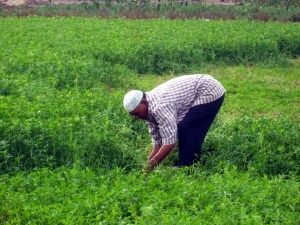
Field Egypt Farmer PeopleEleventh Sunday after Pentecost
Proper 15(20)

“God has made me lord of all Egypt…” Joseph, son of Jacob (Gen 45.9)

“For the creation waits with eager longing for the revealing of the children of God.” Paul of Tarsus (Rom 8.19)

By Wes Howard-Brook and Sue Ferguson Johnson

A decade or so ago, we spent two years of our monthly Saturday teaching/retreat series with the book of Genesis. Folks eagerly engaged Genesis’ anti-city perspective and its all-too-human characters. But when we got to the Joseph story, several rebelled angrily against our starting characterization of Joseph, son of Jacob, as a self-absorbed, manipulative power seeker, who “succeeded” by teaching Pharaoh how to manage famine for personal profit. What is it about Joseph that leads so many to want to see him as a heroic expression of faith? Continue reading “Wild Lectionary: Joseph—God’s Agent or Agent of Empire?”

Wild Lectionary: Beware the Cataclysm!

19024614_10154383615946567_367044656_o
Photo by Helen H. Richardson, The Denver Post

By Wes Howard-Brook and Sue Ferguson Johnson, Abide in Me

For readers of Wild Lectionary, there is hardly a Scripture passage more fitting than Genesis’ account of the Flood. The powerful, terrifying narrative is often reduced to a kids’ story, replete as it is with “cute” animals in the Ark. But, of course, beneath the surface is a story of divine near-omnicide, revealing a deep rift between the Creator’s vision and humanity’s response to God’s gift of the earth. In combination with the conclusion of the Sermon on the Mount (Matt 7.21-28), this week’s texts offer a sobering reminder of the cost of human violence to the earth and its creatures, including sapiens. Continue reading “Wild Lectionary: Beware the Cataclysm!”

Wild Lectionary: Jesus seeds, sprout!

4472671089_c4d4169f44_b.jpgEaster Sunday
By Wes Howard-Brook and Sue Ferguson Johnson

Night and day, woman and man, soil and sky, humanity and God: all these primal pairs are present in this week’s proclamation of the Uprising of Jesus. Each pair echoes an element of the first chapters of Genesis, the foundational narrative of the “religion of creation” upon which John’s gospel is grounded. These connections help us to hear that the hope of Easter is not in an invisible part of one’s self (“the soul”) leaving earth for somewhere else, but in the power of the Creator God to continue to bring forth life from the earth, despite the murderous ways of empire. Continue reading “Wild Lectionary: Jesus seeds, sprout!”

Wild Lectionary: Love Flows Like a River

The Third Sunday in Lent
John 4

By Sue Ferguson Johnson and Wes Howard-Brook

John 4 is like a kaleidoscope. From one angle, it is a story about Jesus’ gender-inclusive invitation to dis-cipleship. Turn it slightly and you can see Jesus seeking to heal a hostile history between Samaritans and Judeans. From yet another angle, it speaks to the question of authentic worship. Continue reading “Wild Lectionary: Love Flows Like a River”

Wild Lectionary: The Very Edges of Your Field

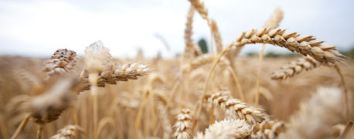
wheat.jpgSeventh Sunday After the Epiphany

“When you reap the harvest of your land, you shall not reap to the very edges of your field, or gather the gleanings of your harvest. You shall not strip your vineyard bare, or gather the fallen grapes of your vineyard; you shall leave them for the poor and the stranger: I am YHWH, your God.” (Lev 19.9-10)

By Wes Howard-Brook and Sue Ferguson Johnson

More than any other biblical text, the book of Leviticus claims to express the direct voice of YHWH. Of the 160 uses of the phrase, “I am YHWH” in the Hebrew Bible, 49 uses are in Leviticus. And yet, the book may be among the least respected or understood scriptural texts. It is to this very chapter in Leviticus that Jesus turns when asked about the greatest commandments. Just a few verses down from the quote above we find: “You shall not take vengeance or bear a grudge against any of your people, but you shall love your neighbor as yourself: I am the LORD” (Lev 19.18; cf. Mk 12.31). Indeed, not only Jesus, but also Paul and James—made into opponents of each other in the post-Reformation culture wars—cite Lev 19.9 as central to discipleship (Rom 13.9; Gal 5.14; James 2.8). Continue reading “Wild Lectionary: The Very Edges of Your Field”

Confronting Empire with the Word

swordBy Wes Howard-Brook and Sue Ferguson Johnson

As I watched in the night visions, I saw one like a human being coming with the clouds of heaven. And he came to the Ancient One and was presented before him. To him was given dominion and glory and kingship, that all peoples, nations, and languages should serve him. His dominion is an everlasting dominion that shall not pass away, and his kingship is one that shall never be destroyed.” (Daniel 7.13-14)

The final Sunday of the church year celebrates the feast of Christ the King. It is at once a redundant and a confounding claim: Greek christos translates Hebrew meshiyah, meaning “anointed,” marking a person as a king (or priest, in some Jewish traditions). That is, the very label “Christ” for Jesus suggests royal authority. Yet many today reject the image and language of “kingdom” in relation to the nonviolent Jesus, preferring the wordplay, “kindom.” While we certainly embrace the image of the discipleship community as one, big family of faith, we believe that something crucial to who Jesus is—and who we are as radical disciples—is lost when we abandon the notion of God’s “kingdom.” Continue reading “Confronting Empire with the Word”

Praying Ourselves Down From Our Privileged Perch

prayerBy Wes Howard-Brook and Sue Ferguson Johnson

Prayer is central to Luke’s Gospel. The opening scene has the assembly of the people in Jerusalem praying while Zechariah is doing his priestly duty (1.10). The adult Jesus’s first appearance in the gospel is while he is praying (3.21). Luke regularly shows us Jesus at prayer as he discerns the Way (5.16; 6.12; 9.18; 9.28-29). Continue reading “Praying Ourselves Down From Our Privileged Perch”

Have Mercy on Us!

lepersBy Wes Howard-Brook and Sue Ferguson Johnson

The final leg of the journey to Jerusalem begins with this week’s gospel (Lk 17.11-19). Alert readers, though, will note that Jesus and the disciples have not gotten very far. At the very beginning, Luke tells us that “they entered a village of the Samaritans to make ready for him” (9.52). Now, eight chapters later, Luke says, “On the way to Jerusalem Jesus was going through the midst (Gk, dia meson, misleadingly translated by NRSV as “between”) of Samaria and Galilee.” Like the Israelites in the wilderness, they seem to be going in circles in the land north of Judea. Perhaps this is a sly reference to the disciples, like their Israelite ancestors, lacking the faith that the journey they are on will lead to the place of God’s abundant provision. Indeed, as we heard last week, the disciples had just demanded of Jesus, “Increase our faith!” (17.5). Continue reading “Have Mercy on Us!”