 Another gem from the front porch of Mama Ruby Sales:
We must go out in the vineyards and bring hope to spirits withered by years of buying into into the hopelessness and despair of Whiteness.

Another gem from the front porch of Mama Ruby Sales:
We must go out in the vineyards and bring hope to spirits withered by years of buying into into the hopelessness and despair of Whiteness.
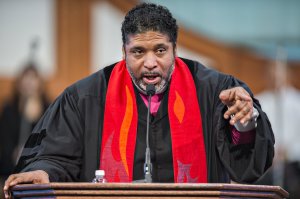 From William Barber’s recent comments in a Democracy Now interview:
Before all of the latest news, Judge Kavanaugh, first of all, was being put forward after McConnell in the Senate held open a seat for over 420 days, in a way that we had not seen since the Civil War. They literally denied a president his right to nominate someone and for them to have a hearing. This was the same Judiciary Committee that denied two African-American women a hearing to be appointed to the federal court, the 1st District—Eastern District in North Carolina. So the process was bad from the beginning. Continue reading “The Gangsterization of Our Politics”
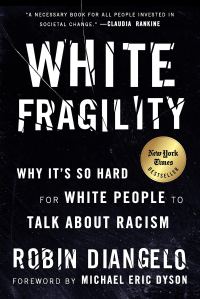 From Robin DiAngelo’s White Fragility: Why It’s So Hard For White People To Talk About Racism (2018):
Racism is the norm rather than an aberration. Feedback is key to our ability to recognize and repair our inevitable and often unaware collusion. In recognition of this, I try to follow these guidelines:
1. How, where, and when you give me feedback is irrelevant—it is the feedback I want and need. Understanding that it is hard to give, I will take it any way I can get it. From my position of social, cultural, and institutional white power and privilege, I am perfectly safe and I can handle it. If I cannot handle it, it’s on me to build my racial stamina.
2. Thank you.
The above guidelines rest on the understanding that there is no face to save and the game is up; I know that I have blind spots and unconscious investments in racism. My investments are reinforced every day in mainstream society. I did not set this system up, but it does unfairly benefit me. I do use it to my advantage, and I am responsible for interrupting it. I need to work hard to change my role in this system, but I can’t do it alone. This understanding leads me to gratitude when others help me.
 A timely word from Brittney Cooper, Rutgers professor of women’s and gender studies, from her Eloquent Rage: A Black Feminist Discovers Her Superpower (2018):
Watching Serena play is like watching eloquent rage personified. Her shots are clear and expressive. Her wins are exultant. Her victories belong to all of us, even though she’s the one who does all the work …That’s kind of how it feels to be a Black woman. Like our victories belong to everyone, even though we do all the work.
 From the introduction to the fabulous resource “How To Be A Less Shitty Gentrifier,” compiled specifically for the Bay Area, but applicable in just about every city in North America.
This document is for you if you are planning to be a new renter in the SF Bay Area and you have race and/or class privilege, or recently became one. This document is for you if you are moving by choice, and have the means to support yourself in the Bay. Maybe you are moving for a job, or for school. Maybe you’re escaping a hellish situation and you hope here will be less hellish. Maybe you grew up here, but you’re ready to live on your own. You know that there’s a housing crisis. You understand that your moving will exacerbate an already dire situation. This is not a “how to move to the bay” guide, but a “so you’re moving to the bay, nothing will stop you, here are some tips on how to be a less shitty gentrifier.”
I am a wealthy white person who moved to Berkeley by choice in 2014. This document is the sum total of what I’ve learned from people of color (queer women esp.), orgs like Causa Justa Just Cause, born and raised bay area folks, and the internet. Here you will find information on how the housing crisis came to be, and how to play your part to fight back against the rampant forces that are, and have been, killing or forcing out black, brown, and indigenous residents of Ohlone Land/ the San Francisco Bay Area since 1542.
For more click HERE.
 By Ruby Sales, Another Love Letter From The Front Porch, August 31, 2018)
Have you ever had to navigate the waters of systemic trauma of White supremacy and find ways to swim without drowning? How do we name the trauma that we endure from White supremacy without becoming the trauma that we endure? How do we speak the truth of our lives without being silenced or demonized by the tyranny of White denial? How do you stand tall as a European American without being pulled down by the seductive drug of Whiteness? Continue reading “Backpacking With Hope”
 From “What To Do Instead of Calling the Police,” a living document (last updated July 15, 2018) compiled by Aaron Rose.
We’ve all been there. Your neighbor is setting off fireworks at 3am. Or there’s a couple fighting outside your window and it’s getting physical. Or you see someone hit their child in public. What do you do? Your first instinct might be: call 911. That’s what many people are trained to do in the United States when we see something dangerous or threatening happening.
At this point, most of us understand that, in the U.S., the police often reinforce a system of racialized violence and white supremacy, in which black people are at least three times more likely to be killed by the police. For years now, we’ve heard the nearly daily news of another unarmed person of color being shot by the police. When the police get involved, black people, Latinx people, Native Americans, people of color, LGBTQ people, sex workers, women, undocumented immigrants, and people living with disabilities and mental health diagnoses are usually in more danger, even if they are the victims of the crime being reported. Police frequently violently escalate peaceful interactions, often without repercussions. In 2017, the police killed over 1,100 people in the U.S. Continue reading “Instead of Calling the Police”
 An excerpt from The Washington Post (8/22/18), reporting on what the data is saying about police militarization.
A new study published in the Proceedings of the National Academy of Sciences has found that there’s little upside to militarized policing. The study looked at data from Maryland, where a state law required that police agencies in the state submit biannual reports on how and how often they used their SWAT teams. The law was in effect from 2010 through 2014, after which the legislature allowed it to expire. Author Jonathan Mummolo performed a statistical analysis of the Maryland data and crime rates, officer safety data, and race. Continue reading “The Data on Militarized Policing”
 From the prophetic front porch of Ruby Sales–a re-post from social media August 11, 2018.
What is liberation for people of color around the globe?
What should be the goals of our movements for liberation?
Should we imagine liberation as the right to exist and live in the world like the guardians of Empire power? Is liberation the right to sit at the Empire’s table and become an envoy for them and their interests? If the answers are no then how should our resistance and movements reflect no? How does no determine how we speak about liberation and how do we speak about our mission and common struggle and destination.
Finally what does liberation mean for White people? Does it mean the right to keep ownership of the table and maintain the power to put a few more seats at it for people of color who meet your requirements and with whom you feel comfortable? Does liberation mean the right to stay in the small and perverse space of Whiteness or does it mean the right to live fully in the world without a shriveled humanity that is constantly poised for battle and wallowing in inferiority and meaningless? If the answers are no then what should be the mission of your liberation struggles and how should it change your discourse, common struggle and destination?
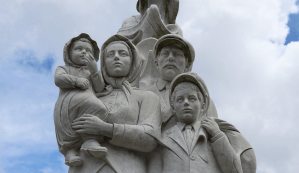 By Jose Luis Casal, excerpted from The Book of Common Worship: 2018 Edition. © 2018 Westminster John Knox Press.
I believe in Almighty God,
who guided the people in exile and in exodus,
the God of Joseph in Egypt and Daniel in Babylon,
the God of foreigners and immigrants.
I believe in Jesus Christ, a displaced Galilean,
who was born away from his people and his home, who fled
his country with his parents when his life was in danger.
When he returned to his own country he suffered under the oppression of Pontius Pilate,
the servant of a foreign power. Jesus was persecuted, beaten, tortured, and unjustly
condemned to death.
But on the third day Jesus rose from the dead,
not as a scorned foreigner but to offer us citizenship in God’s kingdom. Continue reading “The Immigrants’ Creed”
 Radical Discipleship