Practice, Not “The Right Name”

Binding30 years in and Ched Myers’ Binding the Strong Man: A Political Reading of Mark’s Story of Jesus(1988) is more relevant than ever. This week’s commentary homes in on Mark 9:38-50.

The arrogance in John’s objection lies in its attempt to erect boundaries around the exercise of compassionate ministry “in Jesus’ name.” He equates exorcism with the accrual of status and power, and wishes to maintain a monopoly over it. This is especially ludicrous in light of the disciples’ lack of exorcism power, which we have just witnessed (9:14-29). But more importantly, it cuts directly against the grain of “receiving” in 9:37, an exhortation to inclusion, not exclusivity. On top of all this, John’s censure is based on the fact that the stranger “was not following us.” The disciples want to be followed, not followers. Never was a “royal we” less appropriate! Continue reading “Practice, Not “The Right Name””

But Herein Lies The Trap

Michelle AlexanderFrom Michelle Alexander’s The New Jim Crow: Mass Incarceration in the Age of Colorblindness (2010):

The genius of the current caste system, and what most distinguishes it from its predecessors, is that it appears voluntary. People choose to commit crimes, and that’s why they are locked up or locked out, we are told. This feature makes the politics of responsibility particularly tempting, as it appears the system can be avoided with good behavior. But herein lies the trap. All people make mistakes. All of us are sinners. All of us are criminals. All of us violate the law at some point in our lives. In fact, if the worst thing you have ever done is speed ten miles over the speed limit on the freeway, you have put yourself and others at more risk of harm than someone smoking marijuana in the privacy of his or her living room. Yet there are people in the United States serving life sentences for first-time drug offenses, something virtually unheard of anywhere else in the world.

A Revelation

Descending, Front CoverAn excerpt from Tommy Airey’s recent release Descending Like A Dove: Adventures in Decolonizing Evangelical Christianity.

A few weeks into 2016, the Flint water crisis went viral. Tap water was poisoned with high levels of lead and bacteria. As complaints from residents came pouring in, city and state officials did nothing to change the situation. Just denial. For almost two whole years.

A month after the crisis made the headlines of every major newspaper in the world, Flint native and retired autoworker Claire McClinton drove sixty miles south to visit a group of us organizing for clean and affordable water in Detroit. These were Claire’s opening remarks:

We send you greetings from the occupied city of Flint. You can go to the gas station and get lead-free gas. You can go to the hardware store and get lead-free paint. Even a capitalist knows the dangers of lead. But we can’t go to our sink and get lead-free water. I’ve got PTSD. In fact, everybody’s got it if you care about humanity.

Continue reading “A Revelation”

Understanding & Responding to the Doctrine of Discovery

DoDBy Will O’Brien, executive director of Project H.O.M.E. in Philly and the curator of the Alternative Seminary
*This Saturday, September 29, the Alternative Seminary and a group of Mennonite pastors are hosting a gathering in Philadelphia to deepen understanding and discern a call to respond to the Doctrine of Discovery

Of the many crimes perpetrated through history in the name of an imperialized Christ, one of the most pernicious is also one of least known.

The “Doctrine of Discovery” is a philosophical and legal framework dating to the 15th century that gave “Christian” governments in Europe the moral and legal rights to invade and seize indigenous lands and dominate indigenous peoples. For more than five centuries, this doctrine and the laws based upon it have legalized the theft of land, labor, and resources from across the world – crimes that continue to this day. Continue reading “Understanding & Responding to the Doctrine of Discovery”

Radical Status-Reversal

Binding30 years in and Ched Myers’ Binding the Strong Man: A Political Reading of Mark’s Story of Jesus(1988) is more relevant than ever. This week’s commentary homes in on Mark 9:30-37.

They next reach the home in Capernaum. That the community would stop in here on its way south, specifically for instruction on internal matters of power and discipline, is significant, for Capernaum was the center of gravity for the first part of the Gospel (Mk 1:21; 2:1). It is here that Jesus really begins to unmask his disciples’ true aspirations to power. Not only do they not understand where Jesus is trying to lead them; they are headed full speed in the opposite direction. Mark contrives the episode for maximal irony: the disciples are caught debating who was greatest among them “on the way” (twice, 9:33b, 34a)! For Jesus’ response, Mark sets a familiar stage: the twelve are called (3:14; 4:10; 6:7; 10:32; 14:17) and Jesus takes his seat (4:1; 12:41; 13:3). The narrative signals: Pay attention to the teaching that follows! Continue reading “Radical Status-Reversal”

The Gangsterization of Our Politics

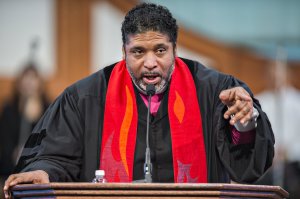
barberFrom William Barber’s recent comments in a Democracy Now interview:

Before all of the latest news, Judge Kavanaugh, first of all, was being put forward after McConnell in the Senate held open a seat for over 420 days, in a way that we had not seen since the Civil War. They literally denied a president his right to nominate someone and for them to have a hearing. This was the same Judiciary Committee that denied two African-American women a hearing to be appointed to the federal court, the 1st District—Eastern District in North Carolina. So the process was bad from the beginning. Continue reading “The Gangsterization of Our Politics”

Why Did She Wait?

Ruby SalesAnother post from the front porch of Ruby Sales (September 17, 2018):

Republicans ask with hypocritical self righteousness that if Christine Ford’s allegation that charges Kavanaugh with sexual terrorism and attempted rape is true why did she wait thirty six years to go public?

She remained silent for the same reasons that thousands of women did not speak out. We lived in a White male patriarchy that blamed women and dismissed us as aggressive sexual predators and whores for sexual crimes against us. Sadly even women internalized this view and believed that we provoked men to commit these acts against us. Continue reading “Why Did She Wait?”

Let’s Give It A Go

Kathleen Dean MooreOregon State Professor of Philosophy Kathleen Dean Moore was once asked, “Would you condone violence on behalf of the planet?” This was her response:

No, violence is what we are opposing. You can’t ever stop a behavior by engaging in it. Using violence only increases its power.

The reason nonviolent methods haven’t worked is because we haven’t really tried them yet. We haven’t tried massive protests and civil disobedience. We haven’t tried boycotts. We haven’t harnessed the power of the global religions. Somewhere near half of us don’t even vote. Here and there, sure, we’ve tried nonviolence, but not on the scale we need. Let’s give it a go. Continue reading “Let’s Give It A Go”

Inevitability

Binding30 years in and Ched Myers’ Binding the Strong Man: A Political Reading of Mark’s Story of Jesus (1988) is more relevant than ever. This week’s commentary homes in on Mark 8:27-38.

Mark will tell us that it was “necessary” for John/Elijah (Mk 9:12:f) to challenge the highest powers and be executed by them; so too with Jesus, for that is the “script” Yahweh has given to the servant/prophets, as Mark will make clear through his parable of the tenants. Continue reading “Inevitability”

It’s Not Part of Our Vision

RamseyThanks to Detroit-based law student Cait De Mott Grady for passing along this profound interview Derrick Jensen did with former U.S. Attorney General Ramsey Clark way back in 2000. His reflections are more relevant than ever. This is an excerpt, but the entire interview deserves a read.

Jensen: So how do we maintain our national self-image as God’s gift to the world, the great bastion of democracy?

Clark: But we’re not a democracy. It’s a terrible misunderstanding and a slander to the idea of democracy to call us that. In reality, we’re a plutocracy: a government by the wealthy. Wealth has its way. The concentration of wealth and the division between rich and poor in the U.S. are unequaled anywhere. And think of whom we admire most: the Rockefellers and Morgans, the Bill Gateses and Donald Trumps. Would any moral person accumulate a billion dollars when there are 10 million infants dying of starvation every year? Is that the best thing you can find to do with your time? Continue reading “It’s Not Part of Our Vision”