No Additional Comments

Mike Lansing
PC: Michael Smith

By Tommy Airey

Lansing, Michigan

Decades ago, Alice Walker suggested that the White House should be run by twelve grandmothers. I spent my Wednesday at the state capital bearing witness to the obvious brilliance of her proposal.

It was almost two years since my first visit to Lansing, days after the Flint water poisoning scandal broke out like an upper respiratory infection.  The brutal part: both viruses still linger.

Back then, business brought my friend Mike to Michigan. But his heart and his camera prodded him all the way to Capitol with me to brave a single-digit-wind-chilled protest during the Governor’s annual State of the State address.  A year later, the state’s Civil Rights Commission issued a scathing 135-page report naming “systemic racism” as a major factor in Flint’s water contamination. Redlining, white flight to the suburbs, intergenerational poverty and “implicit bias” were all chronicled as contributing to the unnatural disaster.  Fifty years after the Kerner Commission report, history came full circle. Continue reading “No Additional Comments”

A Gateway to My Indigenous Soul

LilyBy S. Lily Mendoza (right), from Paula Miranda’s Pinay Protrait Project

I am a native of San Fernando, Pampanga in Central Luzon, Philippines. I grew up in the small barrio of Teopaco next door to calesa drivers with their handsome horses and their backyard stables. I shared with my five siblings duties feeding pigs and raising chickens and collecting horse manure for fertilizing our small family garden. Although I grew up colonized (tutored by American missionaries and Peace Corps Volunteers and Filipino teachers who taught strictly in English), I retain memories of sitting at my Apu Sinang’s feet listening to her tell stories as I strung fragrant sampaguita leis or as I watched with fascination as she prepared her betel nut chew, breaking open the nut and sprinkling shell lime on the meat, then rolling the concoction in betel pepper leaf before putting the bite-size pouch into her mouth for chewing. Then there were the home deliveries of fresh milk in unbranded glass bottles that you handed back when the milkman came back around, and the early morning toot-toot announcing the arrival of Apay Tinapay on his bike, the hot pandesal vendor, who magically kept the fresh-baked buns steaming hot in his big newspaper-insulated basket hanging by the side of his bike. Continue reading “A Gateway to My Indigenous Soul”

Sermon: As One Who Was There

25299574_10214858114229862_8841640536640516071_o.jpgBy Rev. Denise Griebler
1st UCC Richmond, Michigan
January 28, 2018

Mark 1:21-28
Psalm 111

Well, I will tell you this: I went to worship that evening with the usual expectations – which is to say, I wasn’t expecting anything unusual.  It was just after sunset – which is when we worship. By our way of thinking, sundown is the beginning of the new day – a time to rest in God’s presence – a time to rest in the company of family and friends and neighbors. Continue reading “Sermon: As One Who Was There”

The Sunday Long Read: Dove Songs and Fish Offerings

JonahBy Jim Perkinson, a sermon on Jonah 3:1-5, 10 and Mk 1:14-20, January 21, 2018, St. Peter’s Episcopal Church (Detroit, MI)

I am not a fish person—which is why I volunteered to preach this Sunday, where the lessons focus on fish, in the stories of Jonah and the whale and of the disciples on the Sea of Galilee called to become “fishers of humans.” To “catch” the significance of the latter, we need to reel in the former carefully. Though not included in the lectionary, the heart of the Jonah story turns on the following verse:

And the Lord appointed a great fish to swallow Jonah; and Jonah was in the belly of the fish three days and three nights (Jon 1:17).

The text is clear. Jonah was saved by a fish. But we need to go slow, since we often read it the other way around—that Jonah was saved from a fish. So in the interests of getting us hooked on the story-line, I want to string out three pieces of bait. Continue reading “The Sunday Long Read: Dove Songs and Fish Offerings”

Identification With The Mind

TolleFrom spiritual master Eckhart Tolle in his classic The Power of Now (1999):

If you are pulled into unconscious identification with the emotion through lack of presence, which is normal, the emotion temporarily becomes “you”…You will not be free of that pain until you cease to derive your sense of self from identification with the mind, which is to say from ego. The mind is then toppled from its place of power and Being reveals itself as your true nature.

The Only Defense She Has

RandyFrom Randy Woodley in Shalom and the Community of Creation: An Indigenous Vision (2012):

Humans have moved recently from tertiary consumers to becoming primary consumers. Such change is beyond the earth’s natural cycles and recharge rates, creating imbalance and disharmony on the whole planet. In order to restore balance, the earth is being forced to “consume” the primary consumer, moving her temporarily to confront humanity with the only defense she has, namely, natural disasters. In a very real sense, the top of the food chain is now the earth herself.

Wild Lectionary: For They Were Fishermen

014
PC: Arthur Black

Epiphany 3B

As Jesus passed along the Sea of Galilee, he saw Simon and his brother Andrew casting a net into the sea–for they were fishermen. And Jesus said to them, “Follow me and I will make you fish for people.” And immediately they left their nets and followed him.
Mark 1:16-17 

As this week’s lectionary readings tell about the fishing families of Galilee, Wild Lectionary talked to ‘Nagmis fisherman Arthur Black. The ‘Namgis First Nation take their name from a halibut-like sea creature who saved a lone human during a flood when water covered the whole world. We asked Arthur to talk to people of faith about fishing on the West Coast of British Columbia and the threats to wild salmon which have been a staple food and source of wealth and culture for indigenous people in this region for millennia.

Wild Lectionary: Can you talk about fishing in your family?

Arthur Black: I am a fourth generation commercial native fisherman, my kids and grandchildren fish commercially with me on our vessel. Growing up I fished on my grandfather’s boat; when I started skippering boats my great-grandfather Harry Brown came out of retirement and fished with us till his passing in1987. Continue reading “Wild Lectionary: For They Were Fishermen”

The Left Cheek

BayoBy Bayo Akomolafe, Nigerian author and “walkout academic,” [re]posted from his blog
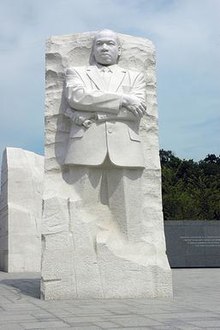
Through this year, my explorations into new materialisms possessed me. In talks and text, in teachings and learnings, I dived into the queerness of seriously rethinking the boundaries I had been conditioned to erect between me and nature. I asked the question: what if we really took seriously the idea that the world is alive, that nature is more mind-like, magical and incorporeal than we know how to speak about, and that humans are more animal-like, embodied and carnal than our stories of centrality allow us to see? My book, These Wilds Beyond our Fences, struggled with these ideas and their implications for the ways we understand race, social justice, culture, loss, environmental degradation, and our perennial fascination with scaling heights. Continue reading “The Left Cheek”

Ratzlaff Reviews: The Pagan’s Apostle

Vern RAnother short and sweet book review-summary from legendary pastor Vern Ratzlaff, posting up on the Canadian prairies, pouring his heart and mind into anti-imperial theology and soul-tending.  

Paul: the Pagans’ Apostle. Paula Fredriksen. Yale University Press, 2017.

Paul’s letters concentrate on two ancient worlds, one Jewish, one pagan. The first is incandescent with apocalyptic hopes, expecting G-d through his messiah to fulfill his ancient promises of redemption to Israel. The second teems with human and divine actors, with superhuman forces and hostile cosmic gods. Fredrikson clearly outlines Paul’s situation within the social/cultural content of gods and humans, pagans and Jews, cities, synagogues and competing Christ-following assemblies, with particular attention to Paul’s letter to the Roman church. Continue reading “Ratzlaff Reviews: The Pagan’s Apostle”