No Additional Comments

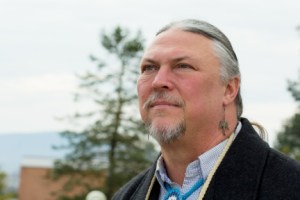
Mike Lansing
PC: Michael Smith

By Tommy Airey

Lansing, Michigan

Decades ago, Alice Walker suggested that the White House should be run by twelve grandmothers. I spent my Wednesday at the state capital bearing witness to the obvious brilliance of her proposal.

It was almost two years since my first visit to Lansing, days after the Flint water poisoning scandal broke out like an upper respiratory infection.  The brutal part: both viruses still linger.

Back then, business brought my friend Mike to Michigan. But his heart and his camera prodded him all the way to Capitol with me to brave a single-digit-wind-chilled protest during the Governor’s annual State of the State address.  A year later, the state’s Civil Rights Commission issued a scathing 135-page report naming “systemic racism” as a major factor in Flint’s water contamination. Redlining, white flight to the suburbs, intergenerational poverty and “implicit bias” were all chronicled as contributing to the unnatural disaster.  Fifty years after the Kerner Commission report, history came full circle. Continue reading “No Additional Comments”

Wild Lectionary: Awe

westlake1_0
Photo credit: NASA

Epiphany 5B
Isaiah 40:21-31

By Camen Retzlaff

Sometimes I am asked why the Bible, especially the Hebrew Bible, says that we should “fear” God, who is love. Psalm 111:10 The fear of the Lord is the beginning of wisdom; all those who practice it have a good understanding.

Have you not known, have you not heard?” says God in Isaiah this week. It is God who sits above the circle of the earth. We, the inhabitants of this planet, are like grasshoppers. God stretches a curtain of heaven for us, as a tent. God is reassuring here: this defeat, this moment in history, this war is not the big story. The story is so much bigger. God brings princes to naught and makes rulers of the earth like dead plants blown in the wind. Continue reading “Wild Lectionary: Awe”

Wild Lectionary: What We Do with Our Bodies

227350_659624815131_692849_nEpiphany 4B
1 Corinthians 8:4-6, 8

As to the eating of food offered to idols, we know that “no idol in the world really exists,” and that “there is no God but one.” Indeed, even though there may be so-called gods in heaven or on earth–as in fact there are many gods and many lords– yet for us there is one God, the Father, from whom are all things and for whom we exist, and one Lord, Jesus Christ, through whom are all things and through whom we exist.

 “Food will not bring us close to God.” We are no worse off if we do not eat, and no better off if we do.

By David Pritchett

Fireflies and Feathers: Two Kinds of Farming

The summer of 2012 was hot in the Midwest. By the fourth week of temperatures over 90 degrees, and over two months without rain, the grass was brown and our crops in Northeastern Indiana were not faring any better. Continue reading “Wild Lectionary: What We Do with Our Bodies”

The Only Defense She Has

RandyFrom Randy Woodley in Shalom and the Community of Creation: An Indigenous Vision (2012):

Humans have moved recently from tertiary consumers to becoming primary consumers. Such change is beyond the earth’s natural cycles and recharge rates, creating imbalance and disharmony on the whole planet. In order to restore balance, the earth is being forced to “consume” the primary consumer, moving her temporarily to confront humanity with the only defense she has, namely, natural disasters. In a very real sense, the top of the food chain is now the earth herself.

Wild Lectionary: Fishing On Our Ancestral Territory

pic 2
My late father, on our traditional Nisga’a fishing territory. Photo credit Tanya Stanley, summer 2011.

Epiphany 3B
Mark 1: 16-18

By: Jeffery Stanley

May the words of my mouth, and the meditation of my heart, be acceptable unto you, Oh God our rock and Redeemer.

“As Jesus passed along the sea of Galilee, he saw Simon and his brother Andrew casting a net into the lake – for they were fishermen. And Jesus said to them ‘follow me and I will make you fish for people.’ And immediately, they left their nets and followed him.”

In the days of Jesus of Nazareth it was the custom for teachers to gather their students from the people of any community and lead them as a company from place to place as they taught. He (a teacher) would from time to time, talk to people and share truths with them. Certain students would be attracted to him and would come to listen to him from time to time. Sometimes they would linger at some favorable spot for awhile and persons would join them to listen and often respond to the message. Gutzke, Manford George. “Plain talk on Mark” pp. 18 Continue reading “Wild Lectionary: Fishing On Our Ancestral Territory”

Wild Lectionary: Woven in the Depths

Womb_2_Kovil_BG
Womb 2 Kovil BG Photo Credit: Fillipov Ivo, Creative Commons

Epiphany, Year B
Psalm 139:1-6, 13-18

By Ragan Sutterfield

E. Stanley Jones once wrote that if there is an instinct in the human heart to conceal there is also a deeper instict to reveal” (Victory Through Surrender). And yet, our culture keeps from authentic disclosure. We are invited, instead, to a kind of performative exposure, a way of revealing that also hides. We want to be known and seen but we do not trust those who might see us. We are afraid of what might happen if we are known, fully, authentically. So we manufacture disclosure on Facebook, hoping that in the commiseration of comments or praise of likes we will achieve what we are afraid to risk through a real openness. It is disclosure at the surface rather than at the depths.

Continue reading “Wild Lectionary: Woven in the Depths”

Wild Lectionary: Metanoia and John – Transformation in Wilderness

Jan 7 photo.jpgBy Valarie Luna Serrels

Epiphany 1B
Mark 1:4-11

There’s a story in Greek mythology about Kairos, the young, swift god of opportunity, with wings on his feet. When he passes by you, it’s too late to grab hold of said opportunity. However, in the wake of Kairos’ fleeting journey, stands the sorrowful goddess Metanoia. She invites those passed by with opportunity for reflection, mourning, and space to make a decision. An urgent decision. Metanoia literally means change. A changed mind, heart, behavior, life. Continue reading “Wild Lectionary: Metanoia and John – Transformation in Wilderness”

Psalm 150: With What You Have

Mike
PC: Michael Smith

By Eric Martin

The pilgrim slept in with the gods

until Spring dripped from the fingers of every tree.
She leapt out hungry into the fields
and heard the hymns of sparrows in flight
and  children  in  chase

      and somewhere the bats upside down.

For a moment she thought she saw
the taxman  barefoot  and eating cherry popsicles.

The sun pressed itself upon her,
armpits swelling with sweat,
and the grass itched
and the buds gained confidence
and the sky shouted   “infinity!”   at everything. Continue reading “Psalm 150: With What You Have”

Wild Lectionary: The Voice Crying, “Out in the Wilderness, Prepare the Way”

fire
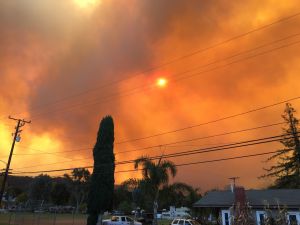
Photo by Victoria Loorz, taken during the Thomas Fire near her home

December 10, 2017
Advent 2B

Isaiah 40:3

A voice cries out: “In the wilderness, prepare the way of the LORD…

2Peter 3:10-13

…and then the heavens will pass away with a loud noise, and the elements will be dissolved with fire, and the earth and everything that is done on it will be disclosed…waiting for the coming of the day of God, because of which the heavens will be set ablaze and dissolved, and the elements will melt with fire? … But, in accordance with his promise, we wait for new heavens and a new earth, where righteousness is at home. Continue reading “Wild Lectionary: The Voice Crying, “Out in the Wilderness, Prepare the Way””

Wild Lectionary: Learn from the Fig Tree

PhotoAdvent 1B

Isaiah 64:1-9
Psalm 80:1-7, 17-19
1 Corinthians 1:3-9
Mark 13:24-37

By Jessica Miller

Many years ago, on a prairie in Michigan, I became a student of the landscape. Officially, I tracked phenology, or the study of seasonal phenomena. Mostly I would wander the tall grass, seeking changes in the flowers. Who is blooming? Who is senescing? Whose shoots are green and growing? Some days would be punctuated by the commanding, haunting, rolling trumpet-call of sandhill cranes. The sound yanked my head up out of the grass and up to the sky. Where were they coming from? Where were they going? Learning the birds and plants and just a tiny fraction of the invisible strings that tie them to the world (the temperature, the direction of the wind, the rising and setting of the sun) taught me how to listen to the Spirit. Where does she come from? Where is she going? You can never know for sure, and yet you can become familiar with her flight-paths. Continue reading “Wild Lectionary: Learn from the Fig Tree”