Somebody’s Hurting Our People and It’s Gone On Far Too Long

BarberA Bible Study designed by Benjamin Isaak-Krauss, for the Poor People’s Campaign

Comments for facilitators:
This Bible Study is designed to be interactive and collaborative. Timeframe: 90 minutes

Objectives:
– Provide low-key way for religious folks to connect with Poor People’s Campaign, build community
– Highlight biblical tradition of care for the poor & resistance to oppression
– Frame civil disobedience as expression of faithfulness to God & our moral values as well as a strategic means
– Invite reflection on what our faith demands of us. Continue reading “Somebody’s Hurting Our People and It’s Gone On Far Too Long”

Why Would I Do This?

RiannaBy Rianna Isaak-Krauß

This week I was arrested. I was in jail for over 14 hours.

At times it was so hot I was sweating.
At times it was so cold I was shivering.
And at all times it smelled rancid.

We sat or huddled in the women’s cell atop either hard cement benches or hard metal bunks (with no mattresses) covered by dried and crusted bodily fluids and years of dirt. A guard saw our sunburns and assumed we had contracted a rash from being in the cells. Without windows or clocks we were deprived of our sense of time. The fluorescent lights lit everything into a brightly illuminated nowhere. It took over 9 hours until we had access to our phone call. From the architecture, to the way guards ignored or yelled at us, everything was designed in a way to strip us of our sense of self and power. At one point, I overheard a guard saying “A beating would not harm that one.” It was a very long 14 hours in jail. Continue reading “Why Would I Do This?”

Praying and Preying

BarberThis week Rev. William Barber was asked about the preacher who was asked to pray at the opening of the U.S. embassy in Jerusalem. The white Southern Baptist pastor has spoken out against Islam, Judaism, Hinduism, Buddhism, gay men and lesbians, Mormonism. Barber’s response:

That same group of people will go in and pray—P-R-A-Y—with President Trump and his other allies in the Congress and bless them, while Trump and his allies are preying—P-R-E-Y-I-N-G—on the poor and the broken and the hurting and the least among. It is sad. It is theological malpractice. It is costing people their lives. It is mean-spirited. And the world should stand up and speak out against it. And clergy and people of faith should speak out against it. And we should stop, in the media, assigning “Christian” and “evangelical” to persons like this. If we say it, we should say it in quotes, or we should call it what it is. It is not Christianity. It is not evangelicalism. It is not the religion of Jesus, who, in his first sermon, said to follow Jesus was to preach good news to the poor, to care for the brokenhearted, to provide liberty and healing to the bruised, and to declare the acceptable year of the lord. Nothing in that says endorse killing, endorse hatred, endorsed meanness.

Ecological Grief

Iceland-8725
PC: Michael Raymond Smith (www.michaelraymondsmith.com)

From the conclusion of “Hope and mourning in the Anthropocene: Understanding ecological grief” by Neville Ellis and Ashlee Cunsulo in The Conversation.  Ellis and Cunsulo define ecological grief as “The grief felt in relation to experienced or anticipated ecological losses, including the loss of species, ecosystems, and meaningful landscapes due to acute or chronic environmental change.”

Ecological grief reminds us that climate change is not just some abstract scientific concept or a distant environmental problem. Rather, it draws our attention to the personally experienced emotional and psychological losses suffered when there are changes or deaths in the natural world. In doing so, ecological grief also illuminates the ways in which more-than-humans are integral to our mental wellness, our communities, our cultures, and for our ability to thrive in a human-dominated world. Continue reading “Ecological Grief”

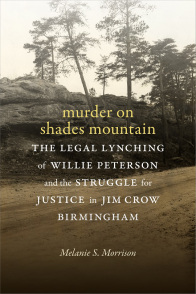
Murder on Shades Mountain

cover-mosm_3-18.jpgBy Joyce Hollyday

Last Thursday in Montgomery, Alabama, the Equal Justice Initiative opened its museum dedicated to racial equality, at the heart of which is a profoundly powerful memorial to the more than 4,400 African-Americans who were lynched in this country between the Civil War and World War II. Three days later Melanie Morrison made a visit to Western North Carolina, reminding us that not all such acts of terrorism and brutality were carried out by white mobs under trees and the cover of darkness. Some were perpetrated in courtrooms in broad daylight. Continue reading “Murder on Shades Mountain”

Wild Lectionary: Proverbial Shelter

Greenhouse aftermath.jpg
Greenhouse where the author works, after Hurricane Irma

Pentecost B
Acts 2:1-21
Proverbs 9:8

By Andrew Hudson

Salvation. I imagine my educated friends skating over the term in today’s reading. After all, Pentecost is an incredible story about harmony in diversity. That is an important theme, and one most educated folks are eager to pick up in these troubled times. Let’s find a way to have that kind of unity, they say.

Continue reading “Wild Lectionary: Proverbial Shelter”

Graffitis, Curses and Inscriptions

ParisNext week marks the 50th anniversary of the volatile period of civil unrest in Paris during May 1968, punctuated by demonstrations and massive general strikes, as well as the occupation of universities and factories across France. The unrest began with a series of student occupation protests against capitalism, consumerism, American imperialism and traditional institutions, values and order. These are some “graffitis, curses and inscriptions of May 1968” from a [free] little book called Boredom Weeps published May 1, 2018 by Black Ink and Interference Archive.

Hijack life then rewrite its user’s manual.

Talk to your neighbors.

Patriotism rhymes with Fascism. Continue reading “Graffitis, Curses and Inscriptions”

They’ll Return Week After Week

PPC, MassachusettsYesterday, more than a thousand people of faith and conscience were arrested nation-wide in acts of civil disobedience in front of state capital buildings.  The Poor People’s Campaign has returned and will continue for forty days.  It’s not too late to join up and throw in with this movement that comes with specific demands for lawmakers: federal and state minimum wage laws “commensurate for the 21st century economy”, relief from student-loan debt, a repeal of the 2017 GOP tax cuts legislation, restoration of the Voting Rights Act, an end to mass incarceration, a fracking ban, protection of public lands, a cessation of US military involvement and universal healthcare.

This is from co-director Liz Theoharis on Democracy Now yesterday:

…in almost 40 states across this country, there are people, impacted folks, poor people, who are taking action together. And we were in Marks, Mississippi. We were in Lowndes County, Alabama. We were in El Paso, Texas. We have traveled around this country, because this campaign is a deep organizing drive amongst people who need to have their voices heard, need their stories to be told, so that we hear that there are 140 million poor people in this country, that in this country there are 38 million poor children. Almost half of this country’s children are poor. And this is unacceptable. And so, people are taking action together, and not just today, but they are deep-dive organizing in their communities. They’ll return, week after week, for this 40 days and into the future, as we build a deep moral movement to turn this country around.