The Only Defense She Has

RandyFrom Randy Woodley in Shalom and the Community of Creation: An Indigenous Vision (2012):

Humans have moved recently from tertiary consumers to becoming primary consumers. Such change is beyond the earth’s natural cycles and recharge rates, creating imbalance and disharmony on the whole planet. In order to restore balance, the earth is being forced to “consume” the primary consumer, moving her temporarily to confront humanity with the only defense she has, namely, natural disasters. In a very real sense, the top of the food chain is now the earth herself.
Wild Lectionary: For They Were Fishermen

014
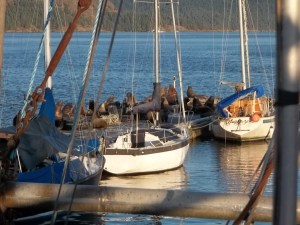
PC: Arthur Black

Epiphany 3B

As Jesus passed along the Sea of Galilee, he saw Simon and his brother Andrew casting a net into the sea–for they were fishermen. And Jesus said to them, “Follow me and I will make you fish for people.” And immediately they left their nets and followed him.
Mark 1:16-17 

As this week’s lectionary readings tell about the fishing families of Galilee, Wild Lectionary talked to ‘Nagmis fisherman Arthur Black. The ‘Namgis First Nation take their name from a halibut-like sea creature who saved a lone human during a flood when water covered the whole world. We asked Arthur to talk to people of faith about fishing on the West Coast of British Columbia and the threats to wild salmon which have been a staple food and source of wealth and culture for indigenous people in this region for millennia.

Wild Lectionary: Can you talk about fishing in your family?

Arthur Black: I am a fourth generation commercial native fisherman, my kids and grandchildren fish commercially with me on our vessel. Growing up I fished on my grandfather’s boat; when I started skippering boats my great-grandfather Harry Brown came out of retirement and fished with us till his passing in1987. Continue reading “Wild Lectionary: For They Were Fishermen”

Wild Lectionary: Fishing On Our Ancestral Territory

pic 2
My late father, on our traditional Nisga’a fishing territory. Photo credit Tanya Stanley, summer 2011.

Epiphany 3B
Mark 1: 16-18

By: Jeffery Stanley

May the words of my mouth, and the meditation of my heart, be acceptable unto you, Oh God our rock and Redeemer.

“As Jesus passed along the sea of Galilee, he saw Simon and his brother Andrew casting a net into the lake – for they were fishermen. And Jesus said to them ‘follow me and I will make you fish for people.’ And immediately, they left their nets and followed him.”

In the days of Jesus of Nazareth it was the custom for teachers to gather their students from the people of any community and lead them as a company from place to place as they taught. He (a teacher) would from time to time, talk to people and share truths with them. Certain students would be attracted to him and would come to listen to him from time to time. Sometimes they would linger at some favorable spot for awhile and persons would join them to listen and often respond to the message. Gutzke, Manford George. “Plain talk on Mark” pp. 18 Continue reading “Wild Lectionary: Fishing On Our Ancestral Territory”

The Left Cheek

BayoBy Bayo Akomolafe, Nigerian author and “walkout academic,” [re]posted from his blog
Through this year, my explorations into new materialisms possessed me. In talks and text, in teachings and learnings, I dived into the queerness of seriously rethinking the boundaries I had been conditioned to erect between me and nature. I asked the question: what if we really took seriously the idea that the world is alive, that nature is more mind-like, magical and incorporeal than we know how to speak about, and that humans are more animal-like, embodied and carnal than our stories of centrality allow us to see? My book, These Wilds Beyond our Fences, struggled with these ideas and their implications for the ways we understand race, social justice, culture, loss, environmental degradation, and our perennial fascination with scaling heights. Continue reading “The Left Cheek”

Sermon: Becoming my Body

thirdtrimeseter
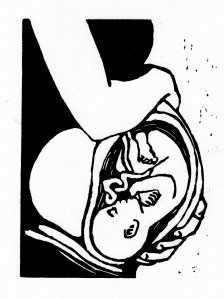
Third trimester By Julia Jack-Scott

By Lydia Wylie-Kellermann
Day House, Detroit Catholic Worker, January 14, 2018

Psalm 40:2, 7-10
1 Samuel 3: 3-10, 19
1 Corinthians 6: 13-15, 17-20

I am not a body person. I feel my identity rests in my head and my heart and far too often, I think of my body only as a tool. A means to an end. It helps me get me where I want to go, but it is not….me.

Lately, I’ve been sitting with health fears for loved ones as tests are done to see if there are things growing in their bodies. And I realized the fear that swells up in me. I don’t understand the body. How could something be killing someone I love from the inside without us knowing?

I grew up along Michigan Avenue where, even as a child, cars pulled over or hollered or followed. I learned what it was like to be a woman in this country and to be seen only as a body. And there is outrage in that rises up, for I want to be seen for the workings of my mind and not the shape of my body. Continue reading “Sermon: Becoming my Body”

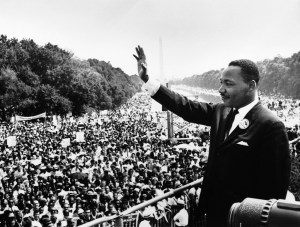
Prayer for the birthday of Martin Luther King, Jr.

USMC-09611By Bill Wylie-Kellermann

Spirit of the Universe, whose moral arc you make to bend toward justice,
thank you for birthing our brother Martin, right on time, into our history, into the journey of transformation for which we yearn. For uttering him in the Word, and forming him in the womb.

We lift him up this day in the communion of ancestors, summoning him from among all who have ever interceded and struggled for justice. Continue reading “Prayer for the birthday of Martin Luther King, Jr.”

The Story of How Humanity Fell in Love with Itself Once Again

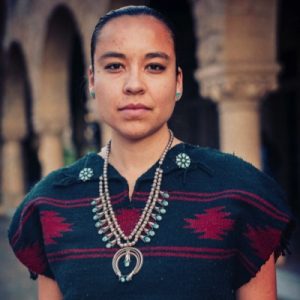
Lyla JuneBy Lyla June Johnston (right), a Diné singer, writer, and activist specializing in intergenerational and inter-ethnic healing, as well as Indigenous philosophy. This essay is [re]posted with permission from her Facebook page.

I spend a lot of time honoring and calling upon my Native American ancestors. I am keenly aware that my father’s people hold a venerable medicine as well. He has ancestry from the Great Sacred Motherland of Europe.

I have been called a half breed. I have been called a mutt. Impure. I have been told my mixed blood is my bane. That I’m cursed to have an Indian for a mother and a cowboy for a father.

But one day, as I sat in the ceremonial house of my mother’s people, a wondrous revelation landed delicately inside of my soul. It sang within me a song I can still hear today. This song was woven from the voices of my European grandmothers and grandfathers. Their songs were made of love.
Continue reading “The Story of How Humanity Fell in Love with Itself Once Again”

Wild Lectionary: Woven in the Depths

Womb_2_Kovil_BG
Womb 2 Kovil BG Photo Credit: Fillipov Ivo, Creative Commons

Epiphany, Year B
Psalm 139:1-6, 13-18

By Ragan Sutterfield

E. Stanley Jones once wrote that if there is an instinct in the human heart to conceal there is also a deeper instict to reveal” (Victory Through Surrender). And yet, our culture keeps from authentic disclosure. We are invited, instead, to a kind of performative exposure, a way of revealing that also hides. We want to be known and seen but we do not trust those who might see us. We are afraid of what might happen if we are known, fully, authentically. So we manufacture disclosure on Facebook, hoping that in the commiseration of comments or praise of likes we will achieve what we are afraid to risk through a real openness. It is disclosure at the surface rather than at the depths.

Continue reading “Wild Lectionary: Woven in the Depths”