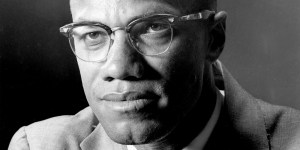
By Carl Wendell Hines, in the wake of the murder of Malcolm X
Now that he is safely dead,
Let us praise him.
Build monuments to his glory.
Sing Hosannas to his name. Continue reading “A Dead Man’s Dream”

By Carl Wendell Hines, in the wake of the murder of Malcolm X
Now that he is safely dead,
Let us praise him.
Build monuments to his glory.
Sing Hosannas to his name. Continue reading “A Dead Man’s Dream”
 A song of St. Anselm:
Jesus, as a mother you gather your people to you:
You are gentle with us as a mother with her children;
Often you weep over our sins and our pride:
tenderly you draw us from hatred and judgment.
You comfort us in sorrow and bind up our wounds:
in sickness you nurse us,
and with pure milk you feed us.
Jesus, by your dying we are born to new life:
by your anguish and labor we come forth in joy.
Despair turns to hope through your sweet goodness:
through your gentleness we find comfort in fear.
Your warmth gives life to the dead:
your touch makes sinners righteous.
Lord Jesus, in your mercy heal us:
in your love and tenderness remake us.
In your compassion bring grace and forgiveness:
for the beauty of heaven may your love prepare us.
“We are in a period of struggle with a movement spiritually deep and broadly connected – and a movement that knows it has to go deeper and broader yet. And we need to keep connecting across barriers of faith and ideology. Many of us understand that a deeper resistance is summoned of us. We are trying, praying, working to be strategic, to be faithful, to be human. And we know that we must keep at it: conspire the next steps, be in conversation, be in community, be in the streets, refuse taxes, refuse to fight, disrupt business as usual, prefer poetry to ideology, pray for victims before nations.
The powers of death and destruction appear to reign. But they are undone. In short, dear friends: Be not awed by the mayhem with which the powers of this world would bamboozle us. When you light a candle let it mean intransigent resistance. When you pray imagine a new world is possible. And then live it.” -Elizabeth McAlister
 A poem inspired by the book of Lamentations (especially chapter three)
by Ken Sehested
Turn off (what passes for) the news.
Boycott the season’s electoral charades.
Don’t give in to Pokémon’s promise of
“augmented reality.” Attend instead to
unmitigated reality: bloodied, stricken
and strewn. Offer grief the hearing it
demands, the voice it obliges, and
the risk it assumes. Continue reading “Lamentations’ call to arms”
 By Wes Howard-Brook & Sue Ferguson Johnson
In the soporific summertime, it is easy enough to lie back, close one’s eyes, and fall into a tranquil sleep. Indeed, many of us could use more sleep, driven as we often are by the exigencies of empire into never-ending task mode. Perhaps ironically, getting more sleep could help prepare us for Jesus’ word to us this Sunday: stay awake (12.32-40)!
The church cycle offers us Lent and Advent as seasonal opportunities to practice anti-imperial wakefulness. With school out, though, the church year seems to take a break from the call to faithful vigilance. But the lectionary surprises us this week, just as Jesus’ message within the text from Luke gives us images of surprising arrivals. Perhaps equally surprisingly, a close listen to our Gospel text invites us to hear precisely what we are called to stay awake against: the lure of the exploitative, anxiety-ridden, imperial economy. At the same time, we are called to stay awake for the opportunity to be servants to one another and all creation. Continue reading “Staying Awake in the Summer”
 By Ross Ringenberg
This article was the result of an AMBS class entitled “Theology, Ethics and Spirituality Of Creation Care” taught by Malinda Berry, PhD. The class examined theological aspects of environmental studies, ethical dilemmas we face in pursuing environmental justice, the intersection of place and spirituality, and how these themes shape our creation care practices.
In recent years I have become interested in learning about the people that inhabited my watershed directly before white settlers arrived. The Pokegan Potawatomi lived, and still have a presence in my watershed of Northern Indiana and Southern Michigan. There are many different ways you can educate yourself about native peoples. This past year I’ve been learning about what the Potawatomi ate and the food that nature produced in my watershed (my foodshed) before white settlers arrived not only by reading, but also by cooking! Continue reading “Food as Pre-Colonial Pedagogy”
 By Frida Berrigan, Re-postd from TomDispatch
I remember well going to the rodeo at Madison Square Garden in New York City with my six-guns proudly strapped to my hips. I was probably eight or nine years old and those two ivory-handled — okay, undoubtedly plastic — revolvers were probably from a Hopalong Cassidy line of toys. That cowboy character was a favorite of mine on TV and, of course, with my friends I regularly played “cowboys and Indians.” But far more of my war play — we’re talking the early 1950s — came out of World War II, my father’s war, even though the country was then involved in a bloody stalemate of a conflict in Korea. Continue reading “Guns for Tots”
 A song from Ontario-based musician Joshua Weresch, remembering the victims of the Orlando nightclub shooting 50 days ago:
This is the lever that moves a world.
This is the fist that packs a glove.
This is the tear that floods a town
And this is a heart without love. Continue reading “Orlando”
From Mark Van Steenwyk (right: with son Jonas) , co-founder of the Minneapolis Mennonite Worker, in a Facebook post from July 6:
If I lived in a swing state, I might vote for HRC. Thank God, I don’t. I have the luxury of voting my conscience (or non-voting my conscience) without much risk.
But I wish and pray and beg that folks would put the same energy into organizing or campaigning or protesting for justice that they put into this horrible excuse for democracy we call “presidential politics”. Continue reading “Precious Little Purchase”
Our problems stem from our acceptance of this filthy, rotten system
– attributed to Dorothy Day

