A Prayer of Kingian Nonviolence

MLKFrom Matt Guynn of On Earth Peace, a prayer based on MLK’s Six Principles of Nonviolence:

Holy One, singing at the center of my very being, resonating and vibrating me toward liberation and life,

Help me to grow in courage, in persistence, in confidence, in boldness in the face of the violence and harm in our world, our neighborhoods, our streets, our own faith communities. Deepen my ability to dwell moment by moment in the reality that I am enough, that I am beloved. As hard as it is, help me to remember that those whom I detest, dislike and disagree with are also your beloved children. Guide me toward a future in which all are cherished in communities of belonging and belovedness. Give me strength and insight to challenge the forces of evil and injustice which oppress and downpress me, other people and entire communities. Guide me to count the cost of waging nonviolent conflict and to accept sacrifice and suffering when necessary, for the sake of the cause and to achieve the goal. Help me to see clearly the violence in my heart, and to see that, unchecked, this violence can grow into expressions of harm towards myself and others. Strengthen me for this long journey as I lend my hands to yours, bending the arc of the universe towards justice. Amen.

The Sermon on the Mount Unadulterated

GandhiFrom Gandhi, in an address delivered at the YMCA in Ceylon in 1927:

The message of Jesus as I understand it is contained in the Sermon on the Mount unadulterated and taken as a whole… If then I had to face only the Sermon on the Mount and my own interpretation of it, I should not hesitate to say, ‘Oh, yes, I am a Christian.’ But negatively I can tell you that in my humble opinion, what passes as Christianity is a negation of the Sermon on the Mount… I am speaking of the Christian belief, of Christianity as it is understood in the west.

Finding our Voice

mary mToday on the Feast of Magdalene, we continue our biblical women series. This time with a male voice. But here Bill Wylie-Kellermann offers a sermon with Peter apologizing to Mary Magdalene.

John 20:1-18

There is a sweet irony, perhaps several, in St Peter’s hosting this service for the Feast of Mary Magdalene, one which makes this traditional gospel for the day more than appropriate.

John’s gospel is among the later to be written. The footrace, on the one hand so exuberant and on the other, so competitive, between Peter and John (or the other disciple) reflects within the text a certain struggle for leadership. Between Mary’s discovery of the empty tomb and her encounter with the Risen Lord, it poses the question: Who got there first? Well, John is fleeter and arrives first, but Peter entered in first, but then John looked around and was first to believe. Is this a carefully negotiated settlement or what? Continue reading “Finding our Voice”

Imploring God: Black Lives Matter!

Black Lives Matter

By Wes Howard-Brook and Sue Ferguson Johnson

A fascinating narrative sequence sets up Luke’s version of “the Lord’s prayer” (11.1-4). Chapter 10 began with the commissioning of the Seventy as laborers in the harvest, seeing cities and houses of “peace” that will provide them hospitality. It continues with Jesus’ powerful condemnation of cities that refuse hospitality. After this, when the Seventy return joyously celebrating their power over demons, Jesus responds with an apocalyptic image of Satan’s fall from heaven and his own rejoicing over the revealing of God’s Way to the “simple” (Gk, nepioi) while it remains hidden from the intellectual elite. Next we hear the parable of the Good Samaritan in response to a lawyer’s attempt to justify himself. Finally, we have the story of Mary and Martha, from which the Lord’s prayer follows immediately. Continue reading “Imploring God: Black Lives Matter!”

Trauma and Memory

ElaineFrom the conclusion of Elaine Enns’ recent piece “Trauma and Memory: Challenges to Settler Solidarity” in the recent edition of Consensus: A Canadian Journal of Public Theology. Click on to read the full article HERE:

Faith communities among Settlers need to create safe spaces to give testimony about intergenerational trauma, but also provide opportunities for privileged people to face our culpability, and build courage and skill to engage in justice-work. Over the last year I have engaged a variety of groups to do this work. Continue reading “Trauma and Memory”

Dialoguing Race and Police Brutality

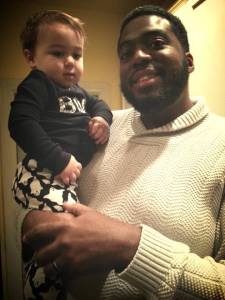
JD2From equity and racial justice expert and consultant Jyarland Daniels, MBA, JD, President & Founder, Better World Branding Solutions & Consulting (right: with son Malcolm), in the wake of continued police brutality (if you want to receive a copy of the entire 8-page resource, click on the Harriet Speaks website or email Jyarland at betterworldbrandsolutions@gmail.com):

WHAT IF THEY SAY? (Frequently Made Comments)

When talking about race, racism, and police brutality, a few comments often come up. Many of us don’t engage in these discussions because we don’t know how to respond if questioned. First of all, you might consider responding to an individual via inbox (or privately) if that makes you feel more comfortable. Often times this will eliminate embarrassment and make the recipient more open to the point you are trying to convey. But following are the comments along with responses you might consider.

1. But if X had just done what police suggested then this would not have happened. Continue reading “Dialoguing Race and Police Brutality”

How Can You Be Objective?

HedgesFrom Chris Hedges in The World As It Is: Dispatches on the Myth of Human Progress (2013):

I have never sought to be objective. How can you be objective about death squads in El Salvador, massacres in Iraq, or Serbian sniper fire that gunned down unarmed civilians, including children, in Sarajevo? How can you be neutral about the masters and profiteers of war who lie and dissemble to hide the crimes they commit and the profits they make? How can you be objective about human pain? And finally, how can you be objective about those responsible for this suffering? I am not neutral about rape, torture, or murder. I am not neutral about rapists, torturers, or murderers. I am not neutral about George W. Bush or Barack Obama, who under international law are war criminals. And if you had to see the butchery of war up close, as I did for nearly two decades, you would not be neutral either.