
A note from Witness Against Torture
 Dear Friends,
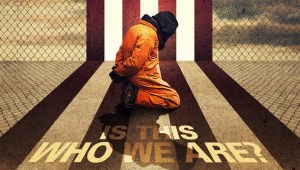
15 men released from Guantanamo Bay Prison
We celebrate the release of 15 men from Guantanamo last Monday to United Arab Emirates. Read more about their release here. Their names are:
Mahmud al Mujahid (now 36, from Yemen)
Mohammed Khusruf (now 66, from Yemen
Abd al Muhsin Salih al Busi (now 37, from Yemen)
Abd al Rahman Sulayman (now 37, from Yemen)
Zahir Omar Hamis bin Hamdoun (now 36, from Yemen)
Majid Mahmud Abdu Ahmed (now 36, from Yemen)
Bashir al Marwalah (now 37, from Yemen)
Saeed Sarem Jarabh (now 38, from Yemen)
Ayub Murshid Ali Salih (now 38, from Yemen)
Mohammed al Adahi (now 54, from Yemen)
Abdel Qadir al Mudhaffari (now 40, from Yemen)
Abdul Muhammed al Muhajari (now 46, from Yemen)
Obaidullah (now 36, from Afghanistan)
Haji Hamdullah (in his 50s, from Afghanistan)
Mohammed Kamin (now 38, from Afghanistan) Continue reading “A note from Witness Against Torture”
Too Big—and Failing! Jesus’ Cure for Affluenza
 By Ched Myers, 15th Sunday after Pentecost, Aug 28, 2016 (Luke 14:1-14)
Note: This is part of a series of weekly comments on the Lukan gospel readings from the Revised Common Lectionary during year C, 2016. This week’s gospel text is related to last week’s; see the background comments for last week here. Much of the post below is adapted from a sermon given at Downers Grove (IL) First United Methodist Church on 10/10/10.
Luke 14:2-6 is unaccountably skipped over in the lectionary. Yet it is profoundly germane to last week’s reading, and moreover introduces the theme of the whole sequence through 14:24: namely, the issue of how social power and privilege is mirrored in meals, and what to do about it. So I strongly advocate re-instating this beginning episode as part of this Sunday’s gospel. Continue reading “Too Big—and Failing! Jesus’ Cure for Affluenza”
Something More of Us is Required
 A Facebook post (July 9) from Michelle Alexander, the author of the ground-breaking The New Jim Crow:
I have struggled to find words to express what I thought and felt as I watched the videos of Alton Sterling and Philando Castile being killed by the police. Last night, I wanted to say something that hasn’t been said a hundred times before. It finally dawned on me that there is nothing to say that hasn’t been said before. As I was preparing to write about the oldness of all of this, and share some wisdom passed down from struggles of earlier eras, I heard on the news that 11 officers had been shot in Dallas, several killed from sniper fire. My fingers froze on the keys. I could not bring myself to recycle old truths. Something more is required. But what? Continue reading “Something More of Us is Required”
Sr. Megan Rice: People are miseducated about nuclear weapons
 By Janice Sevre-Duszynska
On July 28, 2012, Society of the Holy Child Jesus Sr. Megan Rice, 86, along with two other activists in the Transform Now Plowshares movement, broke into the government’s premier nuclear storage facility in Oak Ridge, Tenn. The three were convicted in May 2013 for damaging federal property and obstructing the national defense of the U.S. Rice was sentenced to 35 months and was released May 16, 2015. Continue reading “Sr. Megan Rice: People are miseducated about nuclear weapons”
Hold On
 By Ric Hudgens
For one thing
too much of it
will make you sick.
Garbage in
garbage out.
Which explains
why the commuter
sitting across from you
looks so depressed.
My counter proposal
is legal in all fifty states Continue reading “Hold On”
The Silent Cry
 From Dorothee Soelle in her book The Silent Cry: Mysticism and Resistance (2001):
At best, what Protestant theology and preaching articulate in what they designate as “gospel” can be summed up as follows: God loves, protects, renews, and saves us. One rarely hears that this process can be truly experienced only when such love, like every genuine love, is mutual. That humans love, protect, renew, and save God sounds to most people like megalomania or even madness. But the madness of this love is exactly what mystics live on.
What drew me to mysticism was the dream of finding a form of spirituality that I was missing in German Protestantism. What I was seeking had to be less dogmatic, less cerebral and encased in words, and less centered on men…
The title of this book [The Silent Cry] is an address to God that is taken from an anonymous letter from the late Middle Ages, presumably from a pastor to a penitent in difficulties and distress. “My child, be patient and leave off because God will not be torn from the ground of your heart. O deep treasure, how whilt thou be unearthed?” This is followed by a series of addresses to God that, as often happens in the language of German mysticism, do not use the traditional personal metaphors like Father, King, Most High, but new, nonpersonal ones like treasure, fountain, radiance, or “security that is hidden” in order to name the deity. In that sequence of metaphors is found the paradoxical expression “the silent cry” that has fixed itself in my mind for years now. It is a mystical name for God, whose divine power is not grounded in domination and commandment. It is a name that everyone can use, everyone who misses the “silent cry” that has often become inaudible among us. May the one who also cries in us help us all to learn to hear the cry in the foundations of the world.

Migration through a Christian Perspective
 By Hessed Torres., re-posted from Filipino Portal in Canada
Psalm 66:1-7, 16-20
Isaiah 66:10-14
Luke 10:1-12, 17-20
When I read the first few verses of Psalm 66:1-7, my initial reaction was to cringe from the disconnection of what it was telling me and what my reality was. How can a migrant worker like me “shout for joy” in the midst of exploitation, vulnerability, precariousness and pain? Is this some kind of joke? One cannot expect a demoralized worker to be joyful and forget their agony. Continue reading “Migration through a Christian Perspective”
Healing as Liberation from Crippling Debt
 By Ched Myers, on Luke 13:10-17, for the 14th Sunday after Pentecost
Note: This is part of a series of weekly comments on the Lukan gospel readings from the Revised Common Lectionary during year C, 2016.
This part of Luke’s gospel offers two symbolic stories about the healing of “political bodies” that signify pathology in the body politic: the “bent over” woman (13:10-17) and the “too big” man (14:1-6). Sadly, the second of these is (literally) skipped over by the lectionary. These intimately related healings bracket a series of Jesus’ sayings concerning the Kingdom as surprise and mystery (13:18-21), the “narrow Way” (13:22-30) and the cost of prophetic discipleship (13:31-35). Continue reading “Healing as Liberation from Crippling Debt”

