empty churches preaching empty tombs
to empty pews, a vision of gloom,
the doom of the poor now creeping
close in corona-spoor knocking even
at the door of the rich and who would
have thought it all could upend
in a single dash of air-splash, invisible,
carrying not quite living code from animal
to our abode everywhere, leading all
but rash, bible-brash evangelical hubris
to hunker in shelter, or fear-trembled,
in hovels or dense-packed streets of
homeless retreats or refugee tents
a world of babel towers
and fake news showers and glowering, bulge-veined purveyors of cover
for the bankers and oil exec wankers to push profit-margins to the edge of the cliff . . . Continue reading “the second coming of easter”→
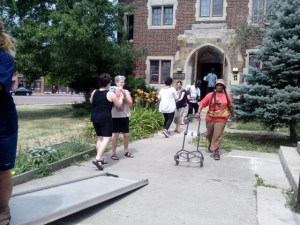
Re-loading cases of water to deliver to victims of water shut-off.
By Jim Perkinson, on John 4:5-42, for the beloved community that meets at St. Peter’s Episcopal Church (right) at the corner of Trumbull and Michigan in Detroit.
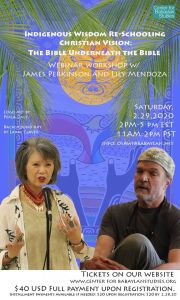
From the Center For Babaylan Studies, this webinar is live tomorrow at 2pmEST. Click here to register!
Is it possible to learn from indigenous wisdom and practice across the globe and then re-read the biblical writings with an eye to the indigenous traces not entirely erased there? Or is going back to indigenous ways the same as going back to superstitious belief? Does following Jesus mean forsaking all other ancestral ways? This webinar will walk through the scriptural tradition to explore a possibility of calling Christianity to depth-work in recovering some of its own indigenous, anti-imperial roots. Continue reading “Indigenous Wisdom Re-Schooling Christian Vision”→
Note: this is a long working definition of Whiteness. Dr. Perkinson laid this down for a committee reflecting in the wake of The Council on the Way (right), an October 2019 gathering of white men envisioning and embodying a redemptive white male theology. The conversation over two days in Washington D.C. was conceived and coached by Ruby Sales, theologian and veteran of the Black Freedom Struggle.
What is whiteness? I would understand the paler shades of skin color that are typically referenced, when the term “whiteness” is used, as a kind of shorthand for a whole social system of infrastructure and expectation, as well as conscious/unconscious identification. It is a system that is rooted in European Christian colonialism taking land on this continent by force (either violent conquest or coercive legal imposition) from indigenous peoples and making much of that land yield “resources” by means of enslaved African peoples (as well as other coerced peoples of color, and to some degree even coerced lower and working class European heritage peoples). Continue reading “What is Whiteness? A Provisional Articulation”→
He lifted me out of the desolate pit, out of the mire and clay; he set my feet upon a high cliff and made my footing sure (Ps 40:2).
I myself did not know him; but I came baptizing with water for this reason, that he might be revealed to Israel. (Jh 1:31)
The next day John again was standing with two of his disciples, and as he watched Jesus walk by, he exclaimed, “Look, here is the Lamb of God!” (Jh 1:36).
So we sit today in bit of snow here in Motown, while our news feeds show weekly pile-ups of cold precipitation elsewhere across the land—and pile-ups, as well, of twisted metal in our stupid infatuation with cars and speed—as the Great Stream of Jetting Air bends south and brutal, from the Arctic Circle to Arizona, in announcement that Change, with a capital “C’ is not future, but here. And we wonder about the upheaval of an entire planet. Australia become a living kiln, cooking up a billion-fold of living flesh, involuntary offerings to our wanton refusal to heed! In Puerto Rico they sleep outside, as the fracked Earth, heaving from a thousand cuts, here, there, in Oklahoma now grinding Her teeth in warning hundreds of times per year where She used to rest soft and fecund and quiet, but in our little cousin island to the south, slipping and sliding the soil into great fear and one more sheer nightmare. Last time—it was the sea and sky as Maria roared through. Now it is rock and sand, all serving notice they do not plan on being raped and plundered, forever. But it is the poor who are first forced to hear and bear the pain. The rest of us sleep-walk in daylight and pull the covers of night over our oblivious heads. But our time is coming as well, I am afraid. And we are far more culpable. Continue reading “What the Waters Know: Re-Reading John 1:29-42”→
By Jim Perkinson, for the St. Peter’s Episcopal community in Detroit, MI (12/29/19) on Psalm 147 and John 1:1-18
star-counter
wound-binder
re-builder of the refuge
for refugees
lowly-lifter
wealthy-rebuker
cloud-tailor for
the heavens when naked Continue reading “word made flesh”→
By Jim Perkinson, on Matthew 24:36-44, performed on 12.01.19 at St. Peter’s Episcopal Church in Detroit, MI
b & e lifted up as priority
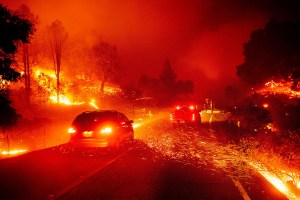
an outlaw god on a mission of
correction, convection, currents
of floods, burned by fire-storms
of trees, california today,
new york city tomorrow, but don’t
worry, just party, drink up your
hot toddy, be snotty, like a donald
trump wanna be, your head in the
potty, doing karate on the future,
the scripture is naughty, sirening
night as the right time, for the
break-in to let the bodies out,
immigrants like abraham finding
oak branches prophesying like
a reckoning for sodom, collapsing Continue reading “advent as the seas rise”→
sometimes
standing on a stage of d-town city after
my black brothers or sisters have spit their joint
i feel thin
as a blade of grass, full of paint
white-washed
in the flash and taint
of my ancestors’ claims Continue reading “testifyin’ white, dreamin’ color”→
The seed parables of the gospels are “heirloom” for modern readers. They come across time, hard with unpacked dynamism. As bare kernels, they sit unmoving before the eyes. But given the right nutrients from without, they may sprout with a surprising prolixity.
*Note: This is a sermon Dr. James Perkinson (right, performing spoken word at the Heidelberg Project in Detroit, MI) did for the liturgical “season” being adopted by some churches including St. Peter’s Episcopal Church in Detroit. It is called the Season of Creation (Sept 1 to Oct 4). The focus on this Sunday (September 1, 2019) was on the oceans. J-Perk included a number of biblical passages related to the seas and water and asked a few questions/made some comments [as indicated], before getting into the sermon proper.


 From the Center For Babaylan Studies, this webinar is live tomorrow at 2pmEST. Click
  By Jim Perkinson
 By Jim Perkinson, for the St. Peter’s Episcopal community in Detroit, MI (12/29/19) on Psalm 147 and John 1:1-18
 By Jim Perkinson, on Matthew 24:36-44, performed on 12.01.19 at St. Peter’s Episcopal Church in Detroit, MI
 by jim perkinson
 By Jim Perkinson (09.01.2019)
 Radical Discipleship